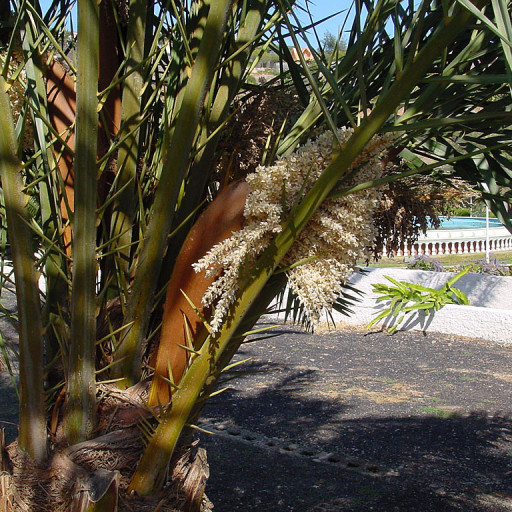
Plant Overview
Known globally as the "Pineapple Palm" for its massive, textured trunk, Phoenix canariensis is the ultimate statement piece for a Mediterranean-style landscape. Originating from the Canary Islands, this majestic palm brings a touch of grand Victorian elegance and rugged island charm to any sunny garden. It is a slow-growing giant that commands attention and defines the skyline.
🔍 How to Identify
- 🌿 The Fronds: Deep green, feathery (pinnate) leaves that can grow up to 20 feet long. They arch gracefully from the crown, creating a massive, rounded canopy.
- 🍍 The Trunk: Exceptionally thick and sturdy, covered in diamond-shaped "scars" left by old leaves. When the lower fronds are trimmed, the top of the trunk resembles a giant pineapple.
- 🟠 The Fruit: Clusters of small, ornamental orange drupes appear on female trees. While they look like dates, they are mostly seed with very little flesh.
🏡 In Your Garden
- ☀️ Space is Key: While they look charming in large pots when young, these are giants. They need significant room to expand both their heavy canopy and their powerful, wide-reaching root systems.
- ✂️ Pruning Nuance: The iconic "pineapple" look is a result of intentional pruning. However, gardeners should avoid "hurricane cutting" (removing too many green fronds), as this weakens the tree’s energy reserves and makes it vulnerable to the South American Palm Weevil.
- 💧 Establishment: Once mature, they are incredibly drought-tolerant, but they appreciate deep, occasional watering during the hottest months to keep their fronds vibrant and lush.
⚠️ Safety & Toxicity
- ⚔️ Spine Warning: The most significant danger comes from the 3–4 inch long, needle-sharp spines located at the base of each leaf. These can easily puncture skin and gardening gloves, often leading to painful inflammation or infection.
- 🐾 Pet & Child Safety: While the plant is not considered chemically toxic if ingested, the physical hazard of the spines is high. Keep play areas well away from the base of the tree.
✨ Fun Fact
In the late 19th century, the Canary Island Date Palm became a "status symbol" in the French Riviera and California. Wealthy estate owners would plant them at their gates to signal their worldliness and prosperity to passersby.

Detailed Care Instructions
| Color | Brown Trunk, Green Leaves, Cream To Yellow Blooms, And Red To Yellow Fruits |
| Soil Ph | 6.1-7.8 |
| Humidity | Normal |
| Invasive | Weed |
| Lighting | Full Sun |
| Toxicity | Non-Toxic |
| Soil Type | Well-Draining, Loamy |
| Bloom Time | Early Spring To Late Summer |
| Difficulty | Medium |
| Plant Type | Tree |
| Mature Size | Up To 66 Feet Tall |
| Native Area | Canary Islands |
| Temperature | 22°C - 25°C |
| Sun Exposure | Full Sun To Partial Shade |
| Hardiness Zones | 8-11 |
To grow a Phoenix Canariensis plant, or Canary Island date palm, follow these steps:
- Purchase a healthy young Phoenix Canariensis plant from a reputable nursery or garden center. Look for a plant with strong, green fronds and a well-developed root system.
- Choose a suitable location for your plant. Phoenix Canariensis prefers full sun but can tolerate some shade. Ensure the soil is well-draining to prevent waterlogged roots.
- Prepare the planting hole by digging it twice as wide and deep as the root ball. If planting multiple date palms, space them several feet apart.
- Gently remove the Phoenix Canariensis plant from its container, being careful not to damage the roots. Place it in the center of the planting hole.
- Backfill the hole with soil, ensuring the plant is at the same level it was originally. Gently firm the soil around the base of the plant.
- Water the newly planted Phoenix Canariensis thoroughly to settle the soil and help establish the roots. Provide frequent, deep watering during the first year to promote healthy growth.
- Apply a layer of organic mulch, such as wood chips or compost, around the base of the plant. This helps retain moisture and suppresses weed growth. Keep the mulch several inches away from the trunk to prevent rot.
- Fertilize the Phoenix Canariensis plant during the growing season. Use a slow-release palm fertilizer according to package instructions. Avoid over-fertilizing, as it can damage the plant.
- Regularly trim or remove dead or damaged fronds to keep the canopy tidy and prevent the spread of diseases or pests. Ensure to use sharp and clean pruning tools.
- Protect the Phoenix Canariensis plant from extreme cold temperatures by covering it or providing some form of protection during winter months, especially in areas where temperatures drop below freezing.
With proper care, watering, fertilizing, and protection from extreme cold, your Phoenix Canariensis plant will grow and thrive, providing you with a beautiful and majestic addition to your garden.

Place in a bright room that is sun drenched almost all day. Or directly in a south-facing window.

To water this plant, you should first ensure that the soil around it is dry. Once you've determined this, you can carefully pour water into the soil until it is thoroughly moistened. Avoid getting water on the leaves or trunk of the plant, and be sure not to over-water it, which can lead to root rot. Additionally, it's best to water this plant in the morning or early evening to avoid evaporation and water stress during the hottest part of the day.
To fertilize this plant, begin by selecting a slow-release, balanced fertilizer designed for palm trees. Apply the fertilizer according to the recommended dosage instructions on the package, ensuring that you cover the root zone of the plant. When applying the fertilizer, be careful not to get any on the leaves or trunk of the plant, as this can cause damage. Fertilize the plant in the spring and fall (or every three months), watering it well after each application to help distribute the fertilizer evenly throughout the soil.
The ideal soil for this plant should be well-draining and allow air and water to flow through it easily. A mixture of sand, perlite, and peat moss or coco coir can be used to create a sandy loam, which is the best type of soil for this plant. It is important to avoid using soil that is too dense, as this can lead to root rot and other issues. When planting or repotting, it is also important to provide good drainage by adding a layer of gravel or sand at the bottom of the pot.
To propagate this plant, select a healthy and mature specimen and remove a mature and healthy offshoot from the base. Cut the offshoot at a slight angle using a sharp and sterilized knife or pruning shears. Then, remove the lower leaves and any plant debris and dip the cut end into rooting hormone. Plant the offshoot in a pot filled with well-drained soil and keep it moist. Place the pot in indirect light and maintain the temperature between 75-80°F. Within a few weeks, the offshoot should start rooting and growing new leaves. Once it establishes itself, it can be transplanted to a larger pot or directly into the ground.
Common pests of the canary island date palm include Scale insect, mealybugs, spider mites. Make a habit of checking your canary island date palm frequently for pests so that any infestations can be caught and managed early.








