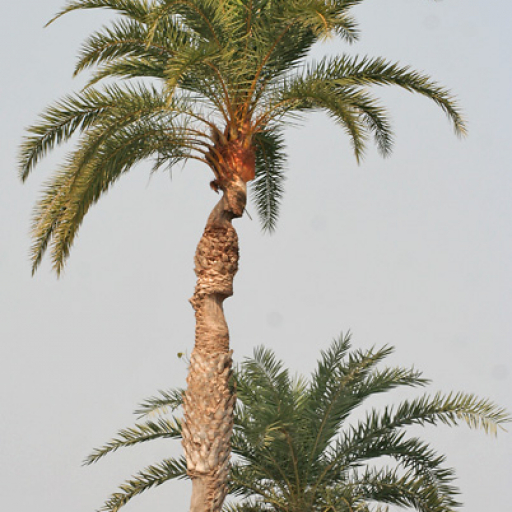
Plant Overview
Known as the Silver Date Palm or the Wild Date Palm, this shimmering beauty is a sturdier, more rugged cousin of the commercial date tree. Originating from the Indian subcontinent, it is often called the "Sugar Date Palm" because its sap is a primary source of traditional palm sugar. With its silvery-blue fronds and iconic diamond-patterned trunk, it adds an immediate touch of "desert oasis" luxury to any landscape.
🔍 How to Identify
- 🌴 The Trunk: Features a striking, textured surface covered in a persistent "diamond" pattern created by the bases of old, fallen leaves.
- 🌿 The Foliage: Large, feathery fronds that arch gracefully, sporting a distinct glaucous (silvery-blue-green) hue rather than a standard deep green.
- 🟠 The Fruit: Produces large, drooping clusters of small, oblong fruits that turn from yellow to a deep orange or purplish-black when ripe.
🏡 In Your Garden
- ☀️ Sun & Space: This palm is a sun-worshipper and needs plenty of room to spread its canopy. While it is incredibly drought-tolerant once established, it develops a much thicker, healthier trunk if given deep, regular watering during its first few years.
- 🧤 The "Thorn" Factor: Be extremely cautious when pruning. The lower leaflets of each frond are modified into long, needle-sharp spines that can easily pierce thick leather. It is best planted away from narrow walkways or areas where children play.
⚠️ Safety & Toxicity
- 🟢 Status: Generally non-toxic to humans and pets.
- 🩹 Physical Hazard: While the fruit is edible (though thin-fleshed), the primary safety concern is the spines at the base of the leaves. Puncture wounds from these spines can be prone to infection, so always wear eye protection and heavy-duty gloves when maintenance is required.
✨ Fun Fact
In many parts of India, this tree is "tapped" like a maple tree. A small notch is cut into the trunk to collect the sweet sap, which is then boiled down to create Jaggery (a delicious, unrefined sugar) or fermented into a traditional beverage known as "Toddy."

Detailed Care Instructions
| Humidity | Normal |
| Lighting | Full Sun |
| Difficulty | Medium |
| Hardiness Zones | 8 - 10 |
To grow a Phoenix Sylvestris plant, also known as the Sylvester Palm or Silver Date Palm, you can follow these steps:
- Find a suitable location: Phoenix Sylvestris prefers full sun exposure, so choose a spot in your garden that receives direct sunlight for at least six hours a day.
- Prepare the soil: The plant requires well-draining soil with a slightly acidic to neutral pH level. If your soil is heavy or clay-like, improve it by adding organic matter such as compost or peat moss.
- Planting the seed: Soak the seeds in warm water for 24 hours before planting. Dig a hole that is twice the size of the seed and place the seed 1 inch deep into the soil. Fill the hole with soil, making sure it is firm around the seed.
- Watering: Keep the soil consistently moist but not soggy. Regularly check the moisture level and water accordingly. During the hotter months, the palm may require more frequent watering.
- Fertilization: Apply a slow-release palm fertilizer with a balanced ratio of nutrients, following the manufacturer's instructions. Apply the fertilizer once every three months during the growing season.
- Mulching: Mulch around the base of the plant to help retain moisture and suppress weed growth. Use organic mulch like wood chips or dried leaves, and ensure it doesn't touch the trunk.
- Pruning: As the plant grows, remove any dead or damaged fronds to maintain a tidy appearance and prevent disease and pests. Only prune healthy, green fronds.
- Protection from cold: Provide frost protection during winter, especially if you live in a colder climate. Cover the plant with a blanket or burlap if temperatures drop below freezing.
- Patience: Phoenix Sylvestris is a slow-growing palm that can take several years to reach its full height. Be patient and ensure consistent care for optimal growth.
Remember to research specific care requirements for your region and adjust the instructions accordingly.

Place in a window with dappled sun or a spot in the middle of a room. Or directly in a window facing west or east.

To water this plant, you should first check the soil moisture by inserting your finger into the soil up to the second knuckle. If the soil feels dry, it's time to water the plant. Use a watering can or hose to slowly water the plant, making sure to saturate the soil and reach the roots. Avoid getting water on the leaves or fronds, as this can promote fungal growth. Allow any excess water to drain away, and do not allow the plant to sit in standing water. During hot weather, you may need to water more frequently, but be careful not to overwater as this can cause root rot.
- Select a high-quality fertilizer with a balanced NPK ratio (nitrogen, phosphorus, and potassium) specifically formulated for palm trees.
- Begin fertilizing in the spring, once the plant has begun actively growing, and continue to fertilize monthly until mid-fall.
- Apply fertilizer evenly around the base of the plant and water thoroughly.
- Follow the manufacturer's recommended dosage and make sure not to over-fertilize, as this can lead to burning or damaging the plant's roots.
- Consider supplementing with micronutrients, such as iron and magnesium, for optimal growth and health.
- Monitor the plant regularly for any signs of nutrient deficiencies and adjust fertilization as necessary.
The ideal soil for Phoenix Sylvestris plant is a well-draining, slightly acidic soil that is rich in nutrients and organic matter. The soil should be loose and friable, allowing for good root growth, and should be able to retain moisture without becoming waterlogged. A pH level of 5.5 to 7.5 is ideal. A combination of loam, sand, and peat moss can be used to create the perfect soil mix. It is also important to ensure that the soil is free from any pests or diseases that can harm the plant. Regular soil maintenance, including watering, fertilizing, and pruning, can help to keep the plant healthy and thriving.
To propagate this plant, you will first need to collect the fresh seeds. Once you have the seeds, you should soak them in water for about 24 hours to soften the outer coats and increase their chances of germination. After soaking, plant the seeds in a pot with well-draining soil, making sure to provide them with plenty of light and warmth.
Keep the soil consistently moist and make sure to remove any weeds that may emerge. Once the seeds have sprouted and grown to a substantial size, they can be potted up into larger containers or planted directly into the ground, depending on your preference.
To propagate the plant further, you can trim off the stem and plant it in soil to grow a new plant. Be sure to remove any leaves from the lower portion of the stem so that they do not rot in the soil. Keep the cutting in a warm and humid environment until roots have developed and the cutting has begun to sprout new leaves. At this point, it can be potted up or planted in the ground.
Overall, propagating this plant is relatively easy and can be accomplished with just a few simple steps. With proper care and attention, your new plants will grow into healthy and vibrant specimens that will bring joy and beauty to your home or garden.








