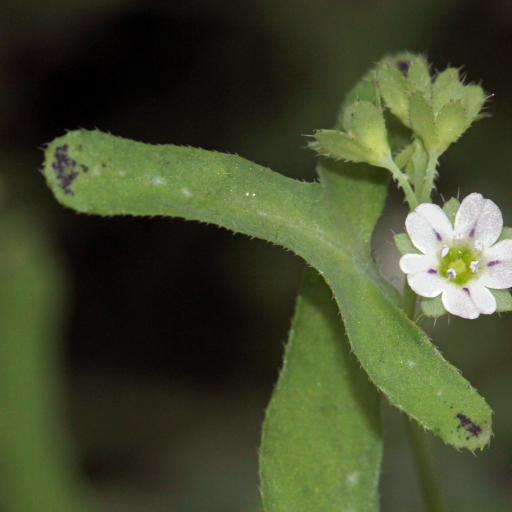
Plant Overview
Known affectionately as the White Fiesta Flower, this delicate California native is a charming "scrambler" often found draped over shrubs in shady woodlands. While it looks like a fragile wildflower, it possesses a surprising "Velcro-like" ability to cling to anything it touches, earning its place in local folklore as a natural decoration for hair and clothing during early California festivals.
🔍 How to Identify
- ⚪ The Bloom: Small, delicate white flowers shaped like open bells, often featuring distinctive purple or blue-violet markings or veins in the center.
- 🌿 The Foliage: Bright green leaves that are deeply lobed (pinnately divided) with a slightly succulent, translucent texture.
- 🪝 The Stems: Thin, brittle stems equipped with tiny, recurved prickles that act like hooks, allowing the plant to "climb" or hitchhike on passing animals and hikers.
🏡 In Your Garden
- 🌳 The Shade Seeker: Unlike many sun-loving California natives, the Fiesta Flower thrives in the "understory." It loves the dappled light beneath Oak trees or large shrubs where the soil stays slightly cooler.
- 🧗 The Gentle Scrambler: It doesn’t have tendrils like a grape vine; instead, it uses its prickly stems to lean on neighbors. In a garden setting, it works beautifully as a seasonal groundcover that will eventually "climb" into your taller perennials for a layered look.
⚠️ Safety & Toxicity
- 🩹 Physical Irritant: While not chemically poisonous, the tiny hooks on the stems can be quite abrasive. If you have sensitive skin, handling the plant without gloves might leave you with a mild, itchy "grass burn" sensation.
- 🐾 Pet Safety: It is generally considered non-toxic to cats and dogs. However, its sticky nature means it can easily get tangled in long-haired fur, which might be annoying for your pet to remove.
✨ Fun Fact
The name "Fiesta Flower" stems from a 19th-century tradition where young women in California would press the blossoms against their dresses or hair. Because of the microscopic hooks on the stems, the flowers would stick perfectly to fabric without the need for pins, acting as "living lace" for evening parties!

Detailed Care Instructions
| Humidity | Dry |
| Lighting | Full Sun |
| Difficulty | Medium |
| Hibernation | Cold Period |
To grow Pholistoma membranaceum (also known as Blue Phacelia or California Bluebell), follow these steps:
- Choose the right location: Pholistoma plants prefer full sun to partial shade. Select a spot in your garden or outdoor area that receives at least 6 hours of direct sunlight per day.
- Prepare the soil: Blue Phacelia grows best in well-draining soil. Amend the soil with organic matter such as compost or aged manure to improve drainage and nutrient content. This will help promote healthy growth.
- Planting: Sow the seeds directly in the ground or in containers in early spring or fall. Gently press the seeds into the soil, ensuring they are not deeply buried. Space the seeds about 12-18 inches apart to allow room for spreading.
- Watering: Keep the soil evenly moist but not waterlogged. Water the Pholistoma plants regularly, especially during dry spells or prolonged periods of hot weather. However, be cautious not to overwater, as excessive moisture can lead to root rot.
- Fertilizing: Apply a balanced fertilizer once or twice during the growing season. Follow the manufacturer's instructions for proper application and dosage. This will provide the necessary nutrients for healthy growth and blooming.
- Mulching: Apply a layer of organic mulch, such as wood chips or straw, around the base of the plants. Mulching helps retain soil moisture, suppresses weed growth, and maintains a more stable soil temperature.
- Pruning: Pholistoma plants can become leggy if not pruned regularly. To encourage bushy growth and prevent excessive flopping, pinch back the growing tips of the plants or prune after flowering. This will also promote more profuse blooming in subsequent years.
- Support: If your Pholistoma plants grow tall and floppy, consider using stakes or trellises for support. This will help keep the plants upright and prevent them from sprawling on the ground.
- Pests and diseases: Pholistoma plants are generally resistant to most pests and diseases. However, keep an eye out for common garden pests like aphids or snails. Regularly inspect the plants and take appropriate measures if any infestations occur.
By following these steps, you should be able to successfully grow Pholistoma membranaceum and enjoy its beautiful blue flowers in your garden.

Place in a bright room that is sun drenched almost all day. Or directly in a south-facing window.

To water this plant, ensure that the soil is completely dry before watering it thoroughly until water runs out of the drainage holes at the bottom of the pot. It is important not to let the plant sit in standing water, as this can lead to root rot. Be sure to empty any excess water from the saucer underneath the pot. Watering once every 1-2 weeks is usually sufficient, but this may vary depending on factors such as the size of the pot, amount of sunlight the plant receives, and the humidity of the surrounding environment.
To fertilize the plant, use a balanced fertilizer with equal amounts of nitrogen, phosphorus, and potassium. Apply the fertilizer on the soil around the base of the plant and water it thoroughly. Fertilize the plant monthly during the growing season, cutting back to every other month during the winter. Avoid over-fertilizing as it may lead to leaf burn and other damage.
Pholistoma Membranaceum is a plant that requires a specific type of soil in order to thrive. It is best to use a soil that is well-draining, as this will prevent the roots from becoming waterlogged and potentially damaged. In addition, the soil should be rich in nutrients and have a slightly acidic pH, which is typically between 6.0 and 7.5. A soil that is too alkaline can inhibit the plant's ability to absorb certain nutrients, which can lead to stunted growth and other problems. It is also important to ensure that the soil is kept moist, but not overly wet. This can be achieved by watering the plant regularly, but allowing the soil to dry out slightly between each watering. Overall, choosing the right soil for Pholistoma Membranaceum is essential in order to promote healthy growth and ensure that the plant thrives in its environment.
To propagate this plant, you will first need to identify a healthy and mature specimen. Take a stem cutting that is approximately 4-6 inches in length, making sure it has at least 2-3 sets of leaves.
Remove the bottom few leaves from the cutting to expose a small area of the stem. Dip this end in rooting hormone, and then place the cutting in a pot filled with moist potting soil.
Cover the cutting with a clear plastic bag to create a humid environment, and place it in a bright spot with indirect sunlight. Water the cutting as needed, making sure to keep the soil moist but not waterlogged.
After a few weeks, the cutting should start to grow new roots. Once the roots have become established, you can transplant the new plant into a larger pot or to a desired location in your garden.








