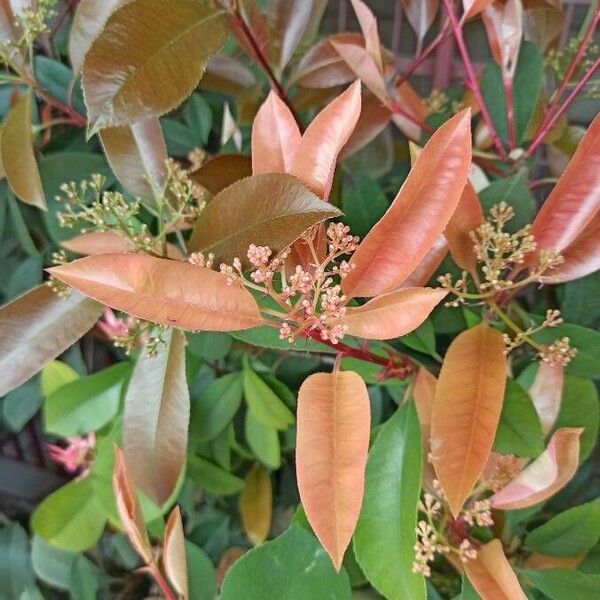
Plant Overview
Often called the Purple Chokeberry, this shrub is a hybrid masterpiece that bridges the gap between its red and black berry-bearing cousins. It is a favorite among landscapers for its "fire-like" fall colors and its ability to thrive where more delicate plants might fail. Whether it's the snowy white blossoms of spring or the dark, jewel-like fruit of autumn, this plant provides a changing theater of color in any garden.
🔍 How to Identify
- 🍃 Leaf Structure: Look for oval, finely toothed leaves that are a glossy dark green during the summer. In autumn, they transform into a spectacular display of vibrant red and deep burgundy.
- 🌸 Spring Blooms: The plant produces small, dense clusters of white to light pink flowers. If you look closely, you’ll see delicate pink-tipped stamens that give the clusters a "fuzzy" appearance.
- 🍇 The Fruit: It bears glossy, dark purple-black berries that hang in heavy bunches. These fruits are distinctive because they are larger than red chokeberries but smoother than the black variety.
🏡 In Your Garden
- 💪 A "Problem Solver": This plant is incredibly resilient to different soil types, including swampy areas or heavy clay. It’s an excellent choice for "rain gardens" or spots in your yard that stay a bit too wet for other shrubs.
- 🦋 Wildlife Magnet: It serves as a vital pit stop for pollinators in the spring and a natural bird feeder in the winter. If you want to attract songbirds like waxwings or catbirds, this shrub is a must-have.
⚠️ Safety & Toxicity
- 👅 Edibility Assessment: The berries are non-toxic and packed with antioxidants, but they are famously astringent. Eating them raw will result in a very dry, "puckered" mouth—which is exactly how it earned the name "Chokeberry."
- 🐾 Pet Safety: While the fruit is generally safe, the seeds and leaves contain trace amounts of cyanogenic glycosides (common in the rose family). It is best to prevent pets from chewing on the woody stems or consuming large quantities of leaves.
✨ Fun Fact
Despite the "choke" in its name, the Purple Chokeberry is considered a "superfruit" in the culinary world. When processed with heat and sugar, the berries lose their bitterness and produce a deep, complex flavor used in award-winning gourmet jams, syrups, and even botanical wines.

Detailed Care Instructions

Place in a bright room that is sun drenched almost all day. Or directly in a south-facing window.

The presence of a dry surface layer of soil does not indicate that the plant requires water. Instead, stick your finger 1-2" (3-5 cm) deep in the soil to feel dampness or moisture content. If the soil seems dry, it's time to water your greens. If the soil is still moist, however, it is better not to water your plant and instead wait a day or two. Overwatering or waterlogging raises the risk of root rot. So if the soil takes longer than a week to dry, check the light conditions because it's likely that the plant isn't getting enough light. It's fine if the upper layer of soil is dry between waterings, but the deeper soil layer should always have some moisture.








