Plant Overview
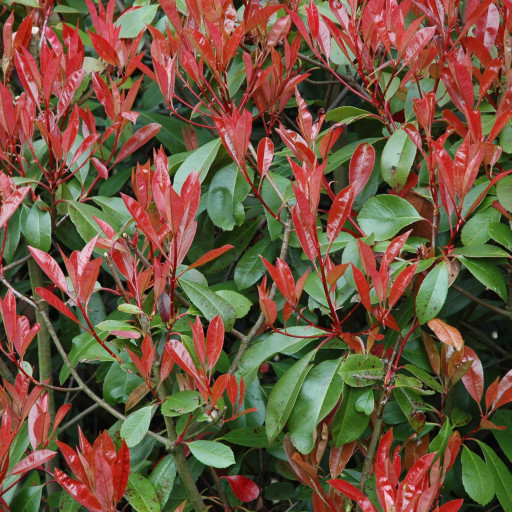
Known affectionately as the "Red Robin," this vibrant evergreen is the ultimate "living fence." A hybrid of two Asian species first discovered at a nursery in Alabama, it has become a staple in landscapes across the globe. It is most famous for its dramatic color transformation, where new spring growth emerges in a fiery scarlet before maturing into a deep, glossy emerald.
🔍 How to Identify
- 🔴 The Foliage: Young leaves are a brilliant, waxy red. As they age, they transition to a dark, lustrous green, creating a multi-layered "burning bush" effect.
- 🍃 Leaf Structure: The leaves are oval-shaped, leathery to the touch, and feature finely serrated (saw-toothed) edges.
- 🌸 The Blooms: In late spring, it produces large, flat-topped clusters of tiny white flowers. While pretty to look at, be warned: many find their scent to be quite "musky" or unpleasant!
🏡 In Your Garden
- ✂️ Pruning for Color: The "Red Robin" only produces its signature red leaves on new growth. To keep your hedge looking fiery, tip-prune it regularly during the growing season to encourage constant new shoots.
- 💨 Airflow is Vital: This plant is susceptible to Entomosporium leaf spot (tiny red dots on the leaves). To prevent this, avoid overhead watering and ensure there is plenty of space for air to circulate through the branches.
- 🧱 Privacy Specialist: Because it grows rapidly—often up to a foot per year—it is the perfect choice for homeowners looking to create a dense, colorful privacy screen or windbreak.
⚠️ Safety & Toxicity
- 🐾 Status: Toxic to Pets: Like many members of the Rose family, Photinia contains cyanogenic glycosides.
- 🤢 Details: If ingested in large quantities, the leaves can be toxic to dogs, cats, and especially horses. It may cause drooling, lethargy, or digestive upset. It is generally not considered a skin irritant, but its serrated leaves can be scratchy.
✨ Fun Fact
The name Photinia is derived from the Greek word photeinos, which means "shiny." This refers to the incredibly glossy, light-reflective surface of the leaves that makes the plant look like it has been polished after a rainstorm.

Detailed Care Instructions
To grow a Photinia × Fraseri plant, follow these steps:
- Choose a location: Photinia × Fraseri plants prefer full sun to partial shade. Select an area in your garden that receives at least 4-6 hours of direct sunlight per day. Ensure the soil is well-draining.
- Prepare the soil: Photinia × Fraseri plants can adapt to a variety of soil types but prefer slightly acidic to neutral soil. Amend the soil with compost or organic matter to improve its structure and fertility.
- Planting: Dig a hole in the prepared soil that is slightly larger than the root ball of your Photinia × Fraseri plant. Place the plant in the hole, making sure it sits at the same level as it did in its container or nursery pot. Backfill the hole with soil and gently tamp it down around the plant to remove any air pockets.
- Watering: Water the newly planted Photinia × Fraseri thoroughly, ensuring the soil is evenly moist. Water deeply but less frequently to encourage the growth of deep roots. Once established, the plant is moderately drought-tolerant but will still benefit from regular watering during dry periods.
- Mulching: Apply a layer of organic mulch around the base of the plant, leaving a small gap around the stem to prevent moisture buildup and potential rot. Mulching helps retain soil moisture, suppresses weeds, and regulates soil temperature.
- Pruning: Photinia × Fraseri plants can be pruned in early spring to shape and encourage bushier growth. Regular pruning also helps maintain the plant's size and appearance. Remove any dead, damaged, or crossing branches. Avoid heavy pruning as it may reduce flowering.
- Fertilizing: Apply a balanced slow-release fertilizer in early spring to provide nutrients for the plant's growth. Follow the instructions on the fertilizer packaging for proper dosage and application.
- Pests and diseases: Photinia × Fraseri plants are generally resistant to pests and diseases. However, keep an eye out for common garden pests like aphids, spider mites, and caterpillars. If necessary, treat with appropriate organic or chemical pesticides.
By following these steps, you should be able to successfully grow a healthy Photinia × Fraseri plant in your garden.

Place in a bright room that is sun drenched almost all day. Or directly in a south-facing window.

To properly water this plant species, it is important to ensure that the soil is moist but not waterlogged. A good way to check this is to stick your finger about an inch into the soil - if it feels dry, it's time to water. When watering, make sure to thoroughly saturate the soil, allowing water to reach the roots. It's best to water early in the morning or late in the evening, when temperatures are cooler and there is less risk of evaporation. Avoid getting water on the leaves, as this can cause fungal growth. In general, this plant species prefers well-draining soil and does not like to sit in water for long periods of time.
To properly fertilize this plant, use a balanced, slow-release fertilizer with equal amounts of nitrogen, phosphorus, and potassium. Apply the fertilizer to the soil around the base of the plant, avoiding contact with the foliage. Water the plant thoroughly after fertilizing to help the nutrients penetrate the soil. Fertilize once in the spring and again in the fall. Be careful not to over-fertilize as this can lead to excessive growth and weaken the plant's overall health.
The ideal type of soil for this plant is well-drained and rich in nutrients. It should be slightly acidic with a pH level between 6.0 and 6.5. A good mix of soil would consist of equal parts of sand, loam, and peat moss or compost. The soil should be kept moist, but not waterlogged, as excess water can lead to root rot and other diseases. Additionally, adding a layer of mulch around the base of the plant can help to retain moisture and suppress weed growth.
To propagate this plant, you will need to take stem cuttings from a healthy adult plant. The best time to take cuttings is in the early spring or late summer. Cut a stem that is at least 6 inches long and has several leaves on it. Remove any leaves from the bottom 2 inches of the stem. Dip the cut end of the stem in rooting hormone and plant it in moist potting soil. Cover the pot with a plastic bag to create a greenhouse effect. Keep the soil moist and in a warm, bright location, but not direct sunlight. After about 4-6 weeks, the cutting should have rooted and new growth should be visible. Once the cutting has established, it can be transplanted into a larger container or outside in the garden.
Common pests of the fraser's photinia include Scale insect, spider mites, aphids. Make a habit of checking your fraser's photinia frequently for pests so that any infestations can be caught and managed early.








