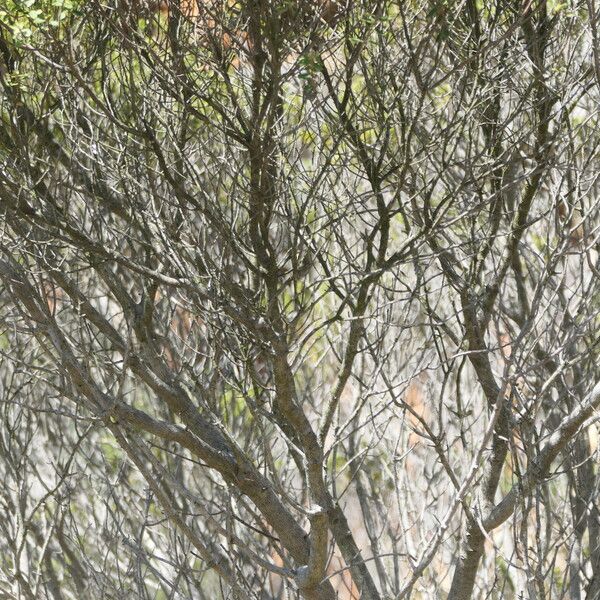
Plant Overview
Known affectionately as the Box-leaf Phylica, this South African native is a master of survival. Originating from the rugged, wind-swept slopes of the Cape, it brings a touch of wild, architectural beauty to any landscape. It is often used by gardeners who want the look of a traditional Boxwood hedge but need a plant that can handle much harsher, coastal conditions.
🔍 How to Identify
- 🍃 Leathery Foliage: Small, oval leaves that are dark green and glossy on top. They are densely packed along the stems, giving the plant a very full, "bushy" appearance.
- ☁️ Silvery Undersides: If you flip a leaf over, you’ll find a soft, white-to-grey felt-like texture. This is a special adaptation that helps the plant trap moisture and resist salt spray.
- 🌼 Honey-Scented Blooms: In late winter and spring, it produces small, inconspicuous clusters of creamy-white flowers. While they aren't showy, they release a surprisingly strong, sweet honey aroma.
🏡 In Your Garden
- 🌬️ Coastal Warrior: This plant is incredibly wind-hardy and salt-tolerant. It is a perfect choice for seaside gardens where other plants might wither under the constant salt-laden breezes.
- 🏜️ Drainage is Key: Like many plants from the fynbos biome, it thrives in sandy, acidic soils. It is very sensitive to "wet feet," so ensure your soil drains rapidly to prevent root rot.
- ✂️ Pruning Nuance: It responds well to light pruning to maintain a neat shape. However, avoid "hard pruning" into very old wood, as it may struggle to produce new growth from the thickest branches.
⚠️ Safety & Toxicity
- ✅ Generally Safe: Phylica buxifolia is not known to be toxic to humans or common household pets. It is a safe addition to family-friendly landscapes.
- 🌿 Skin Irritation: While not poisonous, the stems can become quite woody and the leaves are stiff; sensitive skin might experience minor scratches when pruning without gloves.
✨ Fun Fact
The Box-leaf Phylica is a "resprouter." In its natural habitat, where wildfires are a common part of the ecosystem, this plant has a thickened underground base that allows it to grow back quickly even after the top half has been completely scorched by fire.

Detailed Care Instructions

Place in a bright room that is sun drenched almost all day. Or directly in a south-facing window.

Some plants require more regular watering than others, which should be done every few days. It's critical to maintain the soil moist all of the time. The water requirements of the same plant placed in pots with varying sizes will differ. Because the water in the smaller pot evaporates faster than the water in the larger pot, it will require more watering. Regardless of pot size, the surface should constantly be maintained moist.







