Plant Overview
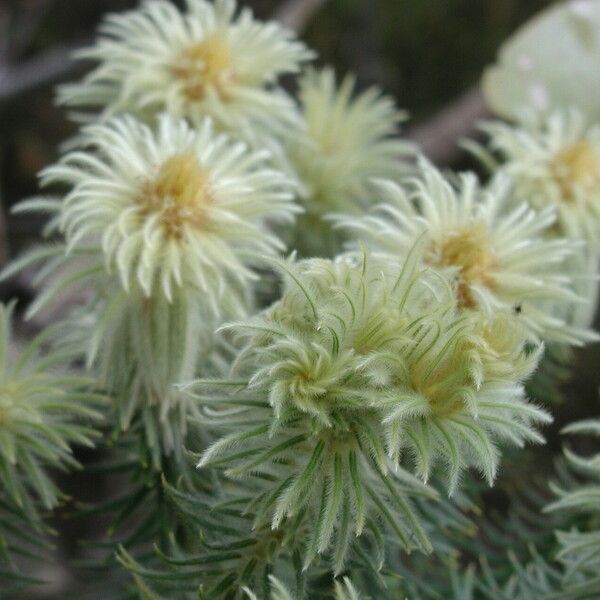
Phylica pubescens, affectionately known as the "Featherhead," looks like a plant plucked straight from the pages of a Dr. Seuss book. Native to the fynbos of South Africa, it is beloved by gardeners and florists alike for its soft, strokeable texture and its unique, pom-pom-like flower heads. These "flowers" are actually modified leaves called bracts that surround the tiny true flowers, creating a permanent, fuzzy crown that shimmers in the sunlight.
🔍 How to Identify
- 🌿 The Foliage: The leaves are narrow, needle-like, and densely covered in fine, silvery-white hairs that give the entire shrub a velvety, frosted appearance.
- ☁️ The Bloom: The "featherheads" appear at the tips of branches as dense, cream-to-yellowish tufts of wool. They are remarkably soft to the touch and appear most vibrantly in winter and spring.
- 📏 The Habit: It grows as an upright, evergreen shrub, typically reaching about 3 to 4 feet in height, maintaining a neat but whimsical silhouette.
🏡 In Your Garden
- 🌬️ Airflow is Key: Because of its dense, hairy foliage, this plant thrives in breezy, open locations. Stagnant, humid air can cause moisture to trap within its "fur," leading to fungal issues, so give it plenty of elbow room.
- ⛰️ Soil & Drainage: Coming from the rocky slopes of the Cape, it is adapted to nutrient-poor, sandy, or acidic soils. It has a sensitive root system that dislikes being disturbed; once planted, it’s best to leave it in its forever home.
⚠️ Safety & Toxicity
- ✅ Status: Phylica pubescens is generally considered non-toxic to humans, cats, and dogs.
- 👐 Mechanical Irritation: While not poisonous, the tiny, fine hairs can occasionally cause mild skin irritation for people with very sensitive skin, similar to the "itch" one might get from a wool sweater.
✨ Fun Fact
Despite looking like a delicate cloud, the Featherhead is incredibly tough in floral arrangements. It is a "staple" in the cut-flower industry because the heads can look fresh for weeks in a vase and dry beautifully, retaining their fuzzy texture for years as a "dried flower."

Detailed Care Instructions
To grow Phylica pubescens, also known as the Hottentotsgod, follow these steps:
- Climate: Phylica pubescens is native to the Western Cape province of South Africa, so it thrives in a Mediterranean climate with mild, wet winters and warm, dry summers. It requires a minimum temperature of 40°F (4°C).
- Soil: The plant prefers well-draining, sandy or loamy soil with a slightly acidic to neutral pH (around 6.0-7.0). If your soil is heavy clay, improve drainage by adding sand or organic matter.
- Sunlight: Phylica pubescens needs full sun exposure to grow well. Choose a location in your garden that receives at least 6 hours of direct sunlight per day.
- Watering: While Phylica pubescens can tolerate some drought, it appreciates regular watering during its establishment period. Water deeply once a week during dry spells, ensuring the soil is slightly moist but not waterlogged. Reduce watering in winter.
- Mulching: Apply a layer of organic mulch around the base of the plant (keep it away from the stem) to conserve moisture, suppress weeds, and protect the roots from temperature fluctuations. Suitable mulches include wood chips or bark.
- Fertilizer: Phylica pubescens generally does not require heavy fertilization. However, you can apply a balanced slow-release fertilizer in early spring to provide some nutrients. Follow the instructions on the fertilizer packaging for application rates.
- Pruning: Prune Phylica pubescens lightly after flowering to shape and remove dead or damaged branches. Avoid heavy pruning as this can harm the plant.
- Propagation: Phylica pubescens can be propagated from seeds or cuttings. Collect seeds from dried flowerheads and sow them in early spring, keeping the soil consistently moist until germination occurs. Cuttings can be taken in late spring or early summer. Dip the cut end in rooting hormone powder and plant it in moist, well-draining soil or vermiculite.
- Pests and diseases: Phylica pubescens is generally resistant to pests and diseases, but keep an eye out for aphids, mealybugs, or leaf spot diseases. Address any issues promptly using organic pest control methods or suitable fungicides, if necessary.
- Protection: Protect young Phylica pubescens plants from strong winds as they can damage the delicate branches.
With proper care and suitable growing conditions, your Phylica pubescens plant should thrive and will reward you with its beautiful flowers.

Place in a bright room that is sun drenched almost all day. Or directly in a south-facing window.

To water Phylica Pubescens, it is important to consider the specific needs of the plant. Here is a detailed guide on watering this particular plant species:
1. Soil moisture: Phylica Pubescens prefers well-draining soil that is moderately moist. It is important to check the moisture levels of the soil before watering.
2. Frequency: Watering frequency depends on factors such as climate, season, and the individual plant's needs. In general, Phylica Pubescens should be watered regularly, but avoid overwatering as it may lead to root rot.
3. Watering method: Use a watering can or gentle hose attachment to water the plant. This will ensure a slow and controlled flow of water that allows the soil to absorb the moisture without causing damage.
4. Water quality: It is preferable to use lukewarm or room temperature water. Avoid using water that is too cold, as extreme temperature fluctuations may negatively affect the plant's health.
5. Watering technique: Water the soil, rather than the leaves or flowers, as wet foliage can lead to fungal diseases. Direct the water towards the base of the plant, allowing it to reach the roots.
6. Soil condition: Before watering, check if the top layer of soil is dry. Insert your finger about an inch into the soil to gauge its moisture content. If it feels dry, it is time to water the plant.
7. Adequate drainage: Ensure that the pot or planting area has proper drainage holes. This will prevent water from accumulating in the soil, which can cause root rot and other issues.
8. Adjusting watering schedule: Observe the plant regularly to determine if it requires more or less water. Factors such as high temperatures, increased sunlight, or growth spurts might necessitate adjusting the watering schedule.
Remember, when watering Phylica Pubescens, it is essential to strike a balance between adequate moisture and avoiding excessive waterlogging.
To fertilize Phylica Pubescens, you can follow these instructions:
- Choose a balanced water-soluble fertilizer with a ratio of 10-10-10 or similar. This means it should contain equal parts of nitrogen (N), phosphorus (P), and potassium (K), along with other essential micronutrients.
- Dilute the fertilizer according to the instructions on the packaging. For example, if the instructions recommend 1 tablespoon per gallon of water, mix it accordingly.
- Water the plant thoroughly before applying the fertilizer. This ensures the soil is moist and ready to absorb the nutrients.
- Pour the diluted fertilizer evenly over the soil surface around the base of the plant. Avoid getting the fertilizer on the leaves as it may cause burns.
- Repeat the fertilization process every four to six weeks during the growing season, which is usually in spring and summer. Reduce or stop fertilizing during the plant's resting period in fall and winter.
- After applying the fertilizer, water the plant again lightly to help the nutrients seep into the soil.
Remember to always follow the specific instructions provided by the fertilizer manufacturer and adjust them based on your plant's individual needs.
To ensure proper growth and development of the Phylica Pubescens plant, it is important to select the appropriate soil. The ideal soil type for this plant is well-draining and slightly acidic in nature. It should have good water-holding capacity while still allowing excess water to drain away.
A suitable potting mix can be created by combining equal parts of loam soil, peat moss, and perlite or coarse sand. The loam soil provides a balanced texture and nutrient content, while the peat moss helps retain moisture. Adding perlite or coarse sand improves drainage and prevents the soil from becoming too compacted.
The pH level of the soil should ideally be slightly acidic, with a range of 5.5 to 6.5. This can be adjusted by incorporating organic matter such as pine bark fines or compost, which will also provide essential nutrients.
When planting the Phylica Pubescens, it is recommended to use a container with drainage holes at the bottom to prevent waterlogged soil. This will ensure the roots do not suffer from excess moisture, which can lead to root rot. It is also advisable to apply a layer of mulch, such as wood chips or dried leaves, around the base of the plant to help conserve moisture and maintain a consistent temperature in the soil.
Overall, a well-draining, slightly acidic potting mix rich in organic matter is essential for the growth and health of the Phylica Pubescens plant.
Phylica Pubescens is a plant species that can be propagated through various methods. Here is a detailed guide on how to propagate it:
- Seeds: The most common and recommended method of propagation is through seeds. Follow these steps:
a. Obtain fresh ripe seeds from a reliable source or collect them from mature plants.
b. Fill a seed tray or seedling pot with a well-draining potting mix, preferably a mixture of peat moss and perlite or sand.
c. Sow the seeds on the surface of the potting mix, gently pressing them in without burying them.
d. Mist the seeds with water to moisten the surface, and cover the tray or pot with a clear plastic lid or plastic wrap to create a humid environment.
e. Place the tray or pot in a warm location with indirect sunlight, maintaining a temperature range of 60-70°F (15-21°C).
f. Keep the potting mix consistently moist by misting it with water whenever it starts to dry out.
g. Germination should occur within 6-8 weeks, after which you can begin removing the cover gradually to acclimate the seedlings to normal environmental conditions.
h. Once the seedlings have developed several true leaves, usually after a few months, you can transplant them into individual pots or a larger container with well-draining soil.
- Stem cuttings: It is also possible to propagate Phylica Pubescens from stem cuttings. Follow these steps:
a. Select healthy, non-flowering stems from the parent plant. Cut about 4-6 inches (10-15 cm) long cuttings just below a node using sterilized pruning shears or a sharp knife.
b. Remove the lower leaves from the cutting, leaving only a few upper leaves intact.
c. Dip the base of the cutting in a rooting hormone powder to enhance rooting, if desired. This step is optional.
d. Fill a small pot with a well-draining rooting medium, such as a mixture of perlite and peat moss or sand.
e. Make a hole in the potting mix with a pencil or finger, and insert the cutting into the hole, burying at least 1-2 inches (2.5-5 cm) of the stem.
f. Firmly press the potting mix around the base of the cutting to anchor it.
g. Place the pot in a warm location with bright, indirect light. Avoid direct sunlight, as it can scorch the cutting.
h. Mist the cutting and the surrounding potting mix to keep it slightly moist, but avoid overwatering to prevent rotting.
i. After a few weeks, you should start to see new growth indicating successful rooting. At this stage, you can gradually acclimate the cutting to normal environmental conditions.
j. Once the roots have developed and the cutting has established itself, usually after a few months, you can transplant it into a larger pot or the desired planting location.
By following these propagation methods, you can successfully propagate Phylica Pubescens and expand your plant collection.








