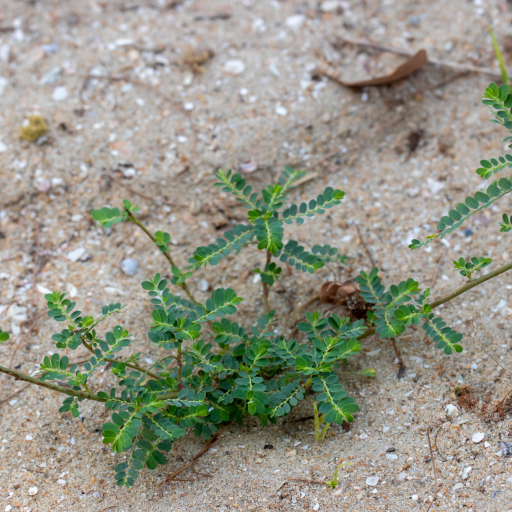
Plant Overview
Known as the "Stonebreaker" or "Seed-Under-Leaf," Phyllanthus amarus is a humble tropical herb with a reputation that far exceeds its size. In many parts of the world, it is treated as a "holy grail" of traditional medicine, particularly in Ayurveda, where it has been used for centuries. Despite its medicinal status, many gardeners encounter it as a persistent, fern-like weed that pops up in damp, shady corners.
🔍 How to Identify
- 🍃 The Foliage: The leaves are small, oblong, and arranged in two neat rows along the branches, giving the plant a delicate, feathery appearance similar to a miniature mimosa.
- 🟢 The "Hidden" Seeds: If you flip a branch over, you will see a row of tiny, round green capsules (fruits) hanging directly beneath the leaf stalks.
- 🌱 Growth Habit: It typically grows upright, reaching about 10 to 20 inches in height, with a smooth, slender green stem that can sometimes take on a reddish tint.
🏡 In Your Garden
- 💧 The "Volunteer" Spirit: You likely won't need to buy seeds; this plant is a master of self-seeding. It thrives in moist, disturbed soil and often appears "magically" in potted plants or garden beds after a heavy rain.
- ☁️ Climate Nuances: It loves humidity and warmth. While it can handle full sun, it stays lusher and greener when tucked into partially shaded spots where the soil remains consistently damp.
⚠️ Safety & Toxicity
- 🩺 Status: Generally safe to handle, but medicinal use should be approached with professional guidance.
- 🐾 Details: While not strictly "poisonous" like nightshade, it contains powerful phytochemicals. Ingesting large amounts can cause a drop in blood sugar or blood pressure. Keep it out of reach of pets, as it may cause digestive upset if grazed upon in large quantities.
✨ Fun Fact
The nickname "Stonebreaker" comes from its long-standing use in folk medicine to treat kidney stones and gallstones. Scientific studies have actually suggested that the plant may help interfere with the formation of calcium oxalate crystals!

Detailed Care Instructions
To grow Phyllanthus amarus (also known as Phyllanthus niruri), you can follow these steps:
- Obtain seeds or starter plants: You can purchase seeds or starter plants from a reputable nursery or online supplier.
- Select a suitable location: Phyllanthus amarus prefers a sunny or partially shaded location that receives at least 4-6 hours of sunlight per day. It can also tolerate a wide range of soil types but prefers well-draining soil.
- Prepare the soil: Ensure that the soil is loose, fertile, and free of weeds. Add organic matter, such as compost or well-rotted manure, to improve soil fertility.
- Plant the seeds or starter plants: If using seeds, sow them directly into the prepared soil, following the recommended planting depth mentioned on the seed packet. If using starter plants, dig a hole slightly larger than the root ball and place the plant in, ensuring that the top of the root ball is level with the surrounding soil.
- Water regularly: Keep the soil consistently moist during the initial growth stage, as Phyllanthus amarus requires ample water for proper establishment. Once established, water the plant as needed, keeping the soil evenly moist but not waterlogged.
- Fertilize occasionally: Apply a balanced, slow-release fertilizer according to the package instructions to provide the plant with essential nutrients. Avoid over-fertilizing, as it can lead to excessive vegetative growth at the expense of flowering and fruiting.
- Mulch the soil: Apply a layer of organic mulch around the base of the plant to help retain moisture, suppress weed growth, and moderate soil temperature.
- Prune as necessary: Trim back any dead or damaged growth, and lightly prune the plant to maintain its desired shape and size. This can be done in late winter or early spring.
- Protect from extreme temperatures: Phyllanthus amarus is sensitive to frost and extreme cold temperatures. If you live in a region with cold winters, consider growing it as an annual or bring potted plants indoors during the winter months.
- Harvest as needed: The leaves, stems, and roots of Phyllanthus amarus can be harvested for medicinal purposes. Wait until the plant has matured before harvesting, typically after a few months of growth. Harvesting can be done by cutting the desired parts of the plant, making sure not to remove more than one-third of the total plant material at once.
Remember to research any specific growing requirements or recommendations for Phyllanthus amarus in your particular geographical area, as it may have specific adaptations based on climate or soil conditions.

Place in a bright room that is sun drenched almost all day. Or directly in a south-facing window.

To water this plant, first you should make sure the soil is dry about an inch deep before watering. When watering, make sure to thoroughly saturate the soil until water drains out of the bottom of the pot. Avoid leaving standing water in the saucer underneath the pot, as this can lead to root rot. Depending on the temperature and humidity of your environment, you may need to water this plant once or twice a week. It's important to consistently monitor the soil moisture level and adjust your watering schedule accordingly.
To fertilize this plant, you should use a balanced liquid fertilizer every 2-3 weeks during the growing season. Dilute the fertilizer to half strength and apply it to the soil around the base of the plant, taking care not to get it on the leaves. Water the plant thoroughly after fertilizing to help distribute the nutrients. During the winter months, reduce the frequency of fertilizing to once a month or stop altogether.
Phyllanthus Amarus plant prefers well-draining soil rich in organic matter with a pH range of 5.5 to 7.5. The soil should be loose and well-aerated, allowing for good water infiltration and drainage. It can be grown in various soil types, including sandy loam, clay loam, and red laterite soils, as long as they meet the above criteria. Avoid using heavy soils or those that retain too much water, as they can lead to root rot and other plant diseases. Adding compost or well-rotted manure to the soil can help improve its fertility and structure.
To propagate this plant, take a cutting of a healthy stem that is about 4-6 inches long. Remove the leaves from the bottom 2 inches of the stem. Dip the cut end of the stem in rooting hormone powder and then plant it in a pot filled with well-draining soil. Water the plant well and keep it in a warm and humid location, such as a greenhouse or inside a plastic bag. Keep the soil moist and in about 4-6 weeks, the cutting should root and begin to grow new leaves. Once the cutting has developed a strong root system and is growing well, it can be transferred to a larger pot or planted outside in a suitable location.








