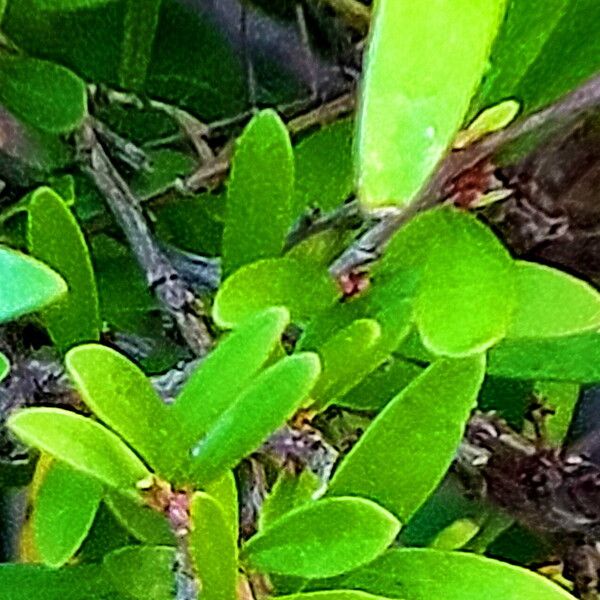
Plant Overview
Known affectionately as the Mousetail Plant or Ceylon Myrtle, this delicate shrub is a favorite among bonsai enthusiasts and tropical gardeners alike. Native to Sri Lanka, it is beloved for its graceful, arching branches and tiny, symmetrical leaves that give it a "feather-soft" appearance. It is the perfect choice for anyone looking to add a touch of zen-like elegance or a fine-textured groundcover to their landscape.
🔍 How to Identify
- 🍃 The Foliage: Small, narrow, lance-shaped leaves that grow in a tight, symmetrical pattern along the stems. They are a vibrant deep green, often looking like a miniature fern.
- 🌸 Hidden Blooms: Tiny, reddish-purple flowers that dangle on thin, thread-like stems from the undersides of the branches. These pendulous stalks are what give the plant its "mousetail" nickname.
- 🌿 Growth Habit: A low-growing, spreading shrub with naturally pendulous (drooping) branches that create a beautiful weeping effect as the plant matures.
🏡 In Your Garden
- 💧 Moisture Consistency: The Ceylon Myrtle is quite sensitive to "wet feet" but equally hates drying out completely. It thrives in consistently moist, well-draining soil. If the soil stays dry for too long, the plant may dramatically shed its leaves.
- ✂️ The Artist's Choice: Because of its small leaf scale and woody trunk that develops character quickly, it is a premier choice for "Mame" or small-scale bonsai. It responds exceptionally well to frequent pruning and can be shaped into intricate topiary.
- 🌞 Light Nuance: While it loves bright light, it prefers "dappled" or indirect sunshine. Harsh, direct midday sun can scorch the delicate leaves, especially in hotter climates.
⚠️ Safety & Toxicity
- 🐾 Pet Safety: This plant is generally considered non-toxic to cats and dogs, making it a safe addition to a pet-friendly home or garden.
- 👶 General Caution: While not known to be poisonous, the tiny flowers and leaves can be a choking hazard for curious toddlers. The sap is generally mild but may cause slight irritation to those with very sensitive skin during heavy pruning.
✨ Fun Fact
- ✨ The name Phyllanthus is derived from the Greek words for "leaf" and "flower." This is because the plant performs a botanical "magic trick"—its flowers grow on such thin, inconspicuous stalks beneath the leaves that they appear to be blooming directly out of the foliage itself!

Detailed Care Instructions

Place in a bright room that is sun drenched almost all day. Or directly in a south-facing window.

Some plants require more regular watering than others, which should be done every few days. It's critical to maintain the soil moist all of the time. The water requirements of the same plant placed in pots with varying sizes will differ. Because the water in the smaller pot evaporates faster than the water in the larger pot, it will require more watering. Regardless of pot size, the surface should constantly be maintained moist.







