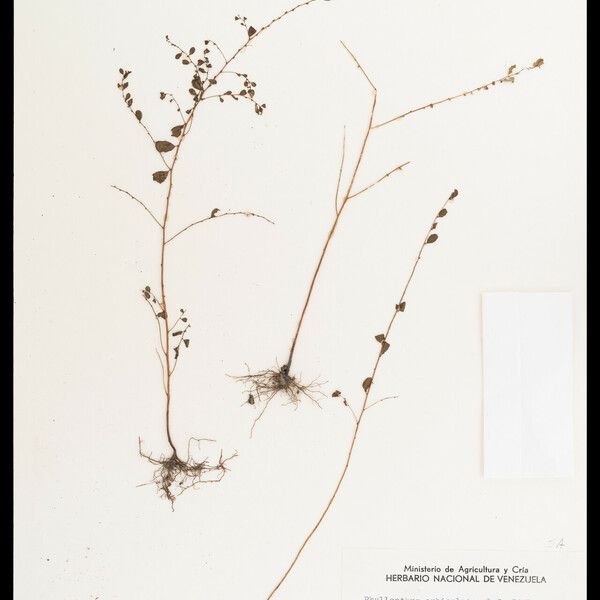
Plant Overview
Known in its native South America as a botanical gem of perfect geometry, Phyllanthus orbiculatus is often called the "Round-leaved Leaf-flower." This delicate herb looks like something out of a fairy tale, with tiny, coin-shaped leaves that seem to be pinned perfectly to its stems. While it is often found growing wild in the shade of Brazilian forests, its unique architectural silhouette has made it a favorite for lovers of "weird" and wonderful tropical foliage.
🔍 How to Identify
- 🍃 Perfectly Round Foliage: The most striking feature is the leaves—small, orbicular (circular), and flat, looking almost like green confetti.
- 📏 Geometric Alignment: The leaves are arranged in two neat, flat rows along the branchlets (phyllanthoid branching), giving the stems a feathery, fern-like appearance.
- 🌼 Hidden Blooms: True to its name "Leaf-flower," it produces microscopic, yellowish blossoms that hang discreetly on the underside of the leaves, hidden from casual view.
🏡 In Your Garden
- 💧 Moisture Lover: This plant is naturally found in humid, sandy regions and near riverbanks. It thrives in soil that stays consistently moist but never waterlogged, as its fine roots are sensitive to rot.
- 🌱 Opportunistic Grower: In tropical climates, it can be a "friendly volunteer," popping up in pots or garden edges. It isn't aggressive, but its tiny seeds travel easily with water and wind, helping it find new shady corners to inhabit.
⚠️ Safety & Toxicity
- 🐾 Pet Precaution: While not considered high-risk, members of the Phyllanthus genus contain various phytochemicals (like tannins and lignans) that can cause mild digestive upset if chewed on by curious cats or dogs.
- 🖐️ Skin Sensitivity: Some individuals may find the sap slightly irritating. It is always best to wash your hands after pruning or handling the stems directly.
✨ Fun Fact
The name Phyllanthus is derived from the Greek words phyllon (leaf) and anthos (flower). It was named this because the flowers are positioned so closely to the leaf axils that they appear to be blooming directly out of the leaves themselves!

Detailed Care Instructions
Phyllanthus Orbiculatus, also known as the Buttonweed plant, is a low-maintenance plant that can easily be grown in a variety of conditions. Here are some tips on how to grow and care for Phyllanthus Orbiculatus:
- Light: Phyllanthus Orbiculatus prefers bright, indirect light. Place your plant near a window where it can receive plenty of sunlight but avoid direct sunlight as it can scorch the leaves.
- Watering: Water your Phyllanthus Orbiculatus plant regularly, keeping the soil moist but not waterlogged. Allow the top inch of soil to dry out before watering again.
- Soil: Use a well-draining potting mix for your Phyllanthus Orbiculatus plant. A mix of peat moss and perlite or sand works well.
- Temperature and Humidity: Phyllanthus Orbiculatus prefers warm temperatures between 60-80°F (15-27°C) and moderate to high humidity levels. Mist the leaves regularly or place a humidifier near the plant to increase humidity.
- Fertilizing: Feed your Phyllanthus Orbiculatus plant with a balanced liquid fertilizer every 4-6 weeks during the growing season (spring and summer).
- Pruning: Trim back any dead or leggy growth to encourage new growth and maintain the plant's shape.
- Repotting: Repot your Phyllanthus Orbiculatus plant every 1-2 years or when it outgrows its current container.
By following these tips, you can successfully grow and care for a Phyllanthus Orbiculatus plant in your home or garden.
To water the Phyllanthus Orbiculatus plant, you should aim to keep the soil consistently moist, but not waterlogged. This plant prefers well-draining soil, so be sure to allow excess water to drain out of the pot or garden bed. Water the plant at the base, rather than from overhead, to prevent fungal diseases and promote healthy root growth. Check the soil regularly by sticking your finger an inch or two into the soil – if it feels dry, it's time to water. During periods of active growth, you may need to water more frequently, but be cautious of overwatering as this can lead to root rot. Adjust your watering schedule based on the specific needs of your Phyllanthus Orbiculatus plant and the environmental conditions in your home or garden.
Fertilize the Phyllanthus Orbiculatus plant using a balanced, water-soluble fertilizer once every two weeks during the growing season. Dilute the fertilizer in water according to the manufacturer's instructions and apply it directly to the soil around the base of the plant. Avoid over-fertilizing, as this can lead to nutrient deficiencies and other issues. Stop fertilizing in late summer to allow the plant to enter dormancy and rest before the next growing season.
Phyllanthus orbiculatus plant thrives in well-draining soil with a slightly acidic to neutral pH level. A recommended soil mix for this plant is a combination of sandy loam, peat moss, and perlite for good drainage and aeration. Avoid using heavy or compacted soils that retain too much moisture, as this can lead to root rot. Additionally, incorporating some organic matter such as compost or leaf mold can help improve soil structure and provide essential nutrients for the plant's growth. Regularly monitor the moisture levels in the soil to ensure that it remains slightly moist but not waterlogged. Overall, providing a well-balanced soil mix will help promote healthy growth and development of the Phyllanthus orbiculatus plant.
Here is a detailed explanation on how to propagate Phyllanthus Orbiculatus plant:
- Take a healthy stem cutting from a mature Phyllanthus Orbiculatus plant using a sharp, clean pair of scissors or shears. The cutting should ideally be around 4-6 inches long and include at least 2-3 leaf nodes.
- Remove the lower leaves from the stem cutting to expose the nodes where roots will form. This will encourage the development of new roots.
- Dip the cut end of the stem cutting in rooting hormone to promote root growth. Rooting hormone can be found at most garden centers and nurseries.
- Plant the stem cutting in a well-draining potting mix, such as a mixture of perlite and peat moss. Make sure the cutting is inserted about 1-2 inches deep into the soil.
- Water the cutting thoroughly until the soil is evenly moist, but not waterlogged. Place the pot in a warm, bright location with indirect sunlight.
- Keep the soil consistently moist by watering the cutting whenever the top inch of soil feels dry to the touch. Avoid overwatering, as this can cause the cutting to rot.
- In about 4-6 weeks, the cutting should start developing roots. You can gently tug on the cutting to check for resistance, which indicates that roots have formed.
- Once the cutting has established a strong root system, you can transplant it into a larger pot or directly into the garden. Make sure to acclimate the new plant to its growing conditions gradually to reduce transplant shock.
By following these steps, you can successfully propagate Phyllanthus Orbiculatus plant and grow new plants from cuttings.







