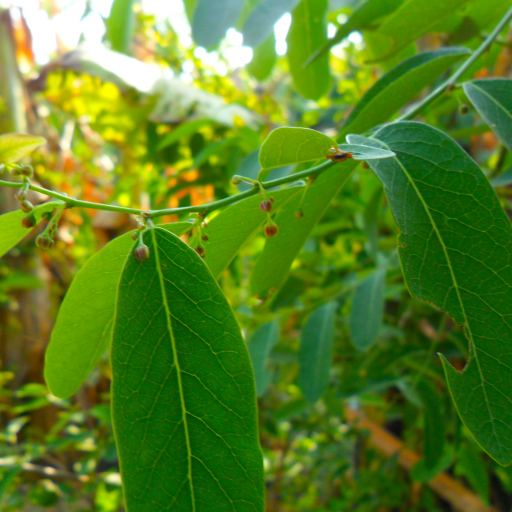
Plant Overview
Often called the Potato Bush, this scrambling shrub is a master of olfactory illusions. Found winding through riverbanks and scrublands from Africa to Southeast Asia, it is most famous for the savory, comforting aroma of baked potatoes that wafts from its branches during the humid evening hours. It is a hardy survivor that often forms dense, protective thickets in the wild.
🔍 How to Identify
- 🍃 Net-Veined Leaves: The small, oval leaves feature a very distinct "net-like" pattern of veins on their undersides, which is exactly what the Latin name reticulatus refers to.
- 🌿 Zig-Zag Stems: The branches tend to grow in a slightly arching, zig-zag pattern, often looking like a chaotic, leafy screen or a "scrambling" vine-like shrub.
- 🌸 Discrete Blooms: Look closely under the leaves to find tiny, greenish-red flowers hanging on thin stalks; they are small but are the source of the plant's famous scent.
🏡 In Your Garden
- 💧 Water & Resilience: While it naturally thrives near riverbanks and loves moist soil, this plant is surprisingly tough. Once its root system is established, it can survive periods of drought, making it a "set and forget" choice for larger landscapes.
- 🦋 A Biodiversity Hub: This is a high-value plant for nature lovers. It serves as a vital nursery for several butterfly species and produces small, dark berries that are a favorite snack for fruit-eating birds.
⚠️ Safety & Toxicity
- 🤢 Mildly Toxic: While various parts of the plant are used in traditional herbal medicine, the raw leaves and berries should not be ingested. They can cause nausea and digestive upset in humans.
- 🐾 Keep Pets Away: Because the dark berries can look like edible currants or blueberries, it is best to plant this out of reach of curious dogs or small children who might be tempted by a "wild snack."
✨ Fun Fact
- 🥔 The Ghost Kitchen: The "baked potato" smell is so potent and realistic that hikers in the African bush often wander off-trail looking for a nearby campfire or kitchen, only to realize the "cooking" is actually coming from this humble green bush!

Detailed Care Instructions
To grow Phyllanthus reticulatus, also known as the netleaf gooseberry plant, you can follow these steps:
- Climate: Determine if the plant is suitable for your climate. Phyllanthus reticulatus prefers warm, tropical regions with high humidity. It thrives in USDA hardiness zones 10-12.
- Location: Choose a location with partial shade or dappled sunlight. Avoid areas with harsh, direct sunlight, as it can scorch the leaves.
- Soil: Phyllanthus reticulatus prefers well-draining soil. It can tolerate a variety of soil types, including sandy or loamy soil. Ensure the soil is fertile and rich in organic matter.
- Planting: If starting from seeds, sow them directly into the soil during the warm season. Press the seeds gently into the soil, but do not bury them deeply. Water the area lightly to keep the soil moist.
- Watering: Phyllanthus reticulatus prefers consistent moisture but does not tolerate waterlogging. Water the plant regularly, keeping the soil evenly moist but not waterlogged. During dry periods, increase the frequency of watering.
- Fertilizer: Apply a balanced slow-release fertilizer during the growing season. Follow the instructions on the fertilizer package for the appropriate application rate. Alternatively, use organic fertilizers like compost or well-rotted manure.
- Pruning: Prune the plant to maintain a desired shape and size. Remove any dead, damaged, or overcrowded branches. Regular pruning also encourages new growth and helps maintain the plant's health.
- Mulching: Apply a layer of organic mulch, such as wood chips or dried leaves, around the base of the plant. Mulching helps retain soil moisture, suppresses weed growth, and keeps the roots cool.
- Pests and diseases: Monitor the plant for any signs of pests or diseases, such as aphids, mealybugs, or leaf spot. Treat any issues promptly with organic insecticides or fungicides, if necessary.
- Propagation: Phyllanthus reticulatus can be propagated through stem cuttings. Take 4-6 inch long cuttings from a healthy plant and remove the lower leaves. Dip the cut end in rooting hormone and plant it in a pot with moist soil. Keep the cutting in a warm, humid environment until roots develop.
Remember to research specific growing details for your region and consult local gardening experts or nurseries for additional advice.

Place in a bright room that is sun drenched almost all day. Or directly in a south-facing window.

Phyllanthus Reticulatus plant requires adequate watering to ensure proper growth and development. The watering frequency may vary depending on several factors such as the plant's size, pot size, humidity levels, and soil type. To water the plant, fill a watering can with fresh water and gently pour it over the soil until the soil is fully saturated. Avoid overwatering or underwatering the plant as it can cause damage to the roots and lead to plant death. It is recommended to water the plant when the top inch of soil is dry to the touch. It is important to note that the plant prefers well-draining soil and can benefit from a layer of mulch to retain moisture in the soil. Additionally, it is advisable to use room temperature water and avoid using chlorinated water as it can harm the plant.
To fertilize this plant, use a balanced fertilizer with equal parts nitrogen, phosphorous, and potassium. Apply the fertilizer once a month during the growing season, following the instructions on the label. Be careful not to over-fertilize, as this can lead to burning of the roots and foliage. Water the plant thoroughly after fertilizing to prevent salt buildup.
Phyllanthus Reticulatus plant prefers a well-draining soil that is slightly acidic with a pH range between 5.5 to 6.5. A nutrient-rich soil with a good amount of organic matter is also beneficial. It should be kept moist but not waterlogged as the plant does not tolerate waterlogging. A mix of potting soil, perlite, and sand can be used to improve drainage. Additionally, the soil should be aerated regularly to avoid compaction, which can hinder root growth and development.
To propagate this plant, start by taking a stem cutting from a healthy mother plant. The cutting should be approximately 4-6 inches long and have several sets of leaves on it. Remove the lower leaves from the cutting, leaving only a few sets of leaves on the top.
Next, dip the cut end of the stem in rooting hormone powder. This will help stimulate root growth. Then, plant the cutting in a well-draining soil mix, making sure to keep the soil moist until roots have formed.
Place the cutting in a warm, bright location, but not in direct sunlight. Mist the cutting regularly with water to keep it from drying out. It should take approximately 3-4 weeks for roots to form.
Once the cutting has developed roots, you can transplant it into a larger container or directly into the ground if the weather is warm enough. Water the plant regularly and provide it with plenty of indirect sunlight.








