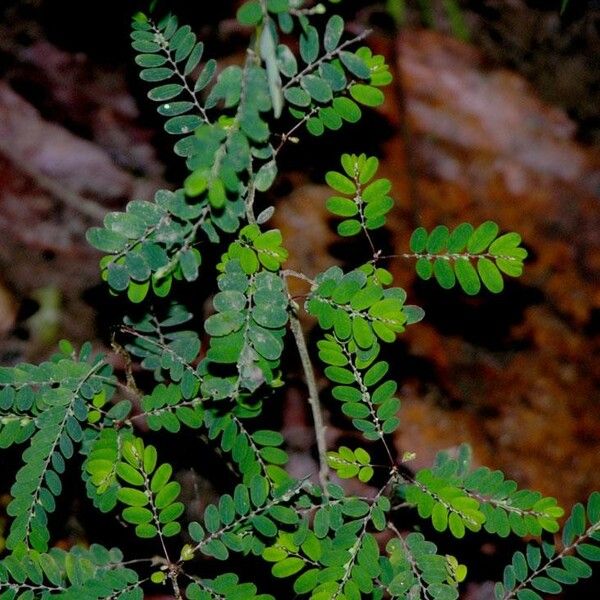
Plant Overview
Commonly known as the Stipule Leafflower, this delicate herb often looks like a miniature fern or a collection of tiny green feathers emerging from the soil. Native to the tropical regions of the Americas, it belongs to a genus famous for its medicinal reputation, frequently associated with the "Stonebreaker" family (Phyllanthus niruri). While it might look like a common garden weed to the untrained eye, it carries a deep history of folk healing and possesses a fascinating, mathematical symmetry in its growth.
🔍 How to Identify
- 🌿 Mimicry Foliage: The plant appears to have compound leaves, but these are actually "phyllanthoid" branches—horizontal stems lined with dozens of tiny, oval leaflets that mimic a single leaf.
- 🌸 Hidden Blooms: True to its name "Leafflower," the tiny, greenish-white blossoms are tucked discreetly underneath the leaves, hanging like miniature pearls.
- 📐 Prominent Stipules: As the name stipulatus suggests, look for the small, triangular appendages (stipules) at the base of the leaf stalks; they are more distinct and pointed in this species than its cousins.
🏡 In Your Garden
- 💧 The Wetland Preference: Unlike many of its drought-tolerant relatives, this plant is a moisture seeker. It thrives in damp, humid environments and is often found naturally near riverbanks or in soggy, shaded garden corners.
- 🌱 Soil & Stability: It prefers sandy or loamy soils that remain consistently moist. Because it has a relatively delicate root system, it doesn't handle being moved frequently—once it finds a "happy" damp spot, it’s best to let it stay there.
⚠️ Safety & Toxicity
- ✅ General Safety: Phyllanthus stipulatus is generally considered non-toxic to humans and common household pets like cats and dogs.
- 💊 Medicinal Caution: While it is used in traditional medicine for kidney and liver support, it contains potent phytochemicals. It should never be ingested as a home remedy without professional guidance, as it can interact with blood pressure or diabetes medications.
✨ Fun Fact
Plants in the Phyllanthus genus exhibit a behavior called "Nyctinasty"—their leaflets fold up tightly together at night as if they are going to sleep, only to reopen with the first light of dawn to begin photosynthesis!

Detailed Care Instructions








