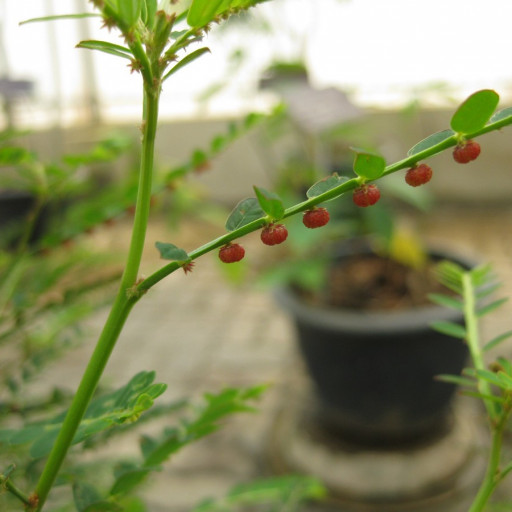
Plant Overview
Often called the Chamberbitter or Gripeweed, this plant is a master of disguise that looks remarkably like a miniature Mimosa tree. Originally from Tropical Asia, it has traveled the world, earning a reputation as one of the most persistent and clever "hitchhikers" in the gardening world. While many consider it a pesky weed, it has a long history in traditional medicine, where it is nicknamed "Shatterstone" for its supposed ability to help with kidney stones.
🔍 How to Identify
- 🍃 The Leaves: Small, oblong, and arranged in two neat rows along the stem. They are sensitive to light and will often fold upward toward each other during the night or in heavy shade.
- 🍒 Hidden Fruit: The most distinct feature is the row of tiny, green, wart-like seed capsules (chambers) found tucked directly onto the underside of the leaf branches.
- 🌱 Growth Habit: It typically grows upright, reaching about 1 to 2 feet in height, with a stem that often takes on a reddish or purplish hue as the plant matures.
🏡 In Your Garden
- 🥊 The Ultimate Competitor: Chamberbitter is a summer annual that loves warm, moist soil and mulch. It grows incredibly fast, often maturing and dropping seeds before a gardener even notices it hiding among other plants.
- 🚜 Resilient Seeds: A single plant can produce thousands of seeds with high germination rates. If you find one in your garden, it is best to pull it before the seed pods turn brown, as they "shatter" and launch seeds several feet away.
⚠️ Safety & Toxicity
- 🟢 Status: Generally non-toxic to humans and pets, but not considered edible.
- 🩺 Details: While it is used in various folk medicines globally, it should never be ingested without professional guidance. For most gardeners, the primary concern is its invasive nature rather than any physical danger to kids or animals.
✨ Fun Fact
The name Phyllanthus literally means "leaf-flower" in Greek. This is because the tiny flowers and fruits are attached so closely to the leaf-like branches that they look as if they are growing directly out of the foliage itself!

Detailed Care Instructions
| Humidity | Normal |
| Lighting | Part Sun |
| Difficulty | Easy |
| Hibernation | Cold Period |
To grow Phyllanthus Urinaria, also known as Chamberbitter or Gripeweed, follow these steps:
- Climate: Ensure that you live in a suitable climate for growing Phyllanthus Urinaria. It thrives in tropical or subtropical regions.
- Propagation: There are two common methods of propagation: by seeds or stem cuttings.
- By Seeds: Collect mature seeds from an existing plant. Soak the seeds overnight in water to soften the seed coat. Sow the seeds in well-draining soil, lightly covering them with a thin layer of soil. Maintain a warm temperature of around 70°F (21°C) and ensure the soil remains consistently moist. Germination usually occurs within two weeks.
- By Stem Cuttings: Take stem cuttings from a healthy plant. Choose a stem that is at least 4-6 inches long and has several sets of leaves. Remove the lower sets of leaves, leaving only the top few sets. Dip the cut end in rooting hormone powder and plant it in a well-draining potting mix. Keep the cutting in a warm, humid environment with indirect light. Mist the cutting regularly and water when the soil feels dry. Roots should develop within a few weeks.
- By Seeds: Collect mature seeds from an existing plant. Soak the seeds overnight in water to soften the seed coat. Sow the seeds in well-draining soil, lightly covering them with a thin layer of soil. Maintain a warm temperature of around 70°F (21°C) and ensure the soil remains consistently moist. Germination usually occurs within two weeks.
- Location: Choose a sunny or partially shaded spot in your garden, preferably with loamy or sandy soil. The area should have excellent drainage, as Phyllanthus Urinaria does not tolerate waterlogged soil.
- Planting: If growing from seeds, transplant the seedlings once they are a few inches tall. If growing from stem cuttings, wait until the cuttings have developed a healthy root system. Dig a hole that is slightly larger than the root ball and gently place the plant in the hole. Fill the hole with soil and press down firmly around the plant to eliminate any air pockets.
- Watering: Keep the soil consistently moist, especially during hot, dry periods. However, avoid overwatering as this can lead to root rot. Consider using a drip irrigation system to ensure a controlled and even water supply.
- Fertilizer: Phyllanthus Urinaria is not a heavy feeder but benefits from occasional feeding. Use a balanced, organic fertilizer once every couple of months during the growing season. Follow the product instructions for application rates.
- Maintenance: Regularly remove any weeds or competing plants that may grow near the Phyllanthus Urinaria. Trim back any unruly or overgrown branches to encourage a bushier growth habit. Watch out for pests like aphids or mealybugs and address them promptly to prevent damage.
By following these steps, you should be able to successfully grow Phyllanthus Urinaria.

Place in a window with dappled sun or a spot in the middle of a room. Or directly in a window facing west or east.

The plant in question prefers regular watering, but you should avoid over-watering. When watering, use room-temperature water and ensure that the soil has good drainage. It is best to water the plant when the soil has dried out slightly. You may also want to mist the leaves occasionally to increase humidity levels.
To fertilize this plant, you will need a balanced fertilizer with equal amounts of nitrogen, phosphorous, and potassium. Apply the fertilizer during the growing season, which is usually from spring to early fall. Mix the fertilizer with water according to the instructions given on the package. Once mixed, apply it to the soil around the plant, being careful not to get any on the leaves or stem. Water the plant thoroughly afterwards. Avoid over-fertilizing, as this can damage the plant.
Phyllanthus Urinaria thrives in well-draining soil that has a neutral to slightly acidic pH level. It requires soil that is rich in organic matter and nutrients for optimal growth. A recommended type of soil for this plant is a loamy soil that contains a balanced mixture of sand, silt, and clay. The soil must be able to retain moisture while allowing excess water to drain away. It should be porous to allow for sufficient aeration and prevent waterlogging. Adding amendments like compost, peat moss, and perlite can improve soil texture and drainage. It is essential to avoid using heavy clay or sandy soils, which can negatively affect the growth and health of this plant. Regular soil testing can help determine the condition of the soil and the need for amending the soil to provide optimum growing conditions.
To propagate this plant, you will need to collect the seeds from a mature plant in the fall when the seed pods dry out and turn brown. Sow the seeds in well-draining soil in a small pot and cover lightly with soil. Water the seeds regularly and keep the soil moist but not waterlogged.
Alternatively, you may propagate the plant through stem cuttings. Take a cutting that is at least 4 inches long and remove any leaves from the bottom half of the stem. Dip the cut end in rooting hormone and plant it in moist soil. Cover the pot with a plastic bag or dome to keep the humidity high and place it in a bright, indirect location. Keep the soil moist and within a few weeks, roots should form and new growth should appear.
It's also possible to propagate this plant through division, but the plant must be mature enough to have developed multiple stems or clumps. Gently dig up the plant and separate the clumps, making sure each section has roots attached. Plant each division in a new pot with fresh soil and water thoroughly.
Common pests of the chamber bitter include Scale insect, mealybugs, spider mites. Make a habit of checking your chamber bitter frequently for pests so that any infestations can be caught and managed early.








