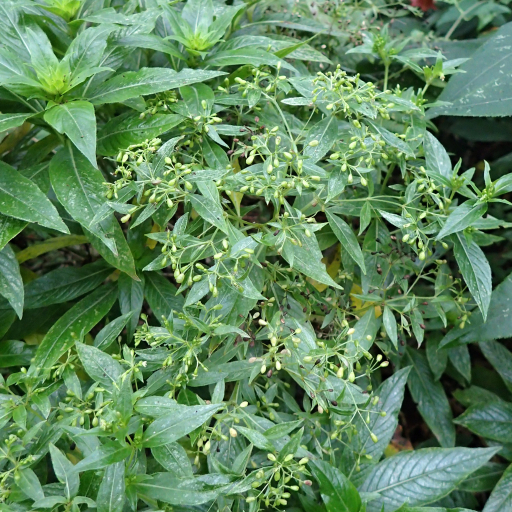
Plant Overview
Commonly known simply as the Nobla, this elegant evergreen shrub hails from the mist-covered laurel forests of the Canary Islands and Madeira. While it may look like a humble roadside bush at first glance, its name "nobla" hints at its stately, upright posture and its vital role in the unique Macaronesian ecosystem. It is a member of the Rubiaceae family, making it a distant relative of both coffee and gardenias.
🔍 How to Identify
- 🍃 Slender Foliage: The leaves are narrow, lance-shaped, and pointed, often resembling the leaves of a willow tree. They have a smooth, slightly glossy texture and a deep green hue.
- 🌼 Loose Flower Panicles: It produces large, airy clusters of tiny, star-shaped flowers. These blooms are typically a pale yellowish-green or creamy white and appear at the ends of the branches.
- 🪵 Woody Base: While the top growth feels soft and herbaceous, the base of the plant develops a sturdy, reddish-brown woody stem as it matures.
🏡 In Your Garden
- 🌫️ The Mist Lover: In its native habitat, the Nobla thrives on the moisture provided by sea mists. If you grow it at home, it appreciates high humidity and sheltered spots that mimic a forest understory.
- 🌱 Drainage is Key: Because it often grows in rocky, volcanic soil in the wild, it is highly sensitive to "wet feet." Ensure your soil is extremely well-draining; it hates sitting in stagnant water which can lead to rapid root decline.
⚠️ Safety & Toxicity
- 🟢 General Status: Phyllis nobla is not considered a high-risk toxic plant for humans. It does not possess stinging hairs or known caustic saps.
- 🐾 Pet Caution: While there are no specific reports of severe poisoning, as with many wild shrubs in the Rubiaceae family, it is best to prevent pets from chewing on the foliage to avoid potential stomach upset or digestive irritation.
✨ Fun Fact
Despite its delicate appearance, the Nobla is a survivor of "Island Gigantism." In the isolated environments of the Canary Islands, many plants that are small herbs in other parts of the world—like the ancestors of Phyllis—evolved into much larger, woody shrubs to fill the ecological niches usually occupied by trees!

Detailed Care Instructions
To grow a Phyllis Nobla plant, also known as the Purple Heart or Tradescantia Pallida, you can follow these steps:
- Obtain a healthy cutting or young plant from a nursery, friend, or online source.
- Choose a suitable pot with drainage holes to plant it in.
- Fill the pot with a well-draining soil mixture, such as a blend of potting soil, perlite, and sand.
- Place the cutting or young plant in the soil, making sure the roots are covered and the plant is upright.
- Water the plant thoroughly, but avoid overwatering as it can lead to root rot. Allow the top inch of soil to dry out before watering again.
- Position the plant in a place that receives bright, indirect sunlight. Phyllis Nobla prefers about 4 to 6 hours of sunlight per day.
- Maintain a temperature range of around 60-85°F (15-29°C) for optimal growth.
- Fertilize the plant once a month during the growing season (spring and summer) with a balanced liquid fertilizer or a slow-release granular fertilizer. Follow the instructions on the fertilizer package.
- Prune the plant regularly to encourage bushier growth and maintain its shape. Pinch off the tips or trim back leggy stems to promote fuller growth.
- Keep an eye out for pests such as aphids or spider mites. If necessary, treat them with insecticidal soap or neem oil according to the instructions on the product.
- If you live in a colder climate, you can bring the plant indoors during winter or grow it as a houseplant year-round. Place it near a window with bright, indirect sunlight.
- Enjoy the vibrant purple foliage of your Phyllis Nobla plant and watch it grow and spread.

Place in a bright room that is sun drenched almost all day. Or directly in a south-facing window.

To water this plant properly, you should wait until the top layer of soil feels dry to the touch before watering. When you do water, give the plant a thorough soaking, ensuring the water reaches all the way to the roots. It's important not to let the plant sit in standing water, so make sure to drain any excess water that accumulates in the saucer or pot. Additionally, avoid getting water on the foliage, as this can lead to disease. Instead, water directly onto the soil around the plant base. Finally, be mindful of the temperature and humidity in the plant's environment, as these factors can impact its water needs.
For optimal growth and health of the plant, apply a balanced fertilizer with equal parts nitrogen, phosphorus, and potassium. Use a water-soluble fertilizer every two weeks during the growing season. Use half the recommended amount of fertilizer for potted plants. Apply fertilizer to moist soil, and avoid applying it to dry soil as it may lead to root burn.
The ideal soil for this particular plant should have a balanced pH level, with a range between 6.0 and 7.0. It should also be well-draining and contain a good amount of organic matter, such as compost or peat moss. The soil should be kept consistently moist, but not waterlogged, as this can lead to root rot. Additionally, adding a slow-release fertilizer to the soil can help to provide necessary nutrients for the plant's growth and development.
Propagation of this plant can be done through stem cuttings. Select a healthy stem and cut it just below a node. Remove any leaves from the bottom half of the stem. Dip the end of the stem in rooting hormone and plant it in well-draining soil. Water thoroughly and keep the soil moist until the cutting takes root. Provide the cutting with bright, indirect light and temperature between 65-75°F. With good care, the plant will start to grow and produce new leaves.








