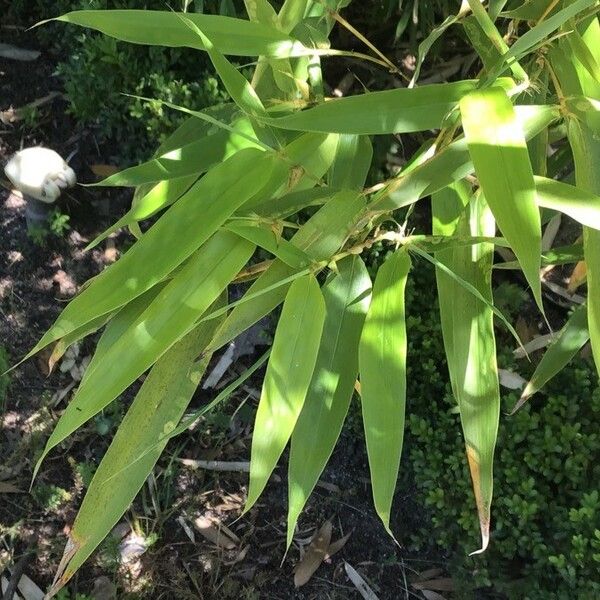
Plant Overview
Known as the Madake or Giant Timber Bamboo, Phyllostachys reticulata is a true titan of the grass family. Revered in Japan for centuries, this bamboo is the backbone of traditional craftsmanship, used to create everything from delicate tea whisks to sturdy construction scaffolding. Its name "reticulata" refers to the beautiful, netted patterns found on its fallen culm sheaths.
🔍 How to Identify
- 🎋 The Culms: These giant stalks emerge as a deep, lustrous green and can reach staggering heights of 50 to 70 feet. They have a characteristic white waxy ring just below each node when young.
- 🍃 The Foliage: The leaves are relatively large, lance-shaped, and hang in graceful, weeping plumes that create a soft "rustling" sound even in a light breeze.
- 🍂 Culm Sheaths: One of its most identifying features is the sheath (the protective "skin" on new shoots), which is a creamy tan color decorated with dark, purplish-brown spots and a distinct netted texture.
🏡 In Your Garden
- 🏃 A Fast Runner: This is a "running" bamboo, meaning it spreads via underground rhizomes. Without a sturdy root barrier or "trenching," it can quickly cross property lines and colonize your neighbor's yard.
- 🪵 Strength and Flexibility: If you have the space, it serves as an incredible living screen. Its wood is denser and more crack-resistant than almost any other bamboo, making it the "gold standard" for garden structures and DIY projects.
- 💧 Thirsty but Picky: While it loves consistent moisture to fuel its rapid growth, it hates "wet feet." Ensure your soil is rich in organic matter and drains well to prevent root rot.
⚠️ Safety & Toxicity
- ✅ Non-Toxic: Phyllostachys reticulata is considered non-toxic to dogs, cats, and horses, making it a safe choice for pet-friendly landscapes.
- 🧤 Physical Hazards: The main "danger" is the sheer speed of growth during the spring. New shoots can push through asphalt or lift heavy pavers if left unchecked. Wear gloves when pruning, as the wood can be incredibly sharp once cut.
✨ Fun Fact
Thomas Edison used a carbonized filament made from this specific bamboo (Madake) for one of his first successful long-lasting incandescent light bulbs. It reportedly burned for over 1,200 hours!

Detailed Care Instructions
To grow Phyllostachys Reticulata, also known as the Chinese grove bamboo, you can follow these steps:
- Choose a suitable location: This bamboo species prefers full sun to partial shade and well-draining soil. Make sure the area has enough space for the bamboo to spread as it can grow quite tall and wide.
- Prepare the soil: Phyllostachys Reticulata thrives in slightly acidic to slightly alkaline soil with good fertility. Before planting, amend the soil with compost or well-rotted organic matter to improve its quality.
- Planting the bamboo: Dig a hole twice as wide and deep as the root ball of the plant. Place the plant in the hole, ensuring that the top of the root ball is level with the ground. Backfill the hole with soil, gently firming it around the roots.
- Watering: Bamboo plants need regular watering, especially during the establishment phase. Water deeply and thoroughly to help the roots develop. However, once established, bamboo is generally drought-tolerant.
- Mulching: Apply a layer of organic mulch around the base of the plant to help retain moisture, suppress weed growth, and regulate soil temperature.
- Fertilization: Phyllostachys Reticulata benefits from annual fertilization in early spring or late winter. Use a balanced slow-release fertilizer or a bamboo-specific fertilizer according to the package instructions.
- Controlling spread: Chinese grove bamboo is known to be a spreading variety, so it's recommended to install a bamboo barrier during planting to restrict its growth. This will prevent the plant from spreading into unwanted areas.
- Pruning: As the bamboo grows, it may require occasional pruning to shape it or remove dead or damaged canes. Pruning is best done in late winter or early spring before new growth begins.
Remember that bamboo can be quite invasive, so keep an eye on its growth and monitor its spread to prevent it from taking over your garden or encroaching on neighboring properties.

Place in a window with dappled sun or a spot in the middle of a room. Or directly in a window facing west or east.

Phyllostachys Reticulata is a bamboo plant that requires regular watering to stay healthy and maintain its growth. The plant should be watered deeply and thoroughly, and the soil should be kept consistently moist but not waterlogged.
It’s important to avoid letting the soil dry out completely, as this can cause stress to the plant and ultimately lead to its death. However, overwatering can also be harmful, as it can cause root rot and other issues.
To water Phyllostachys Reticulata, you should aim to keep the soil evenly moist at all times. This may require watering the plant every few days during dry periods, or more frequently during hot summer months.
When watering, be sure to saturate the soil deeply. This will encourage the plant’s roots to grow deep and strong, helping it to resist drought and other stressors. It’s also a good idea to mulch around the base of the plant to help retain moisture in the soil.
Overall, watering Phyllostachys Reticulata is a relatively straightforward process, but it’s important to be mindful of the plant’s specific needs in order to ensure its health and longevity.
To fertilize Phyllostachys Reticulata, follow the instructions below:
- Choose a balanced, slow-release fertilizer specifically formulated for bamboo or other grass-like plants. Read the manufacturer's instructions for the recommended quantity to use.
- Apply the fertilizer during the plant's active growing season, which is typically spring or early summer. Avoid fertilizing during winter or late summer when growth is minimal.
- Prior to fertilizing, water the plant thoroughly to ensure the soil is moist but not waterlogged. This helps prevent any potential root damage from the fertilizer.
- Sprinkle the required amount of fertilizer around the base of the plant, ensuring it is evenly distributed within the root zone. Avoid direct contact of the fertilizer with the stems or leaves of the plant.
- Gently work the fertilizer into the top few inches of soil using a hand rake or other suitable tool. Be careful not to disturb the plant's roots.
- Water the area again generously after fertilizing to help dissolve and distribute the nutrients into the soil.
- Repeat the fertilization process as necessary according to the fertilizer manufacturer's instructions. Generally, once or twice a year is sufficient for Phyllostachys Reticulata, depending on soil quality and plant growth.
Remember, it's essential to follow the specific recommendations mentioned on the fertilizer package as different brands might have different application rates and schedules.
Phyllostachys Reticulata plant prefers well-draining soil that is rich in organic matter. The soil should have a slightly acidic to neutral pH level, between 5.5 and 7.5. It is recommended to use a mix consisting of a third of compost, a third of peat moss, and a third of sand or perlite to ensure proper drainage. This type of soil mixture provides adequate moisture retention while also allowing excess water to drain away. It is important to avoid using heavy soil, which can pollute the soil and drown the roots. Additionally, the soil should be kept moist but not watered excessively to prevent root rot. A good rule of thumb is to allow the top inch of soil to dry out before watering again.
Phyllostachys reticulata, also known as the "Clumping Bamboo" or "Sunburst Bamboo," is a beautiful and versatile plant that can be propagated through various methods. Here's a detailed description of how to propagate Phyllostachys reticulata:
- Collecting Rhizome Cuttings: One of the primary methods to propagate Phyllostachys reticulata is by collecting rhizome cuttings from an established plant. Rhizomes are underground stems that produce new shoots and roots. Choose a healthy and mature clump of bamboo for rhizome collection.
- Preparing the Cuttings: Using a sharpened and sterilized garden knife or secateurs, cut a portion of the rhizome from the parent plant. Aim for a section that is around 12-18 inches long with multiple growing points or "eyes," which will develop into new shoots. Ensure each cutting has at least two or three nodes.
- Treating the Cuttings: To prevent fungal or bacterial infections, it is advisable to dip the cut ends of the rhizome cuttings into a rooting hormone powder, which stimulates root growth. This step is optional but can enhance the success rate of propagation.
- Preparing the Planting Hole: Select a suitable planting location that offers well-draining soil with good moisture retention. Dig a hole large enough to accommodate the rhizome cutting, ensuring the top bud or eye is positioned slightly above the soil surface.
- Planting the Cuttings: Place the rhizome cutting horizontally in the prepared hole and cover it gently with soil, leaving the top bud exposed. Ensure that the soil is firmly packed around the cutting to provide stability and contact between the nodes and the soil.
- Watering and Maintenance: Water the newly planted cutting thoroughly, allowing the soil to become evenly moist. Maintain consistent moisture levels, avoiding waterlogging or excessive drying out. Regularly monitor the developing cutting for signs of growth and provide appropriate care based on the specific needs of Phyllostachys reticulata.
- Shoot Development: With proper care and favorable growing conditions, including adequate sunlight and moisture, the rhizome cutting should sprout new shoots within a few weeks or months. Initially, these shoots may be small, but they will gradually grow into mature bamboo culms over time.
- Transplanting: Once the propagated bamboo has developed a strong root system and several growing shoots, it can be carefully transplanted into its desired location. Dig a hole in the new planting site and make sure to accommodate the entire root ball and rhizome system. Plant it at the same depth as it was previously growing.
Remember that Phyllostachys reticulata is an aggressive clumping bamboo, so it is essential to choose an appropriate location for planting, considering its potential to spread. Additionally, check your local regulations and guidelines regarding bamboo planting to prevent any potential issues related to invasive behavior.
Common pests of the bamboo include Thrips. Make a habit of checking your bamboo frequently for pests so that any infestations can be caught and managed early.








