Plant Overview
Meet the "Strawberry Tomato," a whimsical garden guest that wraps its fruit in delicate, papery lanterns. While it looks like a miniature Tomatillo, Physalis grisea offers a surprising flavor profile—a complex blend of pineapple, strawberry, and vanilla. It is a favorite for "foraging" right in your backyard because the plant tells you exactly when the harvest is perfect.
🔍 How to Identify
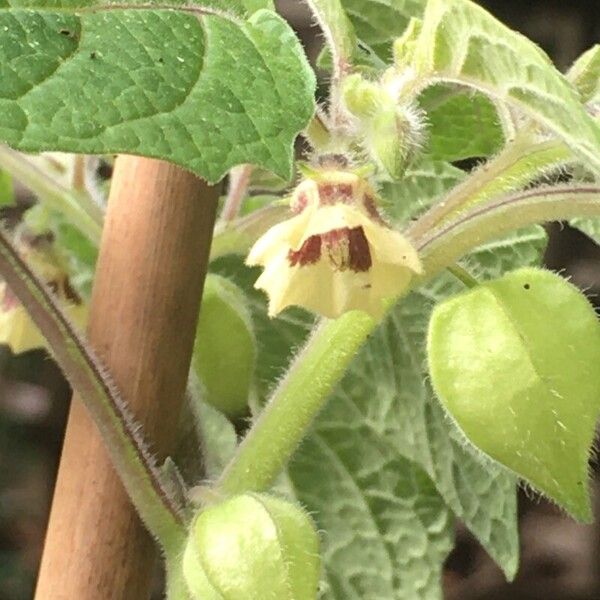
- 🌿 Velvety Foliage: Unlike its smooth-leaved cousins, the stems and leaves of this species are covered in fine, soft hairs, giving the plant a "downy" or grayish-green appearance.
- 🔔 Lampshade Husks: The fruit grows inside an inflated, five-sided calyx that transforms from a vibrant green to a tan, parchment-like lantern as the fruit matures.
- 🌼 Dark-Eyed Blooms: Look for small, nodding yellow flowers that feature five distinct dark purple or brown spots at their throat.
🏡 In Your Garden
- 🧺 The Patient Harvest: You don't actually pick these fruits! True to their "Ground Cherry" name, the lanterns drop to the soil when ripe. The husk acts as a biodegradable protective wrapper while the berry finishes sweetening on the ground.
- 🌱 The Joy of "Volunteers": This plant is a prolific self-seeder. If you leave a few fruits on the ground over winter, you’ll likely find "volunteer" seedlings popping up in the same spot next spring without any extra effort.
- ☀️ Sprawling Habit: It grows in a low, wide bush. Because it stays close to the earth, it appreciates a layer of clean straw mulch to keep the fallen "lanterns" clean and dry until you collect them.
⚠️ Safety & Toxicity
- 🟢 Unripe Warning: As a member of the Nightshade family, the green, unripe fruits and all green parts of the plant (leaves/stems) contain solanine. These are toxic to humans, cats, and dogs if ingested.
- 🟡 Safe When Golden: Only the fully ripe, golden-yellow berries are edible. Ensure the husk has turned brown and papery and the fruit has naturally fallen from the stem before eating.
✨ Fun Fact
In the 18th and 19th centuries, these were a staple for American pioneers. They were frequently used to make "mock apricot" preserves and deep-dish "Strawberry Tomato" pies when traditional orchard fruits were unavailable on the frontier.

Detailed Care Instructions

Place in a bright room that is sun drenched almost all day. Or directly in a south-facing window.

Some plants require more regular watering than others, which should be done every few days. It's critical to maintain the soil moist all of the time. The water requirements of the same plant placed in pots with varying sizes will differ. Because the water in the smaller pot evaporates faster than the water in the larger pot, it will require more watering. Regardless of pot size, the surface should constantly be maintained moist.







