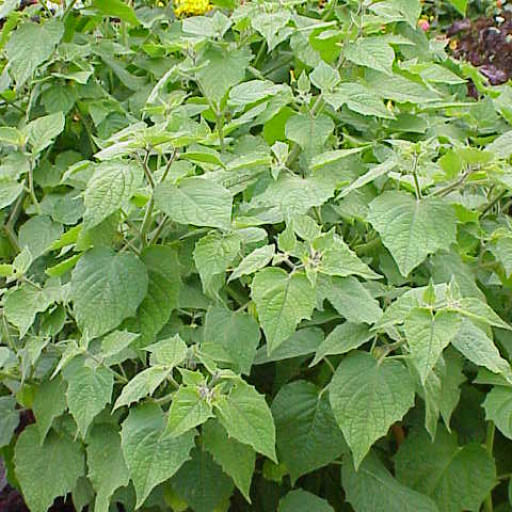
Plant Overview
Known as the "Goldenberry" or "Cape Gooseberry," this Andean native is a garden treasure hidden inside a delicate, biodegradable lantern. While its name suggests a berry, it is actually a close relative of the tomato and husk cherry, producing sweet-tart orange jewels wrapped in papery husks. In Victorian times, it was a prized greenhouse curiosity, often served as a "sophisticated" treat at high-society dinner parties.
🔍 How to Identify
- 🪴 Velvety Foliage: The leaves are heart-shaped, soft to the touch, and covered in fine, downy hairs that give the plant a slightly fuzzy, grayish-green appearance.
- 🏮 Papery Lanterns: Its most iconic feature is the inflated, straw-colored husk (the calyx) that completely encloses the fruit like a protective Chinese lantern.
- 🌼 Spotted Blooms: Before the fruit develops, the plant produces nodding, bell-shaped yellow flowers with five distinct dark purple or brown "thumbprints" at the center.
🏡 In Your Garden
- ☀️ Sun Seeker: To get the sweetest harvest, place this plant in the brightest spot available; while it grows in partial shade, the fruit won't develop its complex sugars without ample UV light.
- 🌱 Tough Love Soil: Surprisingly, this plant performs best in "poor" soil. If you give it too much fertilizer or nitrogen, it will grow into a massive green bush but forget to produce any lanterns.
- 🧤 Growth Habit: It has a sprawling, somewhat untidy habit. Providing a small cage or trellis helps keep the fruit off the ground and prevents the stems from snapping under their own weight.
⚠️ Safety & Toxicity
- 🐾 Pet & Child Alert: Like many members of the Nightshade family, the leaves, stems, and unripe (green) berries contain solanine, which is toxic to humans, cats, and dogs if ingested.
- ✅ The Golden Rule: Only eat the fruit when it is fully ripe. You’ll know it’s ready when the papery husk turns dry and brittle like parchment, and the berry inside is a deep, glowing orange.
✨ Fun Fact
Despite its name, the "Cape" in Cape Gooseberry doesn't refer to its origin. It was named after the Cape of Good Hope in South Africa, where it was first commercially cultivated in the early 19th century before spreading across the globe!

Detailed Care Instructions
| Color | Yellow |
| Soil Ph | Acidic |
| Humidity | Normal |
| Lighting | Part Sun |
| Soil Type | Loamy, Sandy, Well-Drained |
| Bloom Time | Summer |
| Difficulty | Medium |
| Plant Type | Annual |
| Hibernation | Cold Period |
| Mature Size | 3-5 Ft. |
| Native Area | Central America |
| Temperature | 15°C - 25°C |
| Sun Exposure | Full |
| Hardiness Zones | 4–8 |
To grow Physalis Peruviana (also known as Cape gooseberry or ground cherry), follow these steps:
- Choose the right location: Physalis Peruviana grows best in full sun, so select a spot that receives at least 6-8 hours of direct sunlight per day.
- Prepare the soil: The plant prefers well-draining soil that is slightly acidic with a pH level of 6-7. If needed, add organic matter like compost to improve soil fertility and drainage.
- Sow seeds or transplant seedlings: Physalis Peruviana can be started from seeds or transplants. If starting from seeds, sow them indoors 6-8 weeks before the last frost date or directly in the garden after the danger of frost has passed. Transplants can be planted outdoors after the danger of frost has passed as well.
- Planting: Dig small holes or furrows in the prepared soil. Space the holes or furrows about 2-3 feet apart to allow ample room for the plant to spread. If using seedlings, plant them at the same depth as they were growing in their previous containers.
- Watering: Water the plants regularly to keep the soil moist but not waterlogged. Avoid overwatering as it can lead to root rot. Inconsistent watering may cause the fruits to crack, so ensure the soil stays consistently moist.
- Mulching: Apply a layer of organic mulch, such as straw or wood chips, around the plants. The mulch helps retain moisture, suppress weeds, and keeps the soil temperature stable.
- Pruning and support: Physalis Peruviana plants tend to sprawl, so consider providing support with stakes or trellises. Prune any weak or damaged branches to maintain plant health and shape.
- Fertilizing: Physalis Peruviana plants benefit from regular fertilization. Apply a balanced fertilizer (10-10-10 or 14-14-14) once every 4-6 weeks during the growing season, following the package instructions for application rates.
- Pest and disease management: Physalis plants are generally resistant to pests and diseases. However, keep an eye out for common issues like aphids, whiteflies, or powdery mildew. If problems arise, use organic pest control methods or consult with a local gardening expert.
- Harvesting: Physalis Peruviana fruits are ready for harvest when they turn golden or orange and their husks have dried out and become papery. Gently twist or cut the fruits off the plant. They can be eaten fresh or used in various culinary applications.
With proper care and attention, you should soon be enjoying a bountiful harvest of Physalis Peruviana!

Place in a window with dappled sun or a spot in the middle of a room. Or directly in a window facing west or east.

There are several ways to water this plant without using any common names. Here's how to water Physalis Peruviana:
1. First, make sure that the soil in the pot is completely dry to the touch before watering.
2. Fill a watering can with room temperature water and prepare to water the plant.
3. Position the watering can over the plant's soil, then slowly pour water onto the soil.
4. Be careful not to water the leaves of the plant, as this can lead to fungal growth.
5. Water the plant until water starts to drip out of the bottom of the pot.
6. Allow the soil to drain for a few minutes, then discard any excess water that remains in the saucer.
7. To prevent overwatering, avoid watering the plant too frequently. Wait until the soil has completely dried out before watering again.
8. During warmer months, the plant may require more frequent watering to prevent the soil from drying out too quickly.
9. Consider using a moisture meter to determine when it's time to water the plant.
10. Lastly, keep an eye out for signs of overwatering, such as wilted leaves or yellowing foliage. If you notice these symptoms, cut back on watering and allow the soil to dry out completely before watering again.
To fertilize this plant, apply a balanced fertilizer with equal parts nitrogen, phosphorus, and potassium. Do this once every 2-3 months during the growing season. Be sure to water the plant well before and after fertilizing. Avoid over-fertilization, as this can lead to excessive foliage growth at the expense of fruit production.
The ideal soil for Physalis Peruviana should be well-draining and loamy with a pH range of 5.5 to 7.5. It should be rich in organic matter and well-aerated to promote healthy root growth. A good mix would consist of equal parts of sand, peat moss, and perlite. The soil should also be able to retain moisture without becoming waterlogged. Avoid using heavy clay soils as they can cause the plant to become waterlogged and lead to root rot. Furthermore, the soil should be fertile, providing the necessary nutrients and minerals for the plant's proper growth and development. Adding compost or aged manure to the planting hole or using a slow-release fertilizer can help provide the necessary nutrients.
Step 1: Collecting Seeds
Physalis Peruviana plants produce small, yellow fruit that resemble cherry tomatoes. Wait until the fruit is fully ripe before harvesting it. Once ripe, remove the fruit from the plant and open it up to reveal the hundreds of tiny seeds inside.
Step 2: Preparing the Soil
Physalis Peruviana plants thrive in well-draining soil that is rich in organic matter. Prepare the soil by removing any weeds or rocks and adding compost or aged manure to improve the soil's fertility.
Step 3: Sowing the Seeds
Sow the seeds in the soil at a depth of 1/4 inch and cover them lightly with soil. Water the soil gently to ensure that the seeds stay in place.
Step 4: Germination
Keep the soil moist and warm, and germination should occur in about 1-3 weeks. Once the seedlings have emerged, thin them out to ensure that each plant has enough space to grow.
Step 5: Transplanting
When the Physalis Peruviana seedlings have grown to about 4 inches tall, it is time to transplant them. Choose a spot that receives plenty of sunlight and has well-draining soil. Carefully transplant the seedlings into the new location, being careful not to damage their roots.
Step 6: Caring for the Plants
Water the newly transplanted Physalis Peruviana plants regularly and ensure that they receive plenty of sunshine. Fertilize them with an organic fertilizer every 2-3 weeks.
Step 7: Harvesting
It takes about 70-80 days for the Physalis Peruviana plant to mature and start producing fruit. Once the fruit is fully ripe, it can be harvested and used to propagate new plants or eaten.
Common pests of the cape gooseberry include Spider mites. Make a habit of checking your cape gooseberry frequently for pests so that any infestations can be caught and managed early.








