Plant Overview
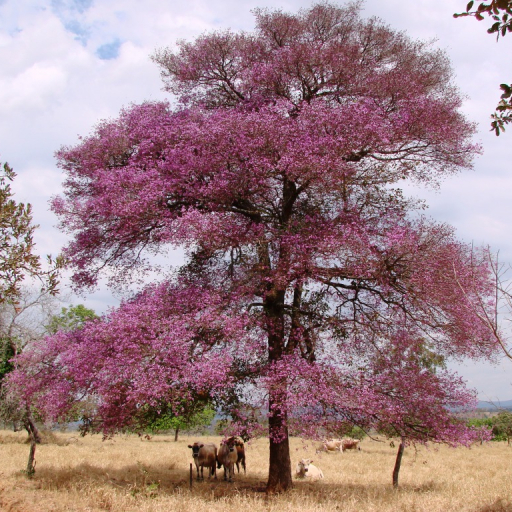
Known in its native Brazil as Pau-de-Rosas (Rosewood Tree), Physocalymma scaberrimum is a breathtaking spectacle of the tropical savanna. When the dry season arrives, this tree sheds its leaves and replaces them with a dense, exploding canopy of vibrant pink and purple blossoms. It is a favorite among landscape designers for its "wow factor" and its ability to thrive in challenging, sun-drenched environments.
🔍 How to Identify
- 🌸 The Bloom: It produces massive, upright clusters (panicles) of flowers that range from deep magenta to soft pink. The petals have a distinctively crinkled, paper-like texture.
- 🍃 Sandpaper Leaves: The species name scaberrimum refers to the leaves, which are incredibly rough to the touch, feeling almost like high-grit sandpaper.
- 🪵 Peeling Bark: The trunk features grayish-brown bark that naturally peels away in long, thin vertical strips, revealing a smoother surface underneath.
🏡 In Your Garden
- ☀️ Sun Lover: This tree is a true child of the sun. It requires a position with full, unobstructed light to produce its famous floral display; in shade, it tends to become leggy and rarely blooms.
- 💧 Drought Strategy: Unlike many garden plants, this tree actually benefits from a distinct dry period. In its native habitat, the lack of water triggers its dormant phase, followed by the spectacular flowering cycle.
- 🌱 Soil Preference: It is remarkably hardy and can handle "poor" or rocky soils, provided they are well-draining. It hates "wet feet" and will suffer in waterlogged clay.
⚠️ Safety & Toxicity
- ✅ Low Risk: Physocalymma scaberrimum is generally considered non-toxic to humans and common household pets like dogs and cats.
- 🧤 Skin Irritation: While not poisonous, the extremely rough, "scabrous" texture of the leaves can be abrasive to sensitive skin. It is wise to wear gloves if you are pruning or handling the foliage extensively.
✨ Fun Fact
Because the wood of this tree is incredibly dense, durable, and features beautiful pinkish-red streaks, it is highly prized in Brazil for high-end carpentry. It is often used to craft luxury fountain pens, jewelry boxes, and even decorative elements in musical instruments.

Detailed Care Instructions








