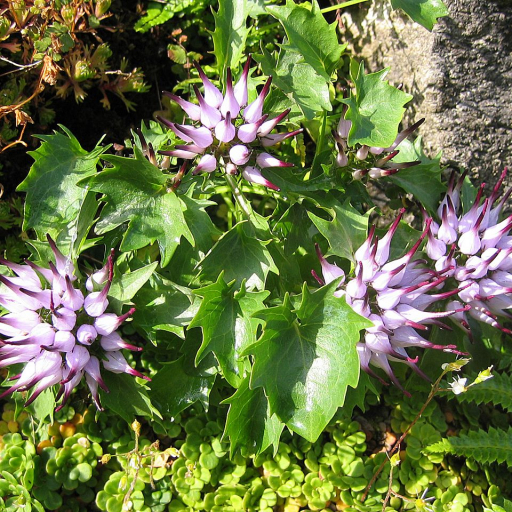
Plant Overview
Known as the "Devil’s Claw" or "Tufted Horned Rampion," Physoplexis comosa looks like a botanical curiosity plucked straight from a fantasy novel. Native to the jagged limestone crevices of the Southern Alps, this rare alpine treasure is famous for its alien-like appearance. It is a "monotypic" plant, meaning it is the only species within its entire genus, making it a true one-of-a-kind find for any nature lover.
🔍 How to Identify
- 🌸 The Bloom: Spherical clusters of pale lilac to deep purple flowers that resemble tiny, inflated flasks or teardrops.
- 👹 The "Horns": Each individual flower terminates in two long, dark, curved appendages (styles) that give the cluster its signature "clawed" or horned silhouette.
- 🍃 The Foliage: Glossy, dark-green leaves that are heart-shaped or triangular with sharply serrated edges, usually forming a low-growing tuft.
🏡 In Your Garden
- 🪨 The Crevice King: In the wild, this plant grows vertically out of solid rock faces. In a home setting, it is notoriously difficult to grow unless tucked into a limestone trough or a specialized rock garden with exceptional drainage.
- 🐌 Slug Magnet: Despite its fierce name, the plant is quite vulnerable. Slugs and snails find the succulent flower buds irresistible and can graze a rare specimen to the ground in a single night.
- 🛑 Taproot Sensitivity: Like many alpine specialists, it possesses a long, brittle taproot. It deeply resents being moved once established, so choose its permanent "crevice" home carefully.
⚠️ Safety & Toxicity
- ✅ Status: Generally Non-Toxic.
- 🐾 Details: There are no known records of Physoplexis comosa being poisonous to humans, cats, or dogs. However, due to its rarity and slow growth, it is best kept in a protected spot where pets won't accidentally trample or nibble it.
✨ Fun Fact
The Devil's Claw is a survivor of the Ice Age! While many other plants were wiped out by advancing glaciers, this species managed to survive in "refugia" (isolated ice-free pockets) in the Alps, remaining virtually unchanged for thousands of years.

Detailed Care Instructions
To grow a Physoplexis Comosa plant, also known as the Devil's Claw, follow these steps:
- Climate: Devil's Claw is native to alpine regions, so it prefers cooler temperatures. It thrives in USDA hardiness zones 4 to 9. Ensure that your growing conditions match these requirements.
- Soil: Use well-draining soil, as wet soil can cause the plant's roots to rot. A sandy or loamy soil mixture would be ideal. Adjust the soil pH to slightly acidic to neutral (around 6.0 to 7.0).
- Light: Provide the plant with a location that receives partial shade or dappled sunlight. Devil's Claw does not tolerate intense or prolonged direct sunlight.
- Planting: Sow the seeds in the late fall or early spring, depending on your climate. Plant the seeds in shallow trays or pots, as they require light to germinate. Press the seeds gently into the soil surface, but do not bury them.
- Germination: After planting, keep the soil consistently moist, but avoid overwatering. Provide bottom heat to help with germination, as Devil's Claw seeds require warm temperatures (around 59 to 68°F or 15 to 20°C) to sprout. Germination may take several weeks to a few months.
- Transplantation: Once the seedlings reach a suitable size, usually after a few weeks or months, they can be transplanted into individual pots or outdoor garden beds. Ensure that the pots or beds have adequate drainage to prevent root rot.
- Care: Maintain a regular watering schedule, keeping the soil slightly moist but not overly saturated. Avoid letting the soil completely dry out. Mulching around the plant can help retain moisture. Fertilize the plant with a balanced, slow-release fertilizer once every few months during the growing season.
- Pruning: Prune back any dead or damaged foliage to maintain plant health. Additionally, cutting back the flowers after they bloom can help prevent self-seeding and promote a compact growth habit.
- Winter care: In regions with harsh winters, provide protection for the plant by covering it with a layer of mulch or moving it to a sheltered location, such as a cold frame or greenhouse.
By following these steps, you should be able to successfully grow a Physoplexis Comosa plant. Remember that it may take several years for the plant to reach maturity and produce flowers.

Place in a bright room that is sun drenched almost all day. Or directly in a south-facing window.

Physoplexis Comosa plant is a delicate species that requires careful watering to ensure its optimal growth. To water this plant, you should always make sure that the soil is thoroughly moistened, but not waterlogged. It is essential to avoid letting the soil dry out completely, as this can cause the plant to wilt and lose its vitality.
To water the Physoplexis Comosa plant, you should first assess the moisture level of the soil by using a moisture meter or by sticking your finger into the soil up to the first knuckle. If the soil feels dry, it is time to water the plant.
When watering this plant, you should use a watering can or a gentle stream of water to moisten the soil evenly. You should avoid pouring water directly onto the plant's foliage or flowers, as this can cause damage or disease.
It is recommended to water the Physoplexis Comosa plant in the morning or early afternoon to ensure the soil has time to dry out slightly before nightfall. This helps prevent the growth of mold or mildew, which can be detrimental to the plant's health.
Overall, you must be cautious when watering the Physoplexis Comosa plant to avoid over or under-watering. By ensuring that the soil is consistently moist and allowing it to dry between watering sessions, you can help this beautiful plant thrive.
To fertilize this plant, use a balanced fertilizer with equal parts nitrogen, phosphorus, and potassium. Apply the fertilizer in early spring and early summer, according to the manufacturer's instruction. Ensure that the soil is moist before applying the fertilizer. Avoid over-fertilizing as it can lead to excessive growth and poor flowering.
It is recommended to use well-draining soil that is rich in organic matter for this plant. The soil should have a pH level of around 6 to 7.5. The plant prefers slightly acidic to neutral soil. Avoid using heavy clay soils as they can hold too much water and cause root rot. Sandy loam or loamy soils are ideal for this plant. Ensure the soil is moist but not waterlogged. Mulching can also help retain moisture and provide nutrients for the plant. It is important to provide good drainage to prevent waterlogging and ensure healthy root development.
Physoplexis Comosa plant can be propagated through the method of seed propagation. The process begins by collecting mature seeds from the fruit of the plant. The seeds should be cleaned and dried thoroughly.
After that, they can be sown in pots or trays filled with a well-draining soil mix. The seeds should be placed on the soil surface and covered lightly with a layer of soil. It is essential to keep the soil moist but not waterlogged.
The seedlings will germinate within two to four weeks. Once the seedlings are large enough to handle, they can be transplanted into individual pots. During this stage, it is important to keep the soil moist and provide adequate light.
As the seedlings mature, they can be transferred to larger pots or planted outside in a well-draining, sheltered location. With proper care, Physoplexis Comosa can grow into a beautiful, flourishing plant.








