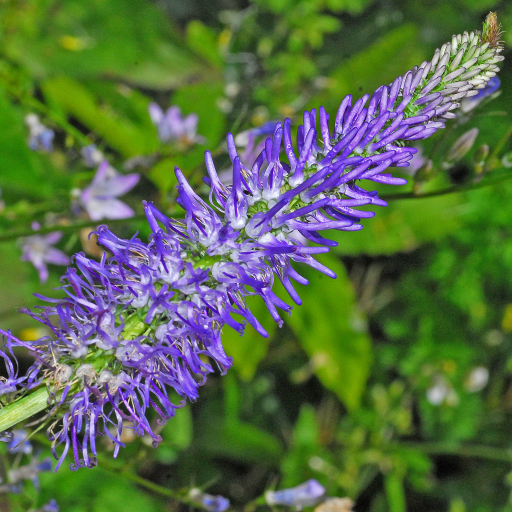
Plant Overview
The Betony-leaved Rampion is a mountain treasure from the European Alps, known for its otherworldly, spiky blue blooms that look like they belong in a botanical sci-fi novel. Its name "Rampion" is famously linked to the fairy tale Rapunzel, whose name is derived from a closely related species that was once a sought-after vegetable. This perennial brings a wild, high-altitude elegance to any rock garden or alpine collection.
🔍 How to Identify
- 💠 The Flowers: Unlike typical bellflowers, its petals are fused into narrow, curved tubes that flare out at the tips, forming a dense, cylindrical or egg-shaped spike of vibrant violet-blue.
- 🍃 The Foliage: The basal leaves are long, heart-shaped, and slightly notched, bearing a striking resemblance to the common Wood Betony (Stachys), which gives the plant its scientific name.
- 📏 Growth Habit: It typically grows in tidy, upright clumps, with unbranched stems reaching about 12 to 20 inches tall, topped by the signature blue "pincushion" heads.
🏡 In Your Garden
- 🏔️ Alpine Aspirations: Because it originates from high-altitude meadows, it thrives in gritty, well-draining soil. It hates "wet feet," so avoid heavy clay which can cause the roots to rot over winter.
- ☀️ Cooler Climates: This plant is a fan of cool summers. In hotter regions, it struggles with humidity and scorching afternoon sun; planting it in a spot with morning light and afternoon shade will help it stay vibrant.
- 🦋 Pollinator Magnet: The unique structure of the flower tubes makes it a favorite for long-tongued bees and butterflies, who are the only ones capable of reaching the nectar hidden deep within the spikes.
⚠️ Safety & Toxicity
- ✅ Generally Safe: The Betony-leaved Rampion is considered non-toxic to humans and is not known to be hazardous to cats or dogs.
- 🧤 Garden Handling: While it isn't an irritant, it is always a good practice to wear gloves when gardening to avoid skin irritation from any neighboring "less-friendly" plants or soil bacteria.
✨ Fun Fact
The name "Phyteuma" comes from the Greek word phyteuo, meaning "to plant" or "to beget," but its common name, Rampion, is the star of folklore. In the original Grimm’s fairy tale, Rapunzel's mother craved the roots of a Rampion so much that her husband stole them from a witch’s garden, leading to the famous tower-bound bargain!

Detailed Care Instructions
To grow Phyteuma betonicifolium, also known as the betony-leaved rampion, you can follow these steps:
- Choose a suitable planting location: Phyteuma betonicifolium prefers partial shade to full sun. It thrives in well-draining soil with a pH level between 6.5 and 7.5.
- Prepare the soil: Before planting, loosen the soil and remove any weeds or rocks. Incorporate organic matter, such as compost, to improve soil fertility and drainage.
- Sowing seeds: Phyteuma betonicifolium can be grown from seeds. Sow the seeds directly into the prepared soil in spring or autumn, as it requires a cold period for germination. Lightly cover the seeds with soil, about 1/8 inch deep.
- Watering: Keep the soil consistently moist during the germination phase, which usually takes 2-4 weeks. Once the plants establish, they are drought-tolerant and require watering only during prolonged dry periods.
- Transplanting: If you prefer, you can start Phyteuma betonicifolium indoors and then transplant the seedlings outdoors once they are large enough to handle. Start the seeds in small pots or seed trays filled with seed compost. Keep the soil moist and provide adequate light. Once the seedlings develop a good root system, transplant them to their final location with a spacing of about 12-18 inches between plants.
- Care and maintenance: Phyteuma betonicifolium is a relatively low-maintenance plant. Provide occasional deep watering during dry spells and remove weeds that compete for nutrients and moisture. Mulching around the plants can help suppress weed growth and retain soil moisture.
- Pruning and deadheading: Deadhead the flowers after they fade to encourage prolonged blooming. In early spring or autumn, you may cut back any dead or dying foliage to promote new growth.
- Propagation: If you want to propagate Phyteuma betonicifolium, you can divide mature clumps in spring or autumn. Gently dig up the clump and separate it into smaller sections with roots intact. Replant the divisions in prepared soil.
By following these steps, you can successfully grow Phyteuma betonicifolium in your garden. Enjoy its beautiful blue flowers and graceful foliage!

Place in a window with dappled sun or a spot in the middle of a room. Or directly in a window facing west or east.

Phyteuma betonicifolium is a plant that requires moderate watering. The amount and frequency of watering will depend on factors such as the climate, soil type, and plant size. Generally, it is recommended to water the plant when the top one-inch layer of soil feels dry to the touch. Overwatering should be avoided as it can cause root rot. It is also important to ensure proper drainage to prevent the soil from becoming waterlogged. The use of a watering can or hose with a gentle spray is recommended to avoid damaging the plant. Additionally, the plant should be watered in the morning or evening to avoid excessive evaporation due to high temperatures during the day.
To fertilize this plant, use a balanced, all-purpose fertilizer in the spring before the growing season. Apply the fertilizer to the soil around the base of the plant and water deeply. Repeat fertilizing once a month during the growing season, following the package instructions for dosage. Do not over-fertilize as it can damage the plant. Stop fertilizing in the fall to allow the plant to prepare for winter.
Phyteuma Betonicifolium plant prefers a well-drained soil that is enriched with organic matter. The soil pH should be slightly acidic to neutral (pH 6.0-7.0). Avoid using heavy or clay soil as it may cause waterlogging and root rot. A sandy loam soil with good drainage is ideal. If your soil is heavy, amend it with sand or coarse grit to improve drainage. Additionally, ensure that the soil is moist but not waterlogged, as Phyteuma Betonicifolium plant is sensitive to water stress. It is recommended to water the plant regularly but not excessively and to mulch around the base of the plant to help retain moisture and suppress weeds. Overall, the soil should be well-aerated, nutritious, and conducive to good root growth.
Phyteuma Betonicifolium is a perennial plant that can be propagated through division of the root crown or through seed propagation. To propagate through root division, dig up the plant in the fall after it has finished blooming and carefully divide the root crown into several clumps, making sure each clump has its own set of roots. Replant each clump in a new location and water thoroughly.
To propagate through seed propagation, collect seed pods in the summer after they have ripened and turned brown. Remove the seeds from the pod and sow them in a tray filled with potting soil. Cover the tray with plastic wrap and place it in a warm, sunny area. Water regularly, keeping the soil moist but not saturated, and the seeds should germinate within two to four weeks. Once the seedlings are large enough to handle, transplant them into individual pots and continue to care for them until they are ready to be planted outdoors.








