Plant Overview
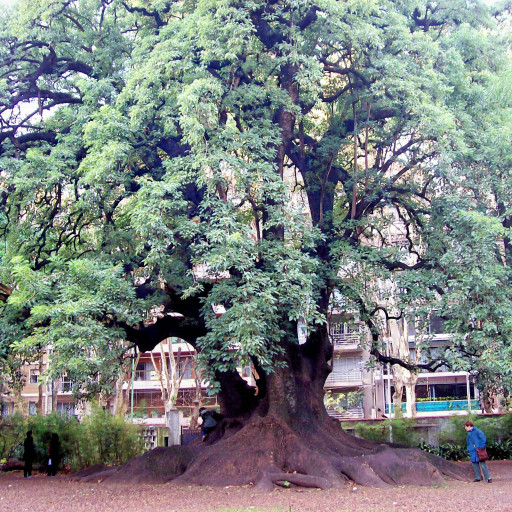
Known as the "Lighthouse of the Pampas," the Phytolacca dioica, or Ombú, is a botanical marvel that blurs the line between tree and herb. Native to the grasslands of South America, this massive evergreen is a cultural icon in Argentina and Uruguay, often serving as the only landmark for miles in the flat plains. Despite its towering size and thick trunk, it is technically a giant perennial herb because its "wood" is actually soft, fleshy tissue that stores vast amounts of water.
🔍 How to Identify
- 🐘 The Massive Base: The most striking feature is its enlarged, sprawling base (caudex) that looks like melting wax or giant elephant feet spreading across the ground.
- 🍃 Glossy Foliage: It features large, elliptical, and leathery leaves with a bright green sheen and a prominent central vein.
- 🍇 Drooping Clusters: In summer, it produces long, hanging racemes of small creamy-white flowers, which eventually turn into clusters of dark, ribbed berries.
🏡 In Your Garden
- 🌳 The Ultimate Shade Provider: Its Spanish name, Bella Sombra (Beautiful Shade), says it all. Because of its massive canopy and rapid growth, it is used primarily as a focal point in very large landscapes or parks where shade is desperately needed.
- 💧 Drought Resistance: The Ombú is a survivor. Its trunk is essentially a massive water tank, allowing it to withstand intense heat and long dry spells that would kill traditional trees.
- 🏗️ Root Management: Because the roots are incredibly invasive and fleshy, it should never be planted near houses, pipes, or sidewalks. It needs "room to breathe" and will easily lift concrete if confined.
⚠️ Safety & Toxicity
- 🚫 Toxic Status: All parts of the Phytolacca dioica—especially the berries and roots—are toxic if ingested.
- 🐾 Pet & Child Safety: It contains high concentrations of saponins and phytolaccatoxin. Ingestion can cause severe gastrointestinal distress, vomiting, and respiratory issues in humans, dogs, and cats.
- 🖐️ Skin Irritation: The sap can be an irritant for those with sensitive skin; it is best to wear gloves when pruning this giant.
✨ Fun Fact
Because the Ombú is technically a giant herb, its trunk does not have growth rings! You cannot determine the age of an Ombú by counting rings; instead, scientists have to estimate its age based on its overall diameter and historical records.

Detailed Care Instructions
| Lighting | Full Sun |
| Hardiness Zones | 8A - 11 |
To grow Phytolacca Dioica, also known as Pokeweed, follow these steps:
- Location: Choose a sunny spot in your garden, as the plant requires at least 6-8 hours of direct sunlight each day.
- Soil: Phytolacca Dioica prefers well-draining soil with a pH level between 5.5 and 7.5. If your soil is heavy or clayey, amend it with organic matter, such as compost or well-rotted manure, to improve drainage.
- Planting: Sow the seeds directly in the soil or start with young nursery-grown plants. If you're using seeds, sow them in early spring, about 1/4 inch deep and at least 4 feet apart from each other. The seeds need a cold stratification period, so you can keep them in a refrigerator for a few weeks before sowing.
- Watering: Keep the soil consistently moist but avoid overwatering, as this can lead to root rot. Water deeply when the top inch of the soil feels dry.
- Fertilization: Phytolacca Dioica is a vigorous grower that doesn't require heavy fertilization. You can apply a balanced, slow-release fertilizer once in early spring or use a layer of compost as a natural fertilizer.
- Mulching: Apply a layer of organic mulch, such as wood chips or straw, around the base of the plant to suppress weeds and retain moisture in the soil.
- Pruning: Pokeweed grows tall and can become bushy over time. To maintain its size and shape, prune back any dead or damaged branches in early spring before new growth emerges.
- Pests and Diseases: Phytolacca Dioica is relatively resistant to pests and diseases. However, keep an eye out for snails, slugs, or aphids, which can occasionally affect the plant. If necessary, use organic pest control methods to eliminate them.
Note: Phytolacca Dioica is a native plant in some regions, but it can be invasive in certain areas. Before planting, check with your local agricultural extension office or plant nursery to ensure it is suitable for your region and won't become a problem in your ecosystem.

Place in a bright room that is sun drenched almost all day. Or directly in a south-facing window.

To water this particular plant, a shallow watering technique is recommended. It is important to avoid overwatering as this can cause root rot. Therefore, it is best to water the plant only when the top 2-3 inches of soil feel dry to the touch. When watering, be sure to thoroughly moisten the soil but avoid standing water. It is also beneficial to use a well-draining soil mix to prevent water buildup. Additionally, it is important to water around the base of the plant and avoid wetting the leaves as this can lead to fungal growth.
To fertilize this plant, begin by selecting a balanced fertilizer that contains equal quantities of nitrogen, phosphorus, and potassium. Apply the fertilizer at least twice per year, during the growing season. Prior to application, ensure the soil is moist by watering the plant. Spread the fertilizer evenly around the base of the plant, keeping it away from the stem. Thoroughly water the plant after applying the fertilizer to enable it to absorb nutrients efficiently.
Phytolacca Dioica is a plant species that prefers a well-draining soil that is rich in organic matter and has a pH range of 5.5 to 7.5. It requires moist soil but not soaked or waterlogged soil. The soil should have good aeration and should be kept slightly moist but not too wet as it can lead to root rot. Clay soils should be amended with sand or perlite to enhance drainage. Adding compost or well-rotted manure to the soil will improve its fertility. It is also important to avoid using soil that has been treated with chemical fertilizers or pesticides which can harm the plant.
Phytolacca Dioica plant can be propagated through various methods, including seeds, stem cuttings, and division. To propagate through seeds, collect mature fruits and extract the seeds. Sow the seeds in a mixture of sand and organic compost, and keep the soil evenly moist. Germination can take up to six weeks.
To propagate through stem cuttings, take cutting from the plant in the spring or early summer. Cut a stem of approximately four inches in length, and remove the lower leaves. Dip the cut end in rooting hormone and plant it in a mixture of sand and organic compost. Keep the soil moist and place the cutting in a shaded area until rooting occurs.
Propagation through division is best done in the spring when new growth appears. Dig up the plant and separate the clumps, ensuring each clump has roots and shoots. Plant each clump in a separate container or in the ground.
Regardless of the propagation method used, it is important to provide the new plant with adequate water and sunlight to promote healthy growth.








