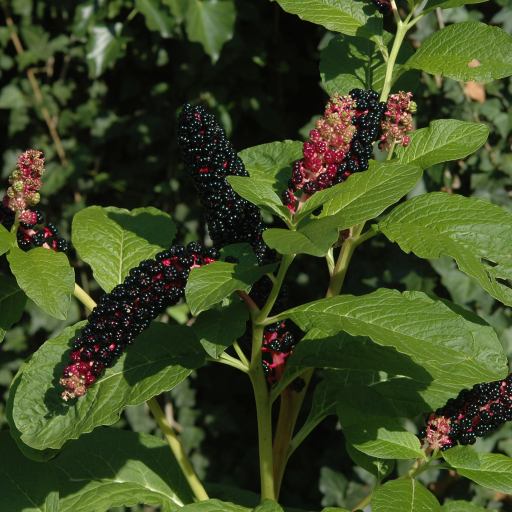
Plant Overview
Known widely as the African Soapberry or by its Ethiopian name, Endod, Phytolacca dodecandra is a plant that bridges the gap between ancient tradition and modern science. Native to Sub-Saharan Africa and Madagascar, this vigorous scrambling shrub has been used for centuries as a natural detergent. It gained global fame when scientists discovered its incredible ability to protect water sources from parasitic diseases, making it a true "lifesaver" in botanical form.
🔍 How to Identify
- 🌿 The Foliage: Large, lush, oval-shaped leaves with a slightly waxy or succulent texture. They are arranged alternately along thick, fleshy stems.
- 🌸 The Flowers: Produces long, drooping spikes (racemes) of tiny, greenish-yellow to white flowers that lack petals but have prominent stamens.
- 🍇 The Berries: Distinctive clusters of berries that look like tiny, ribbed pumpkins. They transition from bright green to orange and finally to a deep succulent purple-black when ripe.
🏡 In Your Garden
- ☀️ Growth Habit: This is a "scrambler"—it doesn't have tendrils to climb, but it will lean on other plants or fences to reach impressive heights. It is best suited for large gardens where it has room to wander.
- 💧 Resilience: It is incredibly drought-tolerant once established. It prefers well-draining soil and loves the sun, mimicking its natural habitat in African highlands and forest edges. It’s a "tough love" plant that thrives on neglect rather than over-pampering.
⚠️ Safety & Toxicity
- 🚫 Status: Toxic to humans and animals if ingested.
- 🐾 Details: The entire plant, especially the roots and unripe berries, contains high concentrations of saponins. While these create a soapy lather, they are highly irritating to the digestive tract. Keep this plant away from curious pets and children, as ingestion can cause severe vomiting and distress.
✨ Fun Fact
In the 1960s, Ethiopian scientist Dr. Aklilu Lemma noticed that in areas where people washed their clothes with Endod berries, the local snail populations vanished. This led to the discovery that the plant is a potent "molluscicide," helping to kill the snails that carry the devastating tropical disease Schistosomiasis (Bilharzia).

Detailed Care Instructions
To grow Phytolacca dodecandra, also known as the Ethiopian green-eye or endod plant, you can follow these steps:
- Obtain seeds or cuttings: Phytolacca dodecandra can be propagated through seeds or stem cuttings. You can purchase seeds or obtain cuttings from a mature plant.
- Choose the right location: Phytolacca dodecandra prefers full sun but can tolerate partial shade. Ensure that the chosen location has well-draining soil.
- Prepare the soil: Phytolacca dodecandra prefers slightly acidic to neutral soil. So, if your soil is alkaline, you may need to amend it with organic matter (such as compost) to adjust the pH.
- Sow the seeds or plant the cuttings: If using seeds, sow them directly into the soil or start them indoors in seed trays and transplant them later. If using cuttings, dip the cut ends in a rooting hormone and plant them in potting soil or directly in the ground.
- Watering and maintenance: Phytolacca dodecandra requires regular watering, especially during dry spells. Keep the soil consistently moist but not waterlogged. Water deeply but infrequently to encourage deep root growth. Mulching around the plant can help retain moisture and suppress weed growth.
- Fertilizing: Although not excessively demanding, you can feed the plant with a balanced fertilizer once or twice a year during the growing season to promote healthy growth.
- Pruning: Pruning should be done in late winter or early spring before new growth starts. Remove any dead or diseased branches and shape the plant as desired. Be cautious while pruning, as the plant's sap may be toxic and can cause skin irritation.
- Pest and disease control: Phytolacca dodecandra is relatively resistant to pests and diseases. However, keep an eye out for any signs of aphids, spider mites, or fungal issues. If any infestation occurs, treat accordingly using organic pest control methods or consult with a local plant specialist.
Remember, Phytolacca dodecandra is considered invasive in some areas, so ensure that it is legal and safe to grow in your region before introducing it to your garden.

Place in a window with dappled sun or a spot in the middle of a room. Or directly in a window facing west or east.

To properly water this plant, you should begin by checking the soil for moisture levels. Insert a finger about an inch deep into the soil to determine if it feels dry or moist. If it feels dry to the touch, it is time to water.
Water the plant at the base, avoiding the foliage as much as possible. Water until the soil is evenly moist, but not saturated. Overwatering can lead to root rot and other issues.
It is important to note that this plant prefers well-draining soil, so make sure the pot has drainage holes to allow excess water to escape. Avoid letting the plant sit in standing water.
When determining how often to water, consider the environment it is in. Plants in bright, sunny areas may need to be watered more frequently than those in a cooler, shadier location. Additionally, the size of the pot and the amount of soil can impact watering frequency.
It is generally recommended to let the soil almost dry out before watering again, rather than consistently keeping it moist.
In summary, water the plant when the soil feels dry to the touch at the base of the plant, water until soil is evenly moist but not saturated, ensure proper drainage and do not let the plant sit in standing water, consider the environment and size of pot when determining watering frequency, and avoid consistently keeping soil moist.
To fertilize this plant, you should use a balanced fertilizer with equal amounts of nitrogen, phosphorus, and potassium. Apply the fertilizer at a rate of 1 tablespoon per square foot of soil, and mix it into the top layer of soil. Water the plant immediately after fertilizing to help dissolve the fertilizer and encourage uptake by the roots. Fertilize the plant every four to six weeks during the growing season, and reduce or stop fertilizing in the winter when the plant is dormant.
Phytolacca Dodecandra prefers well-draining soil that is rich in organic matter. It requires soil pH levels that are slightly acidic to neutral. A good mix for this plant should contain a balance of sand, loam, and organic matter, with a pH between 6.0 and 7.0. It should also be moist but not waterlogged, as this will cause root rot. It is essential to plant Phytolacca Dodecandra in a spot that receives full sun exposure.
To propagate this plant, you can use either seeds or stem cuttings.
For seeds, collect mature fruits from the plant and extract the seeds. Sow the seeds in a well-draining potting mix and keep them in a warm, bright location. Water the seeds regularly but do not overwater. The seeds should germinate within a few weeks.
For stem cuttings, take a healthy stem with several leaves and cut it at a 45-degree angle. Dip the cut end in rooting hormone and plant it in a well-draining potting mix. Keep the cutting in a warm, bright location and water it regularly. In a few weeks, the cutting should develop roots and you can transplant it to a larger pot or outdoors in a suitable location.








