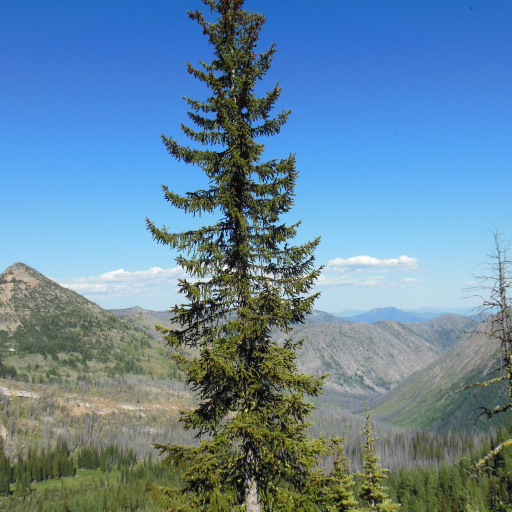
Plant Overview
Often called the "Mountain Spruce" or "Silver Spruce," the Engelmann Spruce is a majestic high-altitude survivor of the American West. Named after the German-American botanist George Engelmann, this evergreen is a staple of the Rocky Mountains, where its narrow, spire-like silhouette stands tall against snowy peaks. It is beloved by mountain hikers for its cool, crisp scent and by gardeners for its stately, formal appearance.
🔍 How to Identify
- 🌲 The Needles: Each needle is four-sided (you can easily roll it between your thumb and finger) and usually points forward toward the tip of the twig. They have a distinct bluish-green hue.
- 🧺 The Cones: Look for small, dangling cones with flexible, papery scales that have a wavy or jagged edge, unlike the smooth scales of a Douglas Fir.
- 🧱 The Bark: On mature trees, the bark is exceptionally thin and breaks into small, loose, reddish-brown scales that look almost like they are peeling away.
🏡 In Your Garden
- 🏔️ Cool & Damp: This tree is a "high-altitude heart." While it is hardy, it struggles in hot, humid lowland summers. In a garden setting, it thrives best in locations with cool summers and consistent moisture.
- 🌬️ Wind Protection: Because it has a relatively shallow root system, it appreciates a spot protected from extreme gale-force winds, which can tip younger trees or dry out their foliage during winter.
⚠️ Safety & Toxicity
- ✅ Status: Non-toxic and safe.
- 🐾 Details: The Engelmann Spruce is generally considered safe for pets and children. However, the needles are quite stiff and sharp; while not poisonous, they can cause minor skin irritation if handled roughly or mild stomach upset if a curious pet tries to eat them.
✨ Fun Fact
The wood of the Engelmann Spruce is a favorite among luthier—the people who build musical instruments. Because of its incredible strength-to-weight ratio and "ring," it is frequently used to make the soundboards (the tops) of high-end acoustic guitars, violins, and harps.

Detailed Care Instructions
To grow Picea engelmannii, also known as Engelmann spruce, follow these steps:
- Climate and Soil Requirements: Picea engelmannii thrives in cooler climates and is native to the mountainous areas of North America. It requires full sun to partial shade and prefers acidic, well-draining soil.
- Seed Collection: Obtain seeds from a reputable seed supplier or collect them from mature cones. Select healthy cones, typically found on the tree's upper branches, and collect them in late summer or early autumn when they have turned brown.
- Seed Preparation: Soak the collected cones in warm water for a few hours to soften them. Afterward, gently massage the cones to release the seeds.
- Cold Stratification: Picea engelmannii seeds require a period of cold stratification to break dormancy and simulate winter conditions. Place the seeds in a sealed plastic bag with moistened peat moss or vermiculite. Store the bag in a refrigerator at around 35-40°F (1-4°C) for 2-3 months.
- Site Preparation and Planting: Prepare the planting site by removing weeds and grass. Dig a hole twice the size of the seedling's root system, ensuring proper drainage. Plant the germinated seeds or seedlings in the hole at the same depth as they were in the container, spacing them several feet apart.
- Watering and Mulching: After planting, water the seedling thoroughly to settle the soil and provide moisture. Apply a 2-3 inch layer of mulch, such as wood chips or pine needles, around the base of the plant to retain moisture and control weeds.
- Care and Maintenance: Regularly water the plant, keeping the soil moist but not waterlogged. If there is lack of rainfall, provide supplemental irrigation during dry periods. Avoid overhead watering to prevent fungal diseases. Mulching helps retain soil moisture and regulate temperature.
- Pruning and Shaping: As the plant grows, you may need to perform occasional pruning to remove dead or damaged branches. However, Picea engelmannii typically has a naturally symmetrical shape and requires minimal pruning.
- Protection from Pests and Diseases: Inspect the plant regularly for signs of pests like aphids, spider mites, or spruce beetles. If necessary, treat the infestation with appropriate insecticides. Engaging in good cultural practices, such as providing adequate airflow and not overwatering, can help prevent diseases.
- Patience and Long-term Growth: Picea engelmannii is a slow-growing tree and may take several years to establish and reach maturity. Be patient and consistent with care to promote healthy growth.
Remember to check with local gardening or forestry experts to ensure that Picea engelmannii is suitable for your specific area and climate before attempting to grow it.

Place in a bright room that is sun drenched almost all day. Or directly in a south-facing window.

When watering this particular plant, it is important to be mindful of the moisture level in the soil. Before watering, check the soil to see if it is dry to the touch. If the soil is still moist, wait a few days before watering again. When giving water, make sure to water deeply to ensure the roots are getting enough moisture. Avoid getting water on the foliage as this can lead to disease and pest issues. It is also important to water in the morning or early afternoon to give the plant enough time to dry before nightfall. Proper watering will help keep the plant healthy and thriving.
To fertilize this variety of plant, use a slow-release granular fertilizer with a balanced N-P-K ratio, such as 10-10-10 or 12-12-12. Apply the fertilizer evenly on the soil surface around the base of the plant, but not touching the trunk. Water the plant thoroughly after fertilizing to help distribute the nutrients and to prevent burn. Fertilize once in the early spring before new growth begins and once in late summer or early fall after growth has slowed down. Avoid fertilizing during drought or extreme heat to prevent stressing the plant.
When planting the Picea Engelmannii plant, it is recommended to use a well-draining soil that is rich in organic matter. The ideal pH level for the soil should be slightly acidic, around 5.5 to 6.5. It is important to avoid soil that is too compact or heavy, as this can inhibit root growth and drainage. A sandy loam soil or a soil mix containing perlite or vermiculite can provide the necessary drainage. It is also a good idea to amend the soil with compost or other organic materials to improve soil fertility. Ensure the soil is moist but not waterlogged, as Picea Engelmannii plants do not tolerate waterlogged conditions.
To propagate this plant, you will need to take cuttings of healthy, young plant stems. Choose stems that are about 4-6 inches long and have several leaves on them. Use a sharp, clean knife or pruning shears to make a clean cut at the base of each stem. It is important to avoid damaging the main stem or the roots as you do this.
Next, remove the lower leaves from each cutting, leaving only a few at the top. This will help the cutting focus on growing roots instead of trying to support leaves. You can dip the cut end of each stem into rooting hormone, which will encourage root growth.
Plant each cutting in a pot filled with a well-draining potting mix. Make a small hole in the soil and gently insert the stem into it. Firmly press the soil around the stem to hold it in place.
Water the soil until it is moist but not waterlogged. Then place the pot in a warm, bright location that receives indirect sunlight. Check on the cuttings regularly and keep the soil moist. After a few weeks, you should start to see new growth and roots forming.
After a few months, when the cuttings have established strong roots and new growth, you can transplant them into larger pots or a garden bed. Make sure to gradually acclimate them to their new environment by increasing their exposure to sunlight and reducing watering frequency.








