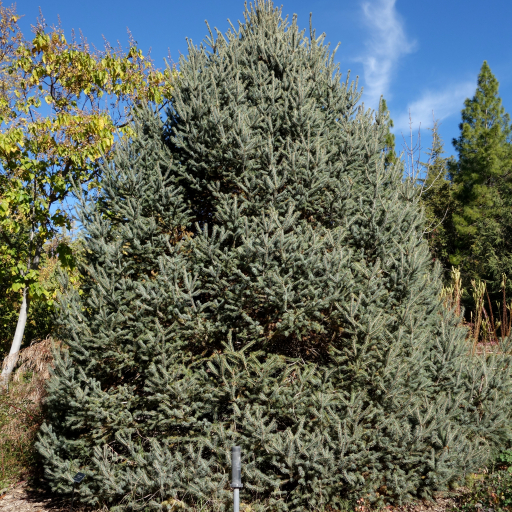
Plant Overview
Often found clinging to the misty slopes of the Himalayas, the Likiang Spruce is a high-altitude marvel known for its stunning, jewel-colored cones. This elegant evergreen acts as a majestic sentinel in its native Chinese forests, reaching for the clouds in some of the world’s most remote mountain ranges. It is a prized choice for gardeners looking to bring the rugged beauty of the Tibetan plateau to a cool-temperate landscape.
🔍 How to Identify
- 🟣 Vibrant Cones: One of its most striking features is the young seed cones, which emerge in shades of deep purple or reddish-magenta, standing upright like tiny ornaments.
- 🌲 Linear Needles: The needles are short, stiff, and quadrangular. They are typically a lush green on top with two pale white stomatal bands underneath, giving the tree a silvery shimmer in the wind.
- 🪵 Flaky Bark: As the tree matures, its grey-brown bark develops deep furrows and begins to peel away in thick, irregular plates.
🏡 In Your Garden
- 🏔️ Alpine Aspirations: Because it originates from high elevations, this spruce thrives in cool, moist environments. It is sensitive to extreme summer heat and does best in regions with distinct, chilly winters.
- 💧 The Drainage Dance: It craves consistent moisture but "hates wet feet." Planting it in heavy clay or stagnant soil will quickly lead to root rot; it prefers acidic, well-draining loams.
- 🌬️ Wind Protection: While the tree is sturdy, young saplings can suffer from "winter burn" if exposed to harsh, drying winds. Planting them in a sheltered spot helps preserve their delicate needle color.
⚠️ Safety & Toxicity
- ✅ Non-Toxic: The Likiang Spruce is generally considered non-toxic to humans, dogs, and cats. It is a safe addition to a pet-friendly backyard.
- 🧤 Sharp Needles: The primary safety concern is physical. The needles are quite stiff and sharp; always wear thick gardening gloves when pruning or transporting to avoid "needle rash" or minor skin punctures.
✨ Fun Fact
In its native habitat in the mountains of Yunnan and Sichuan, some specimens of Picea likiangensis have been known to live for over 500 years, surviving the thin air and harsh freezes of the high-altitude wilderness.

Detailed Care Instructions
To grow Picea likiangensis, also known as the Lijiang spruce, you can follow these steps:
- Location: Choose a suitable location for planting the Picea likiangensis plant. It prefers full sun to partial shade and well-draining soil. The plant can tolerate a range of soil types but thrives in acidic soil with pH levels between 4.5 to 6.5.
- Planting: Dig a hole that is slightly bigger than the root ball of the plant. Place the plant in the hole, making sure the top of the root ball is level with or slightly above the soil surface. Backfill the hole gently, ensuring there are no air pockets around the roots. Water the plant thoroughly after planting.
- Watering: Initially, the Picea likiangensis plant requires regular watering to establish its roots. However, once established, it is relatively drought-tolerant. Water deeply but infrequently, allowing the soil to dry out slightly between waterings. Avoid overwatering, as excessive moisture can cause root rot.
- Mulching: Apply a layer of organic mulch around the base of the plant, such as wood chips or bark mulch. Mulching helps to retain moisture in the soil, suppresses weeds, and moderates soil temperature.
- Pruning: P. likiangensis generally has a pyramidal shape and requires minimal pruning. However, you can remove any dead, damaged, or crossing branches to maintain the plant's health and shape. Pruning is best done in late winter or early spring before new growth appears.
- Fertilizing: Picea likiangensis is a low-maintenance plant that usually doesn't require regular fertilization. However, you can apply a slow-release, balanced fertilizer in early spring to promote healthy growth. Follow the manufacturer's instructions for the proper application rates.
- Pests and diseases: P. likiangensis is generally resistant to most pests and diseases. However, it may occasionally suffer from issues like aphids, spider mites, or needle cast diseases. Monitor the plant regularly for any signs of infestation or disease, and take appropriate measures like using insecticidal soap or fungicides if necessary.
- Winter protection: Being a hardy evergreen, P. likiangensis is adapted to withstand cold winters. However, if you live in an area with harsh winter conditions, you can provide some protection by wrapping the plant with burlap or constructing a windbreak to shield it from strong winds and heavy snow.
Remember to check the specific needs of Picea likiangensis for your region, as it may have slight variations based on climate and soil conditions.

Place in a bright room that is sun drenched almost all day. Or directly in a south-facing window.

To properly water this plant, it is important to check the soil moisture regularly. Stick your finger one inch into the soil, and if it feels dry, it is time to water. When watering, apply water evenly around the base of the plant until the soil is thoroughly moistened. Avoid overwatering, as this plant prefers well-draining soil. Allow the top of the soil to dry out slightly between waterings. If the plant is in a container, make sure there are drainage holes to prevent waterlogging. In hot and dry weather conditions, the plant may require more frequent watering.
The plant should be fertilized with a balanced fertilizer, such as a 10-10-10 or 20-20-20 blend. Fertilization should occur in early spring before new growth appears. The fertilizer should be evenly distributed around the tree’s root zone, which extends beyond the tree’s drip line. It is important to not over-fertilize, as this can lead to excessive growth and weaken the tree. Always follow the instructions on the fertilizer packaging and use gloves when handling fertilizer.
The best type of soil for Picea Likiangensis is well-draining, slightly acidic soil that is rich in organic matter. The soil should have a pH level between 5.0 and 6.5 to ensure optimal growth and health of the plant. The soil should also have good air circulation and water retention capabilities to prevent waterlogged roots. It is recommended to mix in compost or other organic matter into the soil before planting to provide nutrients for the plant. Additionally, Picea Likiangensis prefers a location with partial shade and protection from harsh winds.
Propagation of this plant can be done through various methods like seeds, cutting, and layering. One of the easiest methods is through cutting, wherein a stem from an existing plant is cut and planted in a rooting hormone. For layering, a low branch is selected, and the stem is wounded and covered with soil, and it eventually roots and forms a new plant. The plant can also be grown from seeds, which are collected in the fall and planted the following spring. It grows best in well-draining soil and in partial shade. Regular watering and fertilizing are also essential for its growth. It is a slow-growing plant, but with proper care, it can reach mature heights of up to 100 feet.








