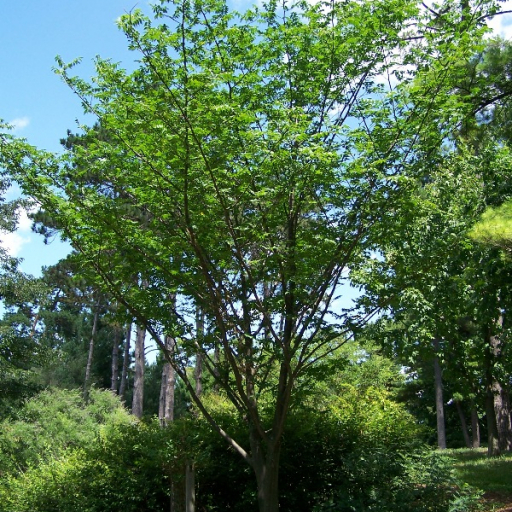
Plant Overview
Often called the Indian Quassia or Bitterwood, Picrasma quassioides is an elegant deciduous tree celebrated for more than just its graceful silhouette. Hailing from the lush mountain forests of East Asia and the Himalayas, it has been a staple in traditional herbalism for centuries. While it appears to be a delicate woodland beauty, it carries a "secret weapon"—a chemical bitterness so intense that it serves as a natural shield against hungry insects.
🔍 How to Identify
- 🍃 Feathery Foliage: The leaves are "pinnately compound," meaning they look like large, multi-pointed feathers. Each leaf consists of 7 to 15 glossy, lance-shaped leaflets that transition from vibrant green to brilliant golds and oranges in the autumn.
- 🌳 Textured Bark: The bark is smooth and greyish-brown, distinctively marked with tiny, pale horizontal slits known as lenticels, which help the tree "breathe."
- 🍒 Changing Berries: In late summer, the tree produces small, pea-sized fruits. These berries undergo a dramatic color transformation, starting green, turning a vivid berry-red, and finally ripening into a glossy, dark black.
🏡 In Your Garden
- 🏔️ Woodland Preferences: To keep this tree happy, think of its mountain origins. It craves moist, well-drained soil and prefers a "cool feet" environment—mulching the base helps mimic the forest floor it loves.
- ⏳ A Slow Burner: This is a tree for the patient gardener. It grows at a moderate to slow pace, meaning it won't suddenly take over your yard, but it will reward you with increased structural beauty and deeper fall colors every passing year.
⚠️ Safety & Toxicity
- 👅 Intense Bitterness: While not classified as a "deadly" plant, the wood, leaves, and bark contain quassinoids—some of the bitterest substances known to man. This usually acts as a natural deterrent, stopping children or pets from eating it.
- 🐾 Pet Watch: If a curious pet manages to chew on the branches, the extreme bitterness can cause excessive drooling, nausea, or a temporary loss of appetite. It is best treated as a purely ornamental specimen.
✨ Fun Fact
The extract from this tree is so potent that it is used worldwide as a natural, eco-friendly insecticide. It effectively keeps aphids and caterpillars at bay without harming beneficial pollinators like bees, making it a "biological bodyguard" for the garden!

Detailed Care Instructions
To grow Picrasma quassioides, also known as the Chinese quassia plant, follow these steps:
- Location: Find a suitable location for your plant. Picrasma quassioides prefers partial shade to full sun, so choose a spot that receives a few hours of direct sunlight each day.
- Soil: The plant prefers moist, well-draining soil. Prepare the soil by adding organic matter, such as compost, to improve fertility and drainage.
- Planting: Dig a hole that is slightly larger than the root ball of the plant. Place the plant in the hole and backfill with soil, firming it gently around the base of the plant. Ensure that the crown of the plant is level with the soil surface.
- Watering: After planting, water thoroughly to settle the soil around the roots. Ensure that the soil stays evenly moist but not waterlogged. Water deeply and less frequently rather than shallow but frequent watering.
- Mulching: Apply a layer of organic mulch, such as wood chips or straw, around the base of the plant to help retain moisture, suppress weeds, and regulate soil temperature.
- Pruning: Prune the plant in late winter or early spring before new growth starts. Remove any damaged, diseased, or crossing branches. This will help maintain a healthy and well-shaped plant.
- Fertilizing: Apply a slow-release balanced fertilizer in early spring and again in mid-summer to provide necessary nutrients for growth.
- Protection: Protect the plant from extreme cold temperatures, especially if you live in a colder climate. Mulching around the base of the plant can help insulate the roots.
- Pests and diseases: Monitor the plant for pests such as aphids and scale insects. Treat any infestations promptly with appropriate insecticides or by using organic methods like neem oil. Check the leaves for signs of disease and address any issues promptly.
- Harvesting: If you are growing Picrasma quassioides for its medicinal properties, the bark is typically harvested in the fall. However, consult a professional or guidebook for specific information on harvesting and using the plant for medicinal purposes.
Remember to research the specific growing requirements and recommendations for Picrasma quassioides in your region, as conditions can vary.

Place in a bright room that is sun drenched almost all day. Or directly in a south-facing window.

To water this plant, make sure to wait until the top inch of soil is dry before watering it again. When you water it, be sure to water it deeply, making sure the water is reaching the roots. It's important not to overwater this plant, as it can be sensitive to too much moisture. It's recommended to use lukewarm or room temperature water and to avoid using water that has been treated with chlorine or fluoride. During the winter, reduce the amount of water given to the plant. Additionally, be careful not to get the leaves wet when watering, as this can lead to fungal diseases.
To fertilize the Picrasma Quassioides plant, follow these instructions:
- Choose a balanced, water-soluble fertilizer formulated for woody plants or broadleaf shrubs.
- Dilute the fertilizer according to the manufacturer's instructions. Typically, a ratio of 1 tablespoon of fertilizer per gallon of water is recommended.
- Apply the diluted fertilizer to the soil around the base of the plant, avoiding direct contact with the foliage.
- Use a watering can or a garden hose with a gentle spray attachment to evenly distribute the fertilizer solution.
- Water the plant after fertilizing to ensure proper absorption of nutrients into the root zone.
- Repeat the fertilization process once every month during the growing season, which is typically spring through early fall.
- Monitor the plant for any signs of excess fertilizer, such as leaf burning or discoloration. If observed, adjust the fertilizer dilution or frequency of application accordingly.
- During the dormant season, reduce or cease fertilization to allow the plant to rest.
- Additionally, consider incorporating organic matter, such as compost or well-rotted manure, into the soil around the plant once or twice a year to provide natural nutrients and improve soil fertility.
- Regularly observe the plant's growth and overall health to determine if any adjustments to the fertilization routine are necessary.
The ideal soil for this plant should be well-drained and rich in organic matter. It should have a slightly acidic to neutral pH level, ideally between 5.5 and 7.0. The soil should be loose and airy to promote proper root growth and to prevent waterlogging. It is recommended to use a mixture of peat moss, perlite, and compost to create the perfect soil blend for this plant. Additionally, it is important to ensure that the soil is kept consistently moist but not waterlogged, as Picrasma Quassioides prefers consistent moisture but can be sensitive to overwatering.
To propagate Picrasma Quassioides plant, you can follow these steps:
- Select a healthy and mature plant: Choose a fully grown Picrasma Quassioides plant that is free from diseases or any signs of distress. This will ensure that the propagated plant will have the best chances of survival.
- Take cuttings: Using a clean and sharp pair of pruning shears, cut a six to eight-inch section from the stem of the plant. Make sure to choose a cutting that has at least two to three nodes, as these will be essential for root development. Nodes are the points on the stem where leaves or branches sprout.
- Remove lower leaves: Strip off the lower leaves from the cutting, leaving only a few pairs of the uppermost leaves intact. This reduces the amount of moisture loss and allows energy to be focused on root development.
- Apply rooting hormone: Dip the cut end of the cutting into a powdered rooting hormone. This hormone will stimulate the growth of roots, improving the chances of successful propagation. Be sure to follow the instructions provided with the rooting hormone for application guidelines.
- Prepare the rooting medium: Fill a small pot or container with a well-draining rooting medium. A mix of equal parts peat moss, perlite, and vermiculite or sand works well. Wet the medium slightly to ensure it is moist but not overly saturated.
- Plant the cutting: Make a small hole in the prepared rooting medium using a pencil or your finger. Insert the cut end of the Picrasma Quassioides cutting into the hole, ensuring that at least one node is below the surface. Gently firm the medium around the cutting to hold it in place.
- Provide appropriate conditions: Place the potted cutting in a warm and well-lit area, but away from direct sunlight. Maintain a consistent temperature between 70-85°F (21-29°C). Avoid extreme temperature fluctuations and keep the humidity high by covering the cutting with a clear plastic bag or a propagator dome.
- Watering: Check the moisture level of the rooting medium regularly and mist the cutting with water if it becomes dry. Ensure the medium remains consistently moist but not waterlogged, as excessive moisture can lead to rotting.
- Root development: Within a few weeks, you should start seeing signs of root development. Gently tug on the cutting to check for resistance, indicating that roots have formed and are anchoring the plant.
- Transplanting: Once the roots have developed sufficiently, typically after 8-12 weeks, the cutting can be transplanted into a larger pot or directly into the garden. Ensure the new container or planting site provides well-drained soil, partial shade, and adequate spacing for the growth of the Picrasma Quassioides plant.
Remember to be patient during the propagation process, as it may take several weeks or even months for the cutting to develop strong roots.








