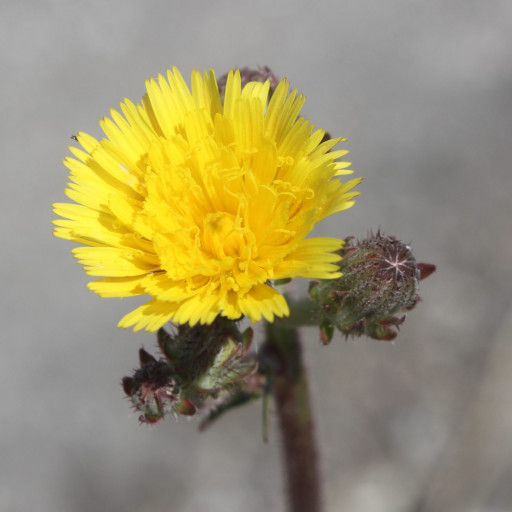
Plant Overview
Often called Hawkweed Oxtongue, this plant is a master of defense and survival that frequently pops up in wildflower meadows and neglected garden corners. Its name comes from the Greek word picros, meaning "bitter," a nod to the pungent milky sap hidden inside its stems. While it might look like a common dandelion at first glance, its rugged, sandpaper-like texture and branching height tell a story of a much hardier survivor.
🔍 How to Identify
- 👅 The "Oxtongue" Leaves: The most distinct feature is the foliage. The leaves are covered in stiff, bumpy, hooked bristles that feel remarkably like a rough tongue if you rub them.
- 🌼 Branching Blooms: Unlike a dandelion which has one flower per stalk, this plant produces a branched "candelabra" of multiple yellow flower heads.
- 🥛 Bitter Latex: If you break a stem, it will bleed a thick, white, milky sap. This liquid is incredibly bitter, acting as a natural deterrent against hungry herbivores.
🏡 In Your Garden
- 🧱 Pioneer Spirit: You will most likely find this plant in "disturbed" soil—think gravel driveways, construction sites, or dry, chalky banks. It is a pioneer species, meaning it excels at living where other plants find the soil too poor or alkaline.
- 🥕 Stubborn Taproot: It anchors itself with a deep, persistent taproot. This makes it highly drought-resistant but also means that if you try to pull it out by hand, the root often snaps and regrows, making it a "persistent guest" in manicured gardens.
⚠️ Safety & Toxicity
- 🛡️ Physical Irritant: While not chemically poisonous to humans, the hooked hairs on the leaves and stems can cause mild skin irritation or a "prickly" sensation. It is best to wear gloves if you are weeding a large patch.
- 🐾 Pet Safety: It is generally non-toxic to cats, dogs, and horses. However, the extremely bitter taste and rough texture usually prevent pets from doing more than taking a curious sniff.
✨ Fun Fact
Ancient folklore suggested that hawks would tear open the stems of this plant and use the milky juice to "wash" their eyes, believing it gave them their legendary sharp vision—this is why many plants in this family carry the "Hawk" prefix!

Detailed Care Instructions
| Toxicity | Poisonous |
To grow Picris hieracioides (hawkweed oxtongue) plant, you can follow these steps:
- Select a suitable location: Choose a spot with full sun exposure or partial shade. The soil should be well-draining, rich in organic matter, and slightly acidic to neutral (pH 5.8 to 7.5).
- Prepare the soil: Remove any weeds, rocks, or debris from the planting area. Loosen the soil using a garden fork or tiller. Incorporate organic compost or well-rotted manure to improve soil fertility and structure.
- Planting method: You can start the plant from seeds or purchase young plants. If using seeds, sow them directly into the prepared soil in early spring or fall. Lightly press the seeds onto the soil surface and cover them with a thin layer of soil. If using young plants, dig a hole slightly larger than the root ball, place the plant in the hole, and backfill with soil. Gently firm the soil around the plant.
- Watering and care: Water the plant moderately, allowing the soil to dry slightly between waterings. Avoid overwatering to prevent root rot. Apply a layer of organic mulch around the plant to conserve moisture, suppress weeds, and regulate soil temperature.
- Fertilization: Hawkweed oxtongue generally doesn't require heavy fertilization. However, you can apply a balanced, slow-release fertilizer in early spring or use a diluted liquid fertilizer every 4-6 weeks during the growing season.
- Pruning and maintenance: Remove any dead or damaged foliage as needed. Pinch back the tips of the stems to encourage bushier growth. In late winter or early spring, cut back the plant to about 2-3 inches above the ground to promote fresh growth.
- Pest and disease control: Picris hieracioides is resistant to many pests and diseases. However, keep an eye out for aphids, slugs, or snails, which could occasionally attack the plant. Use appropriate organic pest control methods if necessary.
- Propagation: You can propagate Picris hieracioides by dividing the clumps in early spring or fall. Dig up the plant, carefully divide it into smaller sections, and replant them in suitable locations.
By following these steps, you can successfully grow Picris hieracioides plant in your garden or outdoor space.

Place in a bright room that is sun drenched almost all day. Or directly in a south-facing window.

To water this plant, it is important to consider the soil conditions and weather patterns. The soil should be moist but not waterlogged, as this can lead to root rot. In the summer months, when temperatures are higher and the plant is actively growing, it may require more frequent watering. However, in cooler months or if the plant is dormant, less watering may be necessary. It is also important to water at the base of the plant, rather than over the leaves, to prevent mold and other fungal diseases. One way to determine when the plant needs water is to stick a finger one inch into the soil; if it feels dry, it may be time to water.
To fertilize this plant, apply a slow-release, balanced fertilizer in early spring, just before new growth emerges. Use a granular or liquid fertilizer according to the package instructions, being careful not to over-fertilize. Water the plant thoroughly after applying the fertilizer to help it absorb the nutrients. Repeat fertilization every two to three months during the growing season. Avoid fertilizing during the winter months, as the plant is dormant and doesn't require additional nutrients.
The soil that is suitable for the plant in question needs to have good drainage, be rich in organic matter and have a slightly acidic pH level. It needs to be well-aerated and should be able to retain moisture without becoming waterlogged. Additionally, the soil should be free of any pests, weed seeds or pathogens that could harm the plant's growth and development. It is recommended to use a high-quality potting mix or a well-balanced garden soil with a good amount of compost to ensure optimal growth of this specific plant.
To propagate this plant, choose a healthy specimen and take a cutting from its stem. The cutting should be 3-4 inches in length with a few leaves. Remove the lower leaves from the cutting and dip the cut end in rooting hormone. Plant the cutting in a pot filled with a well-draining soil mix and water thoroughly. Cover the pot with a plastic bag to create a humid environment and place it in a well-lit area without direct sunlight. Keep the soil moist, and in a few weeks, you should see roots forming. Once the plant has established roots, remove the plastic bag and transplant it to a larger pot or outdoors in a well-drained area.








