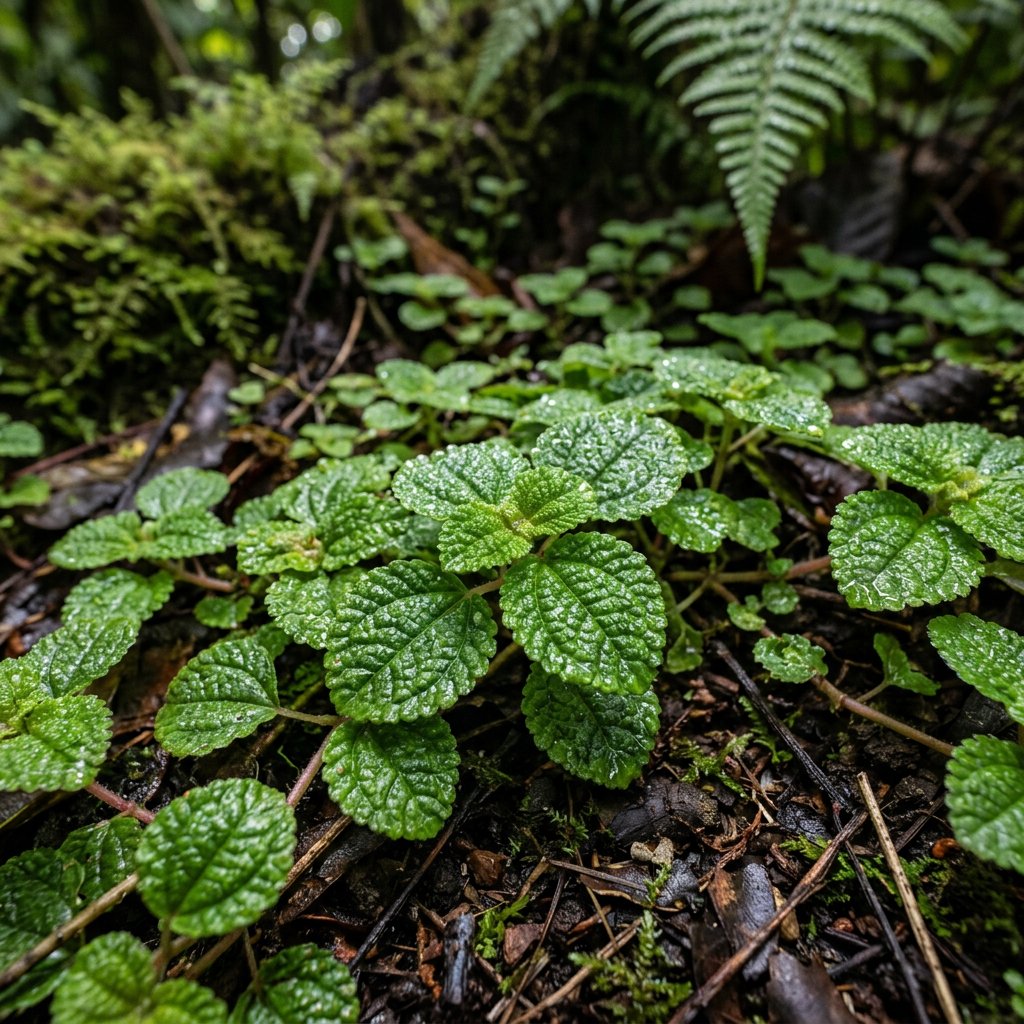
Plant Overview
Often called "Creeping Charlie" (though it shares this name with several other plants), Pilea nummulariifolia is a fast-growing evergreen perennial native to the lush environments of the Caribbean and northern South America. Its vibrant, crinkly leaves create a "puckered" texture that makes it a standout in any indoor jungle. Whether trailing from a high shelf or acting as a soft floor for a terrarium, this plant is a master of filling space with a carpet of vivid green.
🔍 How to Identify
- 🍃 The "Quilted" Leaf: The most striking feature is the deeply veined, "quilted" texture of the leaves, which feel slightly bumpy to the touch.
- 🟢 Shape & Edges: The leaves are small, round, and have delicate scalloped (crenate) edges that look like tiny green coins.
- 🎋 Trailing Stems: It produces long, reddish-tinted stems that creep along the ground or cascade over the sides of a pot, creating a waterfall effect.
🏡 In Your Garden
- 💧 Humidity is Key: Unlike some of its hardier Pilea cousins, the Creeping Charlie thrives in high-humidity environments. If the air is too dry, its thin leaves will quickly crisp at the edges; it is often most at home in a steamy bathroom or a glass terrarium.
- ✂️ The Pinch Method: This plant is an aggressive grower. To prevent it from looking "leggy" or thin, you should regularly pinch off the growing tips. This forces the plant to branch out, resulting in a much fuller and bushier appearance.
- 🌱 Surface Rooting: This plant has a unique "creeping" habit where the stems will grow new roots wherever they touch moist soil. This makes it incredibly easy to propagate—simply press a stem onto the dirt, and it will likely take hold!
⚠️ Safety & Toxicity
- 🐾 Pet Assessment: Safe and Non-toxic.
- 👶 Family Friendly: This Pilea is a fantastic choice for households with curious cats, dogs, or toddlers. While it isn't meant for snacking, it does not contain the irritants or toxins found in many other common houseplants like Philodendrons or Lilies.
✨ Fun Fact
The specific epithet nummulariifolia is derived from the Latin word nummulus, meaning "small coin." This refers to the plant's resemblance to a scattering of tiny green coins across the forest floor!

Detailed Care Instructions
| Soil Ph | 5-6 |
| Humidity | High |
| Lighting | Full Sun |
| Soil Type | Average, Well-Draining |
| Bloom Time | Spring |
| Difficulty | Medium |
| Plant Type | Vine |
| Hibernation | Cold Period |
| Mature Size | 1"-3" |
| Native Area | Tropical And Subtropical Regions Around The World (Except For Australia And New Zealand) |
| Temperature | 18°C - 25°C |
| Sun Exposure | Partial Sun |
| Hardiness Zones | 9-11 |
To grow a Pilea Nummulariifolia plant, also known as Creeping Charlie or String of Coins, follow these steps:
- Purchase a healthy Pilea Nummulariifolia plant from a reputable nursery or garden center. Alternatively, you can propagate new plants from stem cuttings.
- Choose a suitable pot or container with drainage holes. Pilea Nummulariifolia prefers well-draining soil, so use a mix of peat moss, perlite, and regular potting soil.
- Place the pot in a location with indirect, bright light. Avoid direct sunlight as it may scorch the leaves.
- Water the plant regularly but make sure the soil is allowed to dry out slightly between watering. Overwatering can lead to root rot. Stick your finger about an inch into the soil, and if it feels dry, it's time to water. Adjust the frequency based on the plant's needs and the humidity of your environment.
- Maintain a moderate level of humidity around the plant, as Pilea Nummulariifolia prefers a slightly humid environment. You can mist the leaves occasionally or place a tray of water nearby to increase humidity.
- Fertilize the plant during the growing season, from spring to early autumn, using a balanced houseplant fertilizer diluted to half strength. Apply the fertilizer every 4-6 weeks.
- Trim or pinch back the plant regularly to encourage bushier growth. This can be done by snipping off the ends of the stems or pinching off the top growth. This will also help to control the plant's trailing habit and maintain a compact shape.
- Watch out for common pests such as spider mites or aphids. If you notice any infestation, treat it promptly using organic pest control methods like neem oil or insecticidal soap.
By following these steps and providing the right conditions, you can successfully grow and enjoy a thriving Pilea Nummulariifolia plant.

Place in a window with dappled sun or a spot in the middle of a room. Or directly in a window facing west or east.

To water this plant, you should first determine the moisture level of the soil by sticking your finger about an inch deep into the soil. If the soil feels dry at that depth, it's time to water. Use room temperature water and pour it slowly onto the soil until it begins to drain out of the drainage holes in the pot. Make sure to water evenly around the plant and avoid getting water on its leaves. Wait for the soil to dry out slightly before watering again, as overwatering can lead to root rot. Adjust your watering schedule based on the plant's specific needs and the conditions in your home, such as humidity levels and sunlight exposure.
To fertilize this plant, use a balanced fertilizer with equal amounts of nitrogen, phosphorus, and potassium. Dilute the fertilizer with water according to the instructions on the package, then apply it to the soil around the base of the plant. Fertilize once a month during the growing season, which is typically spring and summer. Be sure not to over-fertilize, as this can damage the plant.
The ideal soil type for the Pilea Nummulariifolia plant should be well-draining and rich in organic matter. It should have a slightly acidic to neutral pH level and be able to retain moisture without becoming waterlogged. A mixture of peat moss, perlite, and sand is an excellent choice for a potting soil. Additionally, adding some compost or worm castings to the mixture can help provide nutrients for the plant. The soil should be kept moderately moist, but the plant should be allowed to dry out slightly between waterings to prevent root rot.
To propagate this plant, start by taking stem cuttings from a healthy, well-established parent plant. Choose a stem that is at least 3-4 inches long and has several sets of leaves. Using a clean, sharp pair of scissors or pruners, make a clean cut just below a leaf node (where the leaves meet the stem).
Remove the lower leaves, leaving only 2-3 leaves at the top of the stem. This will help the cutting focus its energy on growing new roots rather than supporting a lot of foliage.
Dip the cut end of the stem into rooting hormone powder (optional) and place it into a small pot filled with moist potting soil. Gently press the soil around the stem to hold it in place.
Cover the pot with a clear plastic bag or dome to create a humid environment for the cutting. Place it in bright, indirect light and keep the soil moist but not waterlogged. Check regularly for signs of new growth or roots.
Once the cutting has established roots and new growth, you can carefully transplant it into a larger pot or into the garden if you live in a suitable climate.
Common pests of the creeping charlie include Mealybugs, spider mites, fungus gnats, thrips. Make a habit of checking your creeping charlie frequently for pests so that any infestations can be caught and managed early.








