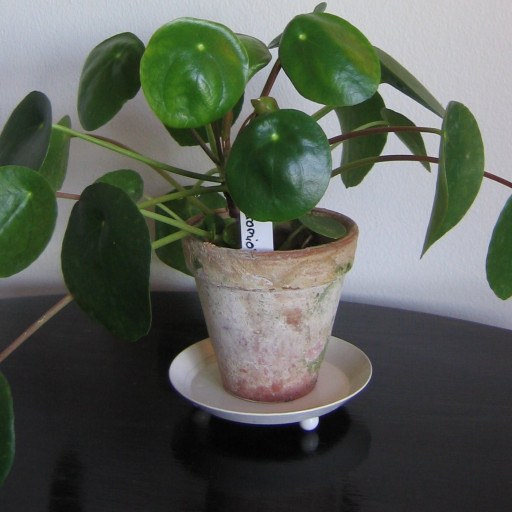
Plant Overview
Often called the Chinese Money Plant, UFO Plant, or Pancake Plant, this charming succulent-like perennial has become a global superstar for its quirky, geometric look. Originally discovered in the high-altitude Yunnan Province of China, it spent decades as a "secret" plant shared between friends via cuttings before it was ever sold in shops. Its perfectly circular leaves look like floating green coins, symbolizing prosperity and good fortune in many cultures.
🔍 How to Identify
- 🟢 Leaf Shape: Perfectly round, flat, leathery leaves that look like flying saucers or green pancakes.
- 🌱 Stem Attachment: A unique "peltate" leaf, meaning the long leaf-stalk (petiole) attaches to the center of the leaf rather than the edge.
- 👶 The Pups: It frequently produces "babies" or offsets that sprout directly from the soil or the main woody stem, creating a lush, clustered appearance.
🏡 In Your Garden & Home
- ☀️ The Lean Factor: This plant is highly phototropic, meaning it grows aggressively toward the light. To keep its "money tree" shape symmetrical, you’ll need to rotate the pot a quarter-turn every few days.
- 💧 Succulent Tendencies: While it looks like a lush tropical, its thick leaves store water. It prefers to dry out almost completely between waterings; if you see the leaves start to look slightly "sad" or droopy, it’s the plant’s way of asking for a drink.
- 🪴 Propagation Joy: It is nicknamed the "Friendship Plant" because it is incredibly easy to propagate. Simply snip a "pup" once it's a few inches tall, pop it in water or soil, and you have a new gift for a neighbor.
⚠️ Safety & Toxicity
- ✅ Non-Toxic: This is one of the safest plants for a busy household. It is non-toxic to cats, dogs, and horses.
- 🧒 Kid-Friendly: It poses no chemical threat to children, though its leaves are quite brittle and can snap off easily if handled roughly during play.
✨ Fun Fact
🎁 For over 40 years, the Pilea peperomioides was almost unknown to Western botanists. It was spread throughout Europe entirely by amateur gardeners and hobbyists who shared cuttings with one another, long before it ever appeared in a commercial nursery!

Detailed Care Instructions
Pilea peperomioides (pancake plant or Chinese money plant) is easy to take care of. They need indirect light and water and, if healthy, will sprout offshoots so you can enjoy more of these plants or share them with family and friends.
What kind of light does a pancake plant need?
These plants do well in medium to bright indirect light. The leaves can burn if placed in direct sunlight.
How often should the Chinese money plant be watered?
Water a pancake plant once a week at the most. Watch for the soil to become dry and leaves to start drooping as good indications that it's time to water it.
| Color | White |
| Soil Ph | 6.0-7.0 |
| Humidity | Normal |
| Lighting | Part Sun |
| Toxicity | Non-Toxic |
| Soil Type | Well-Draining, Rich |
| Bloom Time | Spring |
| Difficulty | Easy |
| Plant Type | Evergreen Perennial |
| Hibernation | Cold Period |
| Mature Size | 12 Inches Tall |
| Native Area | China |
| Temperature | 18°C - 25°C |
| Sun Exposure | Bright Indirect Light |
| Hardiness Zones | 9B - 11B |
To grow a Pilea peperomioides plant successfully, follow these steps:
- Obtain a healthy plant: You can either buy a Pilea plant from a local nursery or propagate one from a mature plant.
- Location: Place your Pilea plant in a spot with bright, indirect sunlight. These plants cannot tolerate direct sunlight as it may scorch their leaves. They can also adapt to slightly lower light conditions.
- Temperature and Humidity: Pilea plants prefer average to slightly warm temperatures between 60°F to 75°F (15°C to 24°C). Keep them away from cold drafts. Moderate humidity is ideal for their growth, so misting the leaves or using a humidifier is beneficial.
- Watering: Water your Pilea when the top inch (2.5 cm) of soil feels dry. Do not overwater as these plants are sensitive to root rot. Allow excess water to drain from the pot to avoid waterlogged conditions.
- Soil: Use well-draining soil with a mixture of peat moss, perlite, and regular potting soil. It should hold some moisture without becoming too compact.
- Fertilization: Fertilize your Pilea plant once a month during the growing season (spring and summer) using a balanced, water-soluble fertilizer. Follow the package instructions for proper dilution.
- Pruning: Trim any leggy or damaged stems to maintain a bushier appearance. This will also encourage new growth.
- Propagation: To propagate new Pilea plants, choose a healthy, mature plant and gently separate the smaller baby plants that grow on the edges. Plant them in a separate pot with fresh soil and care for them as usual.
- Repotting: Pilea plants prefer slightly crowded conditions, so repot them only once every two years. Choose a pot slightly larger than the current one and use fresh soil.
By following these guidelines, you can enjoy the growth and beauty of your Pilea peperomioides plant.

Place in a window with dappled sun or a spot in the middle of a room. Or directly in a window facing west or east.

The watering requirements of this plant are not overly complicated, but it's important to get it right to ensure the plant stays healthy.
When watering, be sure to give the soil a good soak, but avoid leaving it sitting in standing water as this can lead to root rot. Allow the soil to dry out slightly between watering, as the plant prefers slightly dry conditions.
To determine if your plant needs watering, stick your finger about an inch into the soil; if it feels dry, it's time to water. Be mindful not to over-water, as this can cause damage to the plant's roots.
In general, it's better to underwater than to over water. If in doubt, wait a few days until the soil feels dry before watering again.
If you notice that the leaves are wilting or turning yellow, this may be a sign of over watering or under watering, so adjust your watering habits accordingly.
To fertilize the plant, use a balanced liquid fertilizer with a ratio of 10-10-10. Mix the fertilizer according to the manufacturer's instructions and apply it to the soil every two weeks during the growing season (spring and summer). During the dormant season (fall and winter), reduce fertilization to once a month. Avoid over-fertilization as it can damage the roots and compromise the health of the plant. Always water the plant thoroughly before fertilizing to prevent burning the roots.
For the Pilea peperomioides plant, it is best to use a well-draining soil that is rich in nutrients. The soil should be moist but not waterlogged, as the plant prefers a slightly drier environment. A soil mix that is suitable for succulents and cacti is a good option. It is also important to provide good drainage for the plant by placing it in a pot with drainage holes or adding a layer of gravel at the bottom of the pot. The addition of organic matter, such as compost or peat moss, can also improve the soil's fertility and texture. It is recommended to avoid using heavy clay soils or soils that retain too much moisture, as they can lead to root rot and other fungal infections.
To propagate this specific plant, you can start by taking a healthy stem cutting that has at least one leaf node. Make sure to cut the stem cleanly with a sharp pair of scissors or pruning shears.
Next, you will need to let the cutting dry for a few hours to prevent it from rotting when planted. Once the cut end has dried, you can plant the cutting in moist potting soil, making sure that the node is submerged in the soil.
It's important to keep the soil moist but not overly wet while the cutting establishes roots. You can do this by misting the plant or lightly watering the soil. Keep the cutting in a warm, bright location out of direct sunlight.
Within a few weeks, you should start to see roots developing from the node. Once the plant has developed a good root system and is growing well, you can transplant it to a larger pot or into your garden.
Common pests of the chinese money plant include Mealybugs, fungus gnats, aphids, thrips. Make a habit of checking your chinese money plant frequently for pests so that any infestations can be caught and managed early.








