Plant Overview
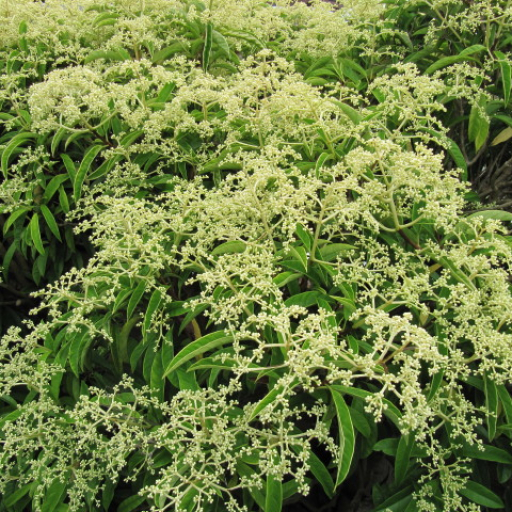
Often called the Evergreen Climbing Hydrangea, this elegant climber is a hidden gem for gardeners seeking to beautify shady walls. Native to the damp, misty forests of Eastern Asia, it offers a sophisticated "polished" look with its leathery leaves. While most climbers leave a skeleton of bare branches in winter, this plant keeps its deep green cloak year-round, finishing the season with a spectacular "foam" of white blossoms.
🔍 How to Identify
- 🍃 Leathery Foliage: The leaves are thick, glossy, and lance-shaped, strongly resembling those of a Viburnum. They are much tougher and more "plastic" to the touch than standard garden hydrangeas.
- ☁️ Frothy Blooms: In late summer and autumn, the plant produces large, terminal clusters of creamy-white flowers. These lack the large "petals" (bracts) of common hydrangeas, creating a delicate, misty, or "lace-like" effect.
- 🧗 Aerial Rootlets: Look for tiny, fringe-like roots along the stems. These allow the plant to "glue" itself to brickwork or tree bark without the need for wires or a trellis.
🏡 In Your Garden
- 🐌 The "Sleep, Creep, Leap" Rule: This plant is notoriously slow to establish. For the first two years, it may seem like it isn't growing at all as it focuses on its root system. Once settled, however, it becomes a vigorous and sturdy climber.
- 🌑 North-Wall Hero: It is one of the few flowering climbers that truly thrives in deep or partial shade. It prefers "cool feet" (shaded roots) and moist, well-drained soil, making it perfect for those difficult north-facing garden spots.
⚠️ Safety & Toxicity
- 🐾 Mildly Toxic: Similar to its Hydrangea relatives, the plant contains cyanogenic glycosides. If ingested in large quantities, it can cause nausea, vomiting, or lethargy in pets and humans.
- 🧤 Sap Sensitivity: The sap can be a mild skin irritant for some people. It is best to wear gloves when performing heavy pruning to avoid any potential "itchy" reactions.
✨ Fun Fact
Unlike many flowering vines that bloom in the height of spring, Pileostegia viburnoides waits until late August and September to show off. This makes it a vital "bridge" plant for late-season pollinators like hoverflies and bees when other nectar sources are beginning to disappear.

Detailed Care Instructions
To grow Pileostegia viburnoides, also known as the climbing hydrangea, you can follow these steps:
- Choose the right location: Pileostegia viburnoides prefers partial shade to full shade. It is best to choose a spot that receives morning sun or dappled sunlight throughout the day. Avoid planting it in areas with direct afternoon sun.
- Prepare the soil: The plant prefers fertile, well-draining soil. Prepare the planting area by loosening the soil and incorporating organic matter, such as compost or well-rotted manure, to improve drainage and enrich the soil's nutrients.
- Planting: Dig a hole that is slightly larger than the root ball of the plant. Gently remove the plant from its container and place it in the hole. Backfill the hole with soil, ensuring that the top of the root ball is level with or slightly above the soil surface. Firmly tamp down the soil around the plants and water thoroughly.
- Watering: Water the plant regularly, especially during the establishment period. Keep the soil moist but not waterlogged. Once the plant is established, it is moderately drought-tolerant but will benefit from regular watering during dry spells.
- Mulching: Apply a layer of organic mulch, such as bark chips or compost, around the base of the plant. Mulching helps retain moisture in the soil, suppresses weeds, and insulates the roots in extreme temperatures.
- Pruning: Pileostegia viburnoides requires minimal pruning. You may trim back any dead, damaged, or overly vigorous growth in late winter or early spring before new growth begins. Avoid excessive pruning, as it can reduce flowering.
- Support: As a climbing plant, Pileostegia viburnoides needs a support structure to climb on. Install a trellis, fence, or wall for the plant to cling on to. You may need to tie the branches to the support initially until they start clinging naturally.
- Fertilizing: Apply a balanced slow-release fertilizer in spring to provide additional nutrients. Follow the manufacturer's instructions for application rates.
With proper care and maintenance, your Pileostegia viburnoides plant should grow and thrive, covering the support structure with its lush foliage and producing clusters of creamy white flowers in summer.
To water this plant, it is important to first check the moisture level of the soil by sticking a finger into the soil. If the top inch of soil feels dry, it is time to water the plant. When watering, be sure to water the plant thoroughly, allowing water to soak into the soil and drain out of the bottom of the pot. Avoid overwatering as this can lead to root rot. It is also important to keep the leaves dry to prevent fungal infections. Watering should be adjusted according to the environment and the time of year, with less watering needed during cooler months and more frequent watering during warmer, drier months.
To fertilize this plant, apply a balanced, slow-release fertilizer in early spring before new growth emerges. Use a low-nitrogen fertilizer to avoid excessive foliage growth, and follow the package instructions for proper application rates. Spread the fertilizer evenly around the base of the plant, avoiding contact with the foliage. Water thoroughly after fertilizing to help the nutrients penetrate the soil. Avoid fertilizing after mid-summer to prevent stimulating new growth that may not have time to harden off before winter.
When selecting soil for the Pileostegia Viburnoides plant, it is important to consider its natural habitat, which typically consists of woodland areas with rich, well-draining soil. Therefore, a suitable soil mix for this plant would ideally be slightly acidic and rich in organic matter, with good drainage and aeration abilities. A blend of peat moss, perlite, and compost or well-rotted manure can create a suitable soil mix for this plant. The soil should be moist but not waterlogged, and the plant should be planted at the same depth it was growing before. Regular watering and fertilization will aid in the growth and health of the Pileostegia Viburnoides plant.
To propagate this plant, you will need to select healthy, mature stems for cutting. Use a sharp, sterilized blade to cut a 4-6 inch stem at a 45-degree angle, just below a node. Remove any leaves from the lower half of the cutting.
Prepare a pot with well-draining soil and moisten it slightly. Dip the cut end of the stem in rooting hormone powder, then place it in the soil, pressing firmly so the soil covers the base of the stem.
Cover the pot with a plastic bag or clear plastic container to create a humid environment, and place it in bright, indirect light. Water the cutting lightly to keep the soil moist but not soggy.
After 4-6 weeks, gently tug on the stem to test for root development. Once roots have formed, remove the plastic covering and care for the plant as usual.








