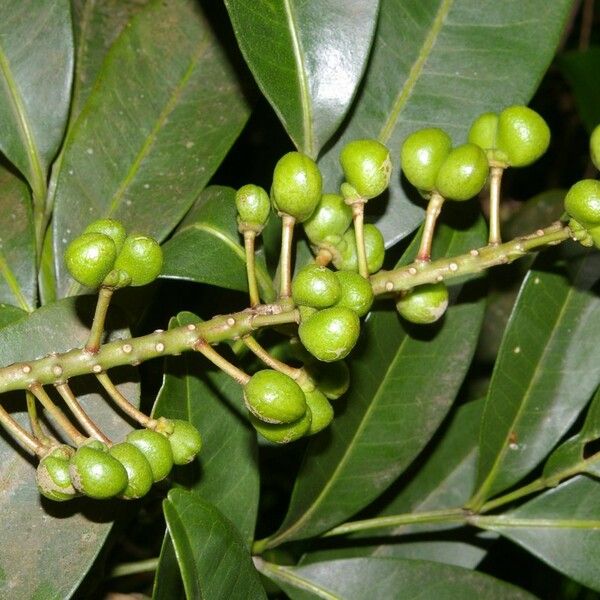
Plant Overview
Often called the Guadeloupe Jaborandi, this unassuming evergreen shrub holds a legendary place in both tribal lore and modern medicine. Native to the Caribbean and parts of Central America, it has been whispered about for centuries as the "sweat-inducing plant." While it may look like a simple tropical hedge, its leaves are biological factories for powerful compounds used to treat serious eye conditions today.
🔍 How to Identify
- 🍃 Leathery Leaflets: The foliage consists of thick, waxy leaves usually divided into one to three leaflets. They have a distinct "sturdy" feel, designed to withstand humid tropical air.
- 🍷 Long Flower Spikes: It earns the name racemosus from its "racemes"—long, drooping flower spikes that can reach over a foot in length, covered in tiny, reddish-purple or greenish blossoms.
- 🌳 Growth Habit: This is a woody perennial that typically grows as a large shrub or a small, multi-stemmed tree, often reaching heights of 6 to 15 feet in the wild.
🏡 In Your Garden
- ☀️ Dappled Shade Specialist: In its natural habitat, this plant lives under the canopy. If you are growing it, avoid harsh, direct midday sun which can scorch the waxy leaves; it prefers the soft, filtered light of a "jungle" environment.
- 💧 Humidity and Drainage: It craves high humidity but hates "wet feet." It requires a very well-draining, slightly acidic soil mix. It is quite sensitive to frost and will quickly drop its leaves if temperatures dip near freezing.
⚠️ Safety & Toxicity
- 🧪 Status: Toxic & Medicinal.
- 🚫 Details: The plant contains high concentrations of the alkaloid pilocarpine. If ingested by pets, livestock, or curious children, it can cause "SLUD" symptoms: Salivation, Lacrimation (tearing), Urination, and Defecation, along with potentially dangerous drops in heart rate. It should be handled as an ornamental only and kept away from nibbling animals.
✨ Fun Fact
The common name "Jaborandi" comes from the Tupi-Guarani indigenous language, roughly translating to "the plant that makes you spit." This refers to its potent ability to trigger the salivary glands, a trait that eventually led scientists to use it as the primary treatment for dry mouth and glaucoma.

Detailed Care Instructions
- Determine the watering needs of the plant by checking the soil moisture. Stick your finger one inch into the soil and if it feels dry, it is time to water.
- Use room temperature water to avoid shocking the roots.
- Water the plant slowly and evenly to avoid creating a puddle. Water from the base of the plant or use a watering can with a long spout to reach the roots.
- Water only when necessary and avoid over-watering as it may cause root rot.
- Ensure good drainage by using well-draining soil and a flowerpot with a drainage hole.
- During the growing season, water once a week or whenever the soil feels dry. Reduce watering during the dormant season.
- If unsure about the watering schedule, monitor the plant regularly and adjust it according to its response.
The ideal soil for Pilocarpus Racemosus is a well-draining soil that is slightly acidic with a pH range of 5.5 to 6.5. The soil should be rich in organic matter and nutrients, which can be accomplished by adding compost or aged manure. The plant prefers a soil that is moist but not waterlogged, so it's important to avoid over-watering. A sandy loam soil is particularly suitable, as it provides good drainage while also retaining moisture. Additionally, the plant prefers full sun or partial shade and can benefit from a layer of mulch to help conserve moisture and maintain an even soil temperature.








