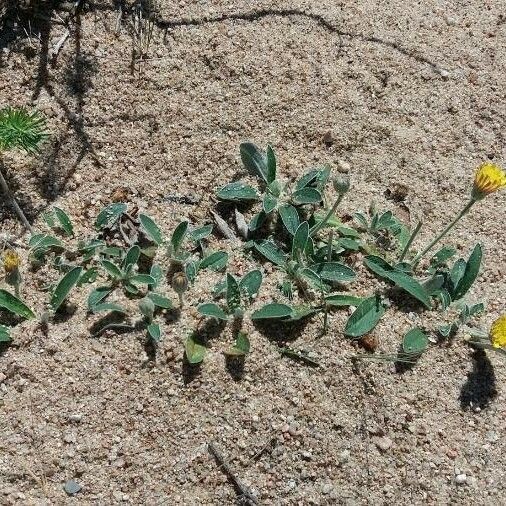
Plant Overview
Known as the Shaggy Mouse-ear Hawkweed, this resilient little perennial looks like a dandelion that decided to put on a thick, woolly sweater. Often found clinging to coastal cliffs or tucked into the crevices of dry, rocky slopes, it is a master of survival in harsh, nutrient-poor environments. In the language of flowers, hawkweeds were once thought to give hawks their keen eyesight, leading to its poetic association with vision and clarity.
🔍 How to Identify
- ☁️ The "Shaggy" Foliage: The leaves are arranged in a tight basal rosette and are covered in exceptionally long, white, silky hairs that give the plant a silvery-grey appearance.
- 🌼 Solitary Blooms: Unlike some hawkweeds that branch out, this species typically produces a single, bright lemon-yellow flower head on a leafless, hairy stalk.
- 📏 Compact Stature: It remains very low to the ground, usually under 6 inches, making it look like a fuzzy silver coin pressed against the earth.
🏡 In Your Garden
- 🏜️ The "Thrive on Neglect" Rule: This plant is perfect for rock gardens or "living walls." It actually struggles in rich, fertilized garden soil; it prefers "hungry" ground with excellent drainage to prevent its fuzzy crown from rotting.
- 🛡️ Coastal Specialist: Because of its dense hairs, it is incredibly resistant to salt spray and drying winds, making it an ideal choice for seaside gardeners where other plants might wither.
⚠️ Safety & Toxicity
- ✅ Status: Non-toxic and generally safe.
- 🧤 Skin Sensitivity: While not poisonous, the dense, stiff hairs on the leaves can occasionally cause a mild mechanical irritation (a "tickling" or itchy sensation) on very sensitive skin or if handled excessively by children.
✨ Fun Fact
The genus name Pilosella literally translates to "small hair" in Latin. Scientists believe the "shagginess" of this specific hawkweed isn't just for looks—it acts as a biological sunshade and windbreak, trapping a layer of still air against the leaf to prevent moisture loss in its sun-scorched habitats.

Detailed Care Instructions

Some plants require more regular watering than others, which should be done every few days. It's critical to maintain the soil moist all of the time. The water requirements of the same plant placed in pots with varying sizes will differ. Because the water in the smaller pot evaporates faster than the water in the larger pot, it will require more watering. Regardless of pot size, the surface should constantly be maintained moist.








