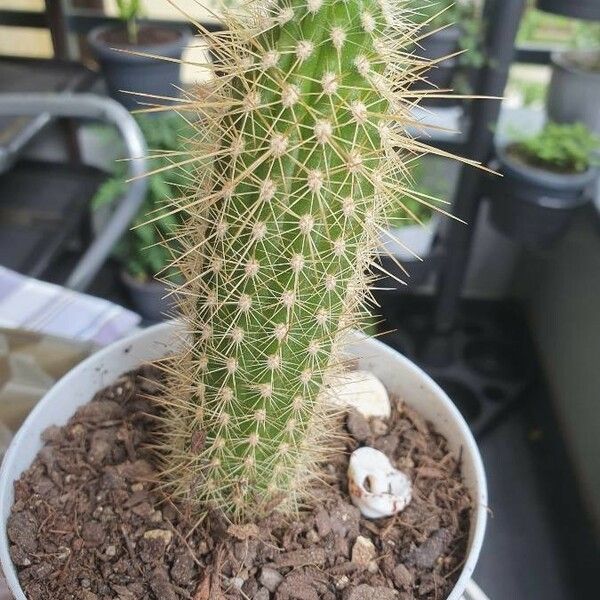
Plant Overview
Commonly known as the Golden Column or Blue Torch, this Brazilian native is a showstopper in any succulent collection. It is famous for its striking contrast: a powdery, sky-blue stem encased in a cage of brilliant, honey-gold spines. In the wild, it stands as a majestic pillar in the arid Caatinga forests, glowing like a golden rod when the sun hits its dense bristles.
🔍 How to Identify
- 🌵 The Stem: A tall, columnar body that displays a magnificent "glaucous" blue hue. This blue isn't just color; it’s a waxy coating that protects the plant from the harsh tropical sun.
- ✨ The Spines: Unlike many cacti with sparse needles, this species is densely covered in fine, golden-yellow spines that create a shimmering, "hairy" appearance along the ribs.
- 🌸 The Flowers: When mature, it produces tubular, nocturnal flowers that are typically white or cream-colored, emerging from a specialized woolly area on the side of the stem.
🏡 In Your Garden
- ☀️ Light is the Secret: To keep that iconic "electric blue" color, this cactus needs intense light. In low light, the blue fades to a dull green, and the golden spines grow thinner and paler.
- 💧 The "Dry Feet" Rule: Because it comes from rocky, well-draining environments, it is highly susceptible to root rot. It’s better to forget to water it for a month than to water it twice in one week.
- 🌡️ Warmth Lover: This is a tropical cactus, meaning it has zero tolerance for frost. If you live in a chilly climate, it must be moved indoors long before the first frost hits.
⚠️ Safety & Toxicity
- 🐾 Non-Toxic: This cactus is generally considered non-toxic to cats, dogs, and humans if accidentally nibbled.
- 🌵 Physical Hazard: While not poisonous, the spines are very fine and numerous. They can easily puncture the skin or get stuck in a curious pet's fur, causing significant irritation and discomfort.
✨ Fun Fact
The "blue" skin of the Pilosocereus chrysostele acts exactly like human sunscreen. This waxy layer (called epicuticular wax) reflects UV rays and prevents the plant from losing moisture in the scorching Brazilian heat!

Detailed Care Instructions
To grow a Pilosocereus Chrysostele plant, also known as the golden column cactus, here are some steps you can follow:
- Lighting: Place your plant in a bright area with indirect sunlight. It prefers approximately 6-8 hours of sunlight per day. If growing indoors, a south-facing window is ideal, but you can also use artificial grow lights.
- Temperature: Pilosocereus Chrysostele plants thrive in temperatures between 60°F-85°F (15°C-29°C). Avoid exposing them to temperatures below 50°F (10°C).
- Watering: Water your plant deeply but only when the soil is completely dry. Overwatering can lead to root rot. Test the moisture levels by sticking your finger about an inch into the soil. If it feels dry, it's time to water. During the winter months, reduce watering frequency.
- Soil: Use a well-draining cactus or succulent potting mix. It should contain perlite, sand, or grit to ensure proper drainage. Avoid using heavy soils that retain moisture, as this can cause root rot.
- Potting: Choose a pot with drainage holes to prevent waterlogged soil. Transplant the plant every two years or when it becomes root-bound. Select a pot that is slightly larger than the root ball, as these plants prefer slightly snug conditions.
- Fertilizer: Feed your Pilosocereus Chrysostele plant with a balanced cactus or succulent fertilizer during the growing season (spring to late summer) every 4-6 weeks. Follow the instructions on the fertilizer label for dosage and application.
- Pruning: Prune your plant to remove any dead or damaged stems. You can also shape it by pinching off the top parts to promote branching. Be careful while pruning as the golden column cactus has spines.
- Propagation: Pilosocereus Chrysostele can be propagated from stem cuttings. Allow the cut end to dry for a few days, then place it in well-draining soil. Water sparingly until roots develop.
- Pests: Occasionally, these plants can face infestations of mealybugs or spider mites. Regularly inspect your plant for any signs of pests and take appropriate measures, such as using insecticidal soap or wiping the leaves with a damp cloth.
- Winter care: During the winter, decrease watering frequency and protect the plant from cold drafts. If necessary, provide extra insulation by moving it to a warmer location or using a frost cloth.
By following these guidelines, you can help your Pilosocereus Chrysostele plant grow and thrive. Remember to monitor its specific needs and adjust care accordingly.

Place in a bright room that is sun drenched almost all day. Or directly in a south-facing window.

Pilosocereus Chrysostele plant should be watered thoroughly but infrequently, allowing the soil to dry out partially between waterings. It is important to avoid over-watering as this can cause root rot and other issues. The amount and frequency of watering will depend on factors such as the temperature and humidity of the environment, the type of soil, and the size of the plant. It is recommended to water in the morning or early evening to avoid evaporation and limit water stress during the hottest part of the day. When watering, it is best to pour the water directly onto the soil, avoiding the leaves and stem. It is also important to ensure proper drainage to prevent water from pooling around the roots.
To fertilize the plant, you can use a balanced, slow-release fertilizer during the growing season (spring and summer). Dilute the fertilizer to half strength and apply it once a month. Avoid fertilizing during the dormant season (fall and winter). Make sure to water the plant before and after fertilizing to prevent fertilizer burn.
The Pilosocereus Chrysostele plant thrives best in a well-draining soil that is slightly acidic in nature. The ideal soil type for this plant is a mixture of sand, perlite, and peat moss in equal proportions, although a well-draining cactus potting mix can also be used. The soil should be organically enriched with humus or compost to provide nutrients to the plant. The pH level of the soil should be between 6 to 7, and the plant prefers a slightly moist soil but can tolerate drought-like conditions. The soil should be allowed to dry out completely before the next watering, and the plant should be kept in well-drained containers to prevent waterlogging. A soil blend containing fertilizers or high levels of nitrogen should be avoided, as it can cause rapid growth and weakens the plant's structure. Overall, the Pilosocereus Chrysostele plant prefers a lean and well-draining soil with good aeration to promote healthy root growth and overall well-being.
To propagate this plant, you will need to take a stem cutting from a mature, healthy plant. Use a clean, sharp knife to cut a section of stem that is 4-6 inches long and has at least 2-3 nodes. Allow the cutting to dry out and callus over for a few days before planting it in a well-draining soil mix. Water sparingly and keep the cutting out of direct sunlight to prevent it from drying out. With proper care, the cutting should develop roots and begin to grow within a few weeks.
Common pests of the deadly dangerous daddy cactus include Scale insect, mealybugs, spider mites, thrips. Make a habit of checking your deadly dangerous daddy cactus frequently for pests so that any infestations can be caught and managed early.








