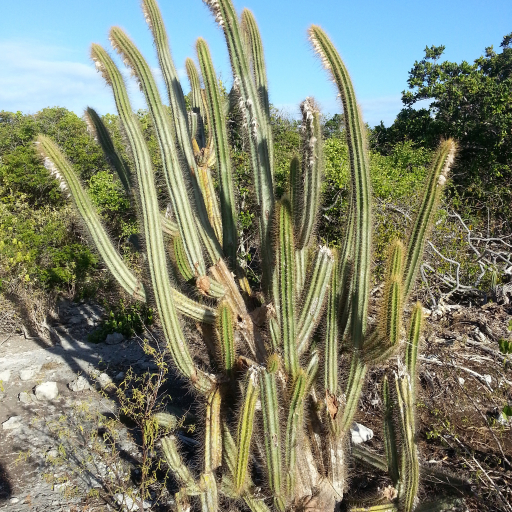
Plant Overview
Known as "Royen’s Tree Cactus" or often grouped with the "Blue Candle" family, this Caribbean native is a striking vertical masterpiece. In the wild, it forms majestic, multi-branched forests that look like something out of a prehistoric seascape. Its most mesmerizing feature is the frosty blue-teal hue that coats its stems, shimmering like sea glass under the hot tropical sun.
🔍 How to Identify
- 🌵 Columnar Growth: It features tall, upright stems that can branch from the base or higher up as the plant matures, creating a tree-like silhouette.
- ❄️ Waxy Blue Coating: A distinct "glaucous" layer covers the ribs, giving the cactus a cool, metallic blue-green appearance that stands out against greener foliage.
- ☁️ Woolly Areoles: Along the vertical ribs, you’ll find small, fuzzy white or yellowish tufts where the spines emerge, looking like tiny clouds of lint.
- 🌸 Nocturnal Blooms: It produces large, funnel-shaped white or pale pink flowers that open exclusively at night to attract specialized pollinators.
🏡 In Your Garden
- ☀️ Natural Sunscreen: That beautiful blue color isn't just for show; it is a protective wax (epicuticular wax) that reflects intense UV rays. If the plant turns greener, it is often a sign that it isn't receiving enough direct sunlight.
- 🏜️ Drainage is Non-Negotiable: Because it hails from rocky, coastal Caribbean regions, its roots are highly sensitive to "wet feet." It requires a very gritty potting mix to prevent root rot.
- 🌡️ Cold Sensitivity: Unlike some desert cacti that can handle a light frost, this species is strictly tropical. It prefers to stay warm year-round and should be brought indoors if temperatures dip near freezing.
⚠️ Safety & Toxicity
- 🌵 Physical Hazard: While the plant is not chemically poisonous, it is armed with sharp, stiff spines. These can cause painful punctures and localized skin irritation if handled without thick gloves.
- 🐾 Pet & Child Safety: It is generally considered non-toxic to cats, dogs, and humans if accidentally nibbled. However, the physical danger of the spines makes it a "look but don't touch" plant for curious pets and toddlers.
✨ Fun Fact
In its native island habitats, Pilosocereus curtisii serves as a "midnight buffet" for nectar-feeding bats. These bats are the primary pollinators, darting from flower to flower under the cover of darkness to drink the cactus's sweet nectar.

Detailed Care Instructions








