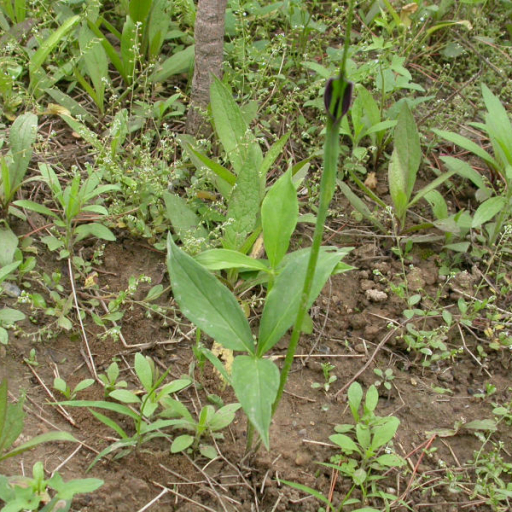
Plant Overview
Commonly known as the Crowdipper, Pinellia ternata is a curious little woodland perennial hailing from East Asia. Its most striking feature is its flower, which looks like a tiny green cobra or a hooded monk peeking out from the foliage. In ancient lore, its appearance was often timed with the midsummer rains, leading to its various nicknames across China and Japan.
🔍 How to Identify
- 🍃 The Three-Part Leaf: Unlike many of its cousins, this plant typically features leaves divided into three distinct leaflets, which gives it the specific name ternata.
- 🐍 The Whip-Like Spadix: The flower consists of a green, hooded spathe from which a long, thin "tail" (the spadix) extends upward and curves out, resembling a fishing line or a snake's tongue.
- 📿 Stem Bulbils: One of its most unique traits is the presence of small, bead-like bulbils (mini tubers) that grow directly on the leaf stalks, allowing the plant to "clone" itself effortlessly.
🏡 In Your Garden
- 🌱 The Great Colonizer: While beautiful in a woodland setting, be warned—this plant is a prolific spreader. Those little bulbils on the stems drop to the ground and start new plants, which can make it invasive in disturbed soil or small garden beds.
- ☁️ Woodland Preferences: It thrives in the "in-between" spaces. It loves dappled shade and moist, rich soil. If the soil dries out completely, the plant may go dormant early, retreating into its underground tuber until the next wet season.
⚠️ Safety & Toxicity
- 🚫 Toxic if Raw: All parts of the Pinellia ternata contain calcium oxalate crystals, which act like tiny needles if touched or ingested.
- 👄 The Irritant: If any part of the plant is chewed, it causes immediate swelling of the mouth and throat, intense stinging, and digestive distress. While it is used in Traditional Chinese Medicine, it undergoes intense professional processing to remove toxins—never attempt to use it yourself. Keep it away from curious pets and children.
✨ Fun Fact
The "Crowdipper" gets its name from a bit of poetic observation: the long, protruding spadix is said to be the perfect height for a thirsty crow to use as a perch while dipping its beak into the water-holding "cup" of the flower's hood.

Detailed Care Instructions
To grow Pinellia Ternata (also known as the Green Dragon Plant or Chinese Arum), follow these steps:
- Planting: Select a well-draining pot or garden bed with rich, loamy soil. Pinellia Ternata prefers partial to full shade, so choose a location with indirect sunlight or dappled shade. Plant the rhizomes or bulbs about 2 inches deep in the soil, ensuring that the growing tips are facing up.
- Watering: Keep the soil consistently moist but not overly saturated. Pinellia Ternata prefers damp conditions, so water regularly to prevent the soil from drying out. However, avoid waterlogging the plant, as this can cause root rot.
- Fertilization: Apply a balanced, slow-release fertilizer during the growing season, following the manufacturer's instructions. This will provide the necessary nutrients for healthy growth.
- Transplanting: Pinellia Ternata may require dividing and transplanting every few years to prevent overcrowding and promote robust growth. This is best done during the dormant season when the plant is not actively growing.
- Mulching: Apply a layer of organic mulch, such as wood chips or leaf litter, around the base of the plant. Mulching helps retain moisture, suppresses weed growth, and insulates the soil.
- Pruning: Remove any dead or damaged leaves or stems as needed. This will help maintain the plant's appearance and overall health.
- Pests and diseases: Pinellia Ternata is generally resistant to most pests and diseases. However, keep an eye out for common issues like slugs, snails, or aphids. If any infestation occurs, remove them manually or use appropriate organic pest control methods.
- Winter care: In colder climates, Pinellia Ternata may die back in winter. Mulch heavily around the plant to protect it from frost and extreme temperatures. Alternatively, you can dig up the rhizomes in late autumn and store them in a cool, dry place until spring.
- Propagation: Propagate Pinellia Ternata through division. Dig up the rhizomes in early spring or autumn, and carefully separate them into smaller sections with at least one growing tip. Replant the divisions in suitable locations.
By following these steps, you can successfully grow Pinellia Ternata and enjoy its unique foliage and distinctive green flowers.

Place in a bright room that is sun drenched almost all day. Or directly in a south-facing window.

1. Observe the plant: Before watering Pinellia Ternata, closely observe the plant for any signs of dehydration or wilting. Check the soil moisture level as well. If the soil is dry to the touch, it indicates the plant needs watering.
2. Watering frequency: Pinellia Ternata requires slightly moist soil for its growth. Water the plant once or twice a week during the growing season. During winters and dormant periods, watering can be reduced to once every two weeks.
3. Watering method: Avoid overwatering the plant as it can lead to root rot. Water the plant slowly and deeply, allowing the water to penetrate the soil. Water the soil around the roots and not the foliage. Use a watering can or a drip irrigation system.
4. Soil type: Pinellia Ternata prefers well-draining soil that is slightly moist. The soil should be enriched with organic matter and should not be compacted.
5. Humidity: The plant prefers high humidity levels and can benefit from misting. Misting the foliage once a week can help maintain the required humidity levels.
6. Water quality: Use filtered or distilled water to water the plant. Tap water may contain chlorine, fluoride, and other chemicals that can harm the plant.
7. Drainage: Ensure that the pot has sufficient drainage holes. Proper drainage helps to prevent waterlogging and root rot. Remove any excess water that collects in the saucer.
8. Temperature: The plant prefers moderate temperatures between 68-86°F (20-30°C). High temperatures can increase the rate of evaporation, and the plant may require more frequent watering. Conversely, low temperatures may reduce the watering frequency.
9. Fertilization: Fertilize the plant once every two months during the growing season. Use a balanced fertilizer that is high in potassium and phosphorus. Overfertilization can lead to salt build-up in the soil and cause harm to the plant.
The Pinellia Ternata plant should be fertilized every four to six weeks during the growing season with a balanced, water-soluble fertilizer. Use a dilution rate of ½ teaspoon per gallon of water. Avoid over-fertilizing, as this can cause damage to the plants. Water the plant thoroughly after fertilizing. Do not fertilize during winter months when the plant is dormant.
Pinellia Ternata plant requires well-draining soil that is rich in organic matter. This plant prefers a slightly acidic to neutral soil pH, with a range between 5.5 and 7.0. The soil should be moist, but not waterlogged or soggy, as standing water can lead to root rot and other fungal diseases. It is advisable to use a good-quality potting mix or garden soil mixed with compost and sand to help improve drainage. Additionally, incorporating perlite or vermiculite into the soil mix can help to improve aeration and prevent soil compaction. Overall, providing a well-draining, nutrient-rich soil will help ensure that Pinellia Ternata plant grows healthy and strong.
To propagate this plant, start by selecting a healthy mature plant and observing it closely to identify its natural growth habits. Wait until the plant has completed its growth cycle and is ready for propagation.
The preferred method of propagation is through the division of the mother plant. This can be done in spring or early summer when the plant has completed its active growth phase. Carefully dig up the plant and gently remove the soil from the roots. Examine the rhizomes and locate any small offsets or side shoots that can be separated from the main plant. Use a sharp knife or scissors to cut the offsets away from the main plant, ensuring that each one has its own set of roots and leaf shoots.
Prepare a well-draining potting mix using equal parts of peat moss, perlite, and sand. Fill small pots with the mixture and plant the separated offsets into the soil. Water the pots thoroughly and place them in a warm, bright location that receives indirect sunlight. Provide regular watering and fertilization to encourage healthy growth.
Another propagation method is through seed, but this can be more challenging and time-consuming. Collect seeds from mature plants in late summer or early fall and plant them in a seed tray filled with well-draining potting mix. Cover the tray with plastic wrap to maintain moisture and warmth and place it in a bright, warm location. Seed germination can take several weeks to several months.
Once the seedlings have sprouted, transplant them into small pots filled with a well-draining potting mix. Provide regular watering and fertilization and gradually acclimate them to brighter sunlight as they grow. The seedlings may take several years to reach maturity and produce new offsets.








