Plant Overview
Meet the Slim-spurred Butterwort, a tiny but fierce hunter from the snowy slopes of the European Alps. Often mistaken for a common succulent at first glance, this carnivorous gem uses its "buttery" leaves to lure and trap unsuspecting gnats. It is a botanical masterpiece that balances delicate beauty with a ruthless survival strategy perfectly adapted for high-altitude life.
🔍 How to Identify
- 🍃 The Rosette: A low-growing, star-shaped arrangement of pale, yellowish-green leaves that feel strangely greasy or "buttery" to the touch.
- 💧 Sticky Glands: The leaf surface is covered in microscopic glands that produce glistening droplets of mucilage, making the plant look like it is perpetually covered in morning dew.
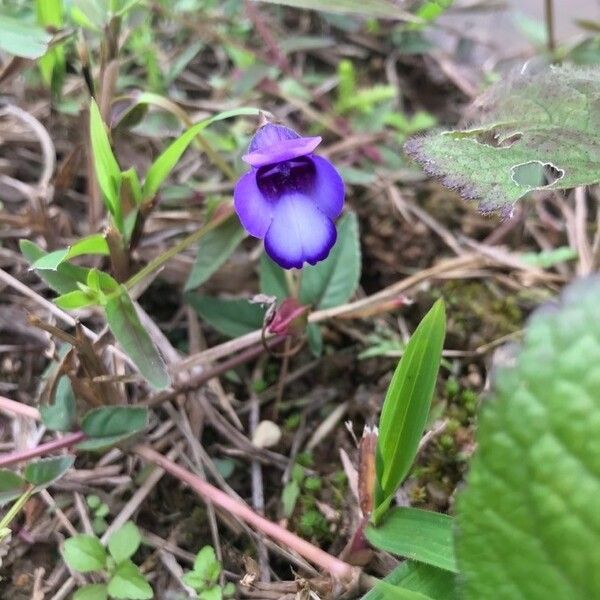
- 🌸 The "Slim" Spur: It produces elegant violet-blue flowers with a distinct white patch on the throat. The namesake "leptoceras" refers to the exceptionally thin, long nectar spur at the back of the bloom.
🏡 In Your Garden
- 🏔️ The Alpine Vibe: This isn't a tropical plant; it thrives in cool, bright conditions. It is a temperate species, meaning it requires a "winter sleep" (dormancy) where it shrinks into a tiny, hardened bud called a hibernaculum to survive the cold.
- 🪨 Mineral Rich: Unlike many carnivorous plants that love peat, the Slim-spurred Butterwort often grows in calcareous (lime-rich) areas. It appreciates a gritty, mineral-heavy substrate that mimics its rocky mountain home.
- 🦟 Natural Pest Control: It is a fantastic companion for indoor plant lovers, as it naturally "mops up" fungus gnats and fruit flies that hover around your potting soil.
⚠️ Safety & Toxicity
- ✅ Non-Toxic: The Slim-spurred Butterwort is completely safe for humans, cats, and dogs. It lacks any poisonous compounds or snap-traps that could harm a curious pet.
- 🤲 Handle with Care: While it isn't dangerous to you, you are dangerous to it! The leaves are very brittle and the sticky enzymes can be rubbed off by human fingers, which stresses the plant and reduces its ability to feed.
✨ Fun Fact
The genus name Pinguicula comes from the Latin word "pinguis," meaning "fat." This refers to the oily sheen on the leaves. Historically, people in northern Europe used the enzyme-rich leaves of butterworts to curdle milk, creating a traditional thick, yogurt-like substance called tätmjölk.

Detailed Care Instructions

Place in a dark room with little light, like a dark bedroom or a spot far away from a window or directly in a north-facing window.

Water-loving plants flourish in wet or sloppy soil and near ponds. The extensive root system enables these plants to absorb plenty of water. The surface of the soil should be kept moist at all times. Place your pot in a container filled with water to guarantee that plants get enough water. If the ground becomes dry, it is recommended that you water it well. Plants in smaller pots will need to be watered more frequently. Water the soil in which the plant is standing thoroughly using a watering can.








