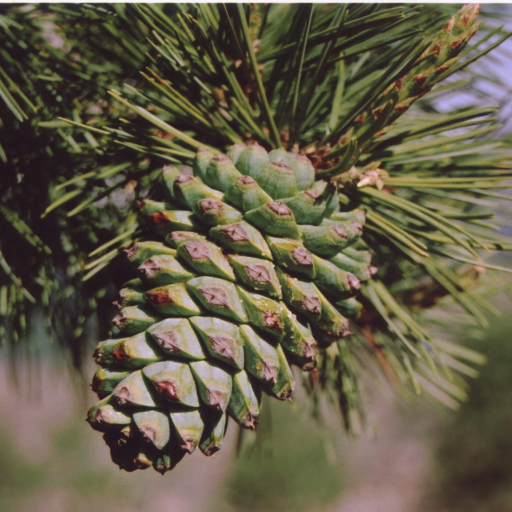
Plant Overview
Often called the "Chilgoza Pine," this majestic evergreen is the source of one of the world’s most expensive and nutritious nuts. Native to the rugged, high-altitude mountains of the Northwest Himalayas, it thrives in harsh, rocky terrains where other trees struggle. Beyond its culinary value, its striking, camouflage-like bark makes it one of the most visually stunning pines in existence.
🔍 How to Identify
- 🎨 The Bark: Unlike the rough, craggy bark of most pines, this species has smooth, silvery-grey bark that peels away in plates. This reveals patches of olive-green, yellowish, and reddish-brown, much like a Sycamore tree.
- 🌲 The Needles: It carries its needles in bundles of three. They are stiff, vibrant green, and usually 6 to 10 centimeters long, giving the branches a tufted, brush-like appearance.
- 🪵 The Cones: The woody cones are heavy and resinous. Inside, they house the famous "Chilgoza" seeds—long, slender, and brown-skinned nuts that are much larger than those of the common Stone Pine.
🏡 In Your Garden
- ⛰️ Mountain Resilience: This tree is built for the elements. It prefers well-drained, gravelly, or even sandy soil. It is remarkably drought-tolerant once established, as it is adapted to the dry, cold slopes of Afghanistan and Pakistan.
- ⏳ Slow and Steady: The Chilgoza Pine is a slow-grower and hates "wet feet." If you are planting one, ensure it is in a spot where water never settles. Because it develops a deep, sensitive taproot, it hates being transplanted; pick its "forever home" carefully!
⚠️ Safety & Toxicity
- ✅ Safe & Edible: The seeds are completely non-toxic and highly prized for their protein and healthy fats. They are a gourmet staple in Middle Eastern and Asian cuisines.
- 🐾 Pet Considerations: While the tree is non-toxic to cats and dogs, the fallen needles can be sharp, and the sticky resin can be a mess to clean out of long fur. As with any pine, the high resin content can cause mild stomach upset if a pet decides to chew on the bark.
✨ Fun Fact
The tree is named after Captain Alexander Gerard, a British army officer and Himalayan explorer who first described the species to Western science in the early 19th century while mapping the treacherous mountain passes of India.

Detailed Care Instructions
Pinus Gerardiana, also known as the Chilgoza pine, is a slow-growing tree that requires specific growing conditions to thrive. Here are some tips on how to successfully grow this plant:
- Climate: Pinus Gerardiana requires a cool, temperate climate with well-defined winters and summers. It is native to the Himalayan region, where it grows at high altitudes.
- Soil: The plant grows best in well-drained, sandy soil with a slightly acidic to neutral pH level. Make sure the soil is rich in organic matter and has good drainage.
- Sunlight: Pinus Gerardiana thrives in full sun, so choose a sunny spot in your garden to plant it.
- Watering: While the plant is drought-tolerant once established, it requires regular watering during the first few years of growth. Make sure the soil is kept consistently moist but not waterlogged.
- Fertilization: Pinus Gerardiana does not require much fertilization, but you can add a slow-release fertilizer in the spring to help promote growth.
- Pruning: Pruning is generally not necessary for Pinus Gerardiana, as it has a naturally attractive shape. However, you can remove any dead or diseased branches to promote healthy growth.
- Mulching: Mulching around the base of the plant can help retain moisture and suppress weeds. Use organic mulch such as bark chips or compost.
- Pest control: Keep an eye out for pests like bark beetles, aphids, and caterpillars, which can damage the plant. Use insecticidal soap or neem oil to control these pests if necessary.
With proper care and attention to its specific growing requirements, Pinus Gerardiana can thrive and grow into a beautiful tree in your garden.

Place in a bright room that is sun drenched almost all day. Or directly in a south-facing window.

To water a Pinus Gerardiana plant, it is important to be mindful of the soil moisture levels. Pinus Gerardiana plants prefer slightly dry conditions, so it is best to allow the soil to dry out slightly between waterings. When watering, ensure that the water is applied evenly around the base of the plant to penetrate the root system effectively.
Additionally, it is important to avoid overwatering, as this can lead to root rot and other issues. To prevent waterlogging, make sure the soil has good drainage and consider using a watering schedule to monitor the plant's moisture needs.
During hot weather or periods of drought, it may be necessary to increase the frequency of watering to ensure the plant remains healthy and hydrated. However, be mindful not to water too frequently, as this can also be detrimental to the plant's overall health.
Overall, being attentive to the soil moisture levels and adjusting the watering routine accordingly will help ensure the optimal growth and vitality of your Pinus Gerardiana plant.
To effectively fertilize the Pinus Gerardiana plant, apply a balanced slow-release fertilizer in early spring before new growth begins. Use a fertilizer with an N-P-K ratio of 10-10-10 or similar. Avoid fertilizing in late summer or fall, as this can promote new growth that may be damaged by winter temperatures. Water the plant well after applying the fertilizer to help it absorb the nutrients. Repeat the fertilization process annually to promote healthy growth and improve overall plant health.
Pinus Gerardiana plants prefer well-draining soil with a slightly acidic pH. It is recommended to use sandy loam or loamy soil with good drainage to prevent waterlogging, as excessive moisture can be detrimental to the plant's health. Additionally, adding organic matter such as compost or peat moss can help improve soil structure and fertility. Regularly checking the soil's moisture levels and ensuring it does not become too compacted will also promote optimal growth for Pinus Gerardiana plants.
Pinus Gerardiana can be propagated through several methods, including seed propagation and cuttings.
Seed propagation is a common method for propagating Pinus Gerardiana. Collect ripe seeds from the cones of a mature Pinus Gerardiana plant. Remove the seeds from the cones and allow them to air dry for a few days. Plant the seeds in a well-draining soil mix, covering them with a thin layer of soil. Water the seeds lightly and place them in a warm, sunny location. Keep the soil consistently moist but not waterlogged. The seeds should germinate within a few weeks to a few months.
Another method of propagating Pinus Gerardiana is through cuttings. Take a cutting from a healthy, mature Pinus Gerardiana plant, making sure to include a few inches of the stem and a few sets of needles. Remove the lower needles from the cutting and dip the cut end into rooting hormone. Plant the cutting in a well-draining soil mix and water it lightly. Place the cutting in a warm, sunny location and keep the soil consistently moist. The cutting should develop roots within a few weeks to a few months.
Regardless of the propagation method, it is important to provide proper care and attention to the young plants to ensure their successful growth and establishment.
Common pests of the chilghoza pine include Scale insect, spider mites, aphids. Make a habit of checking your chilghoza pine frequently for pests so that any infestations can be caught and managed early.








