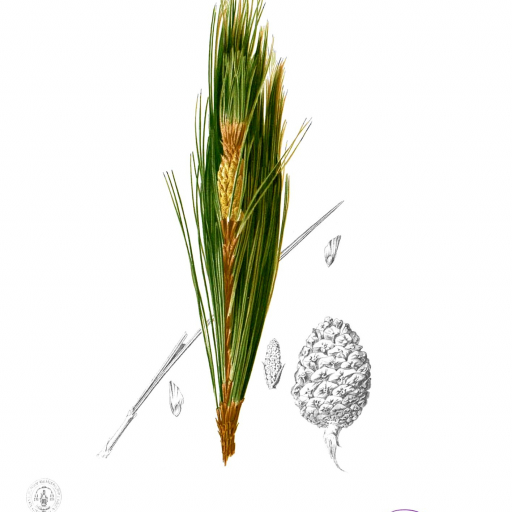
Plant Overview
Often called the Khasi Pine or the Benguet Pine, Pinus kesiya is a towering symbol of the cool, misty highlands of Southeast Asia. While most people associate pine trees with the snowy north, this resilient evergreen thrives in the tropical mountains of the Philippines, Vietnam, and India. In the city of Baguio, it is so iconic that it defines the entire landscape, filling the air with a nostalgic, resinous scent often described as "the smell of the mountains."
🔍 How to Identify
- 🌲 The Needle Trio: Unlike some pines that have two or five needles, this species almost always grows its needles in bundles of three. They are slender, flexible, and a vibrant grass-green.
- 🪵 Fissured Bark: As the tree matures, its bark becomes thick and deeply cracked into irregular plates, ranging in color from a dark grey to a rich, reddish-brown.
- 🍍 Ovoid Cones: The woody cones are relatively small and egg-shaped. They usually grow in pairs or small clusters and persist on the branches for several years even after releasing their seeds.
🏡 In Your Garden & Landscape
- ⛰️ Highland Specialist: This tree is not a fan of "wet feet." In its natural habitat, it clings to steep, rocky slopes. If planting one, ensure your soil is exceptionally well-draining; it prefers acidic, sandy, or gravelly soils over heavy clay.
- 🔥 Fire & Light: It is a sun-worshiper that requires full, direct sunlight to grow straight and strong. Interestingly, it is a "pioneer species," meaning it is often the first tree to grow back after a forest fire, thanks to its thick, protective bark and light-loving nature.
⚠️ Safety & Toxicity
- 🟢 General Safety: Pinus kesiya is considered non-toxic to humans and most animals.
- 💧 Resin Irritation: The tree produces a very thick, sticky resin (sap). While not poisonous, this sap can cause mild skin irritation or allergic reactions in some people, and it is famously difficult to wash off clothing or fur.
- 🐾 Pet Note: While the tree itself isn't toxic, the sharp needles can cause minor mouth or stomach irritation if a curious dog or cat tries to chew on them.
✨ Fun Fact
In the Philippines, the resin-rich heartwood of this tree is known as "Saleng." Because it is so saturated with natural turpentine, even a small splinter of the wood can be lit like a candle, making it a legendary natural fire-starter for campers and mountain dwellers for centuries.

Detailed Care Instructions
To grow Pinus Kesiya (Khasi pine) plants, you can follow these steps:
- Choose the right location: Khasi pine prefers full sun exposure and well-draining soil. Ensure the planting area receives at least six hours of direct sunlight per day.
- Preparation: Prepare the soil by removing any weeds, rocks, or debris. Loosen the soil using a garden fork or tiller to allow proper root growth.
- Seed collection: Collect mature cones from existing Pinus Kesiya trees. The cones should be brown and fully open to release the seeds easily. Remove the seeds from the cones.
- Seed treatment: Soak the seeds in clean water for 24-48 hours to soften the outer coating.
- Prepare seed trays: Fill seed trays with a well-draining potting mix. Sow the seeds about 1 cm deep in the tray, spacing them at least 5 cm apart. Gently press the soil to ensure good seed-to-soil contact.
- Germination: Place the seed trays in a warm location with a temperature between 20-25°C (68-77°F). Keep the potting mix moist but not waterlogged. The seeds should start germinating within 2-3 weeks.
- Transplanting: Once the seedlings have grown to a sufficient size (around 10-15 cm tall), carefully remove them from the seed tray and transfer them to individual pots filled with suitable potting soil. Water thoroughly after transplanting.
- Growing conditions: Continue to provide full sun exposure and regular watering. Pinus Kesiya can withstand drought conditions but prefers evenly moist soil. Fertilize with a balanced slow-release fertilizer according to the package instructions.
- Planting outdoors: When the seedlings are around 1-2 years old and have a sturdy root system, they can be planted outdoors in their permanent location. Ensure proper spacing (about 3-4 meters) between each tree to allow for their mature size.
- Care: Monitor the growth of the Pinus Kesiya trees and provide appropriate care. Water regularly, especially during hot and dry periods. Mulch around the trees to retain moisture and suppress weed growth. Prune selectively to shape the trees and remove any dead or damaged branches.
Remember that growing Pinus Kesiya requires patience, as it is a slow-growing species. However, with proper care, your pine trees will thrive and provide beauty and shade to your garden or landscape.

Place in a bright room that is sun drenched almost all day. Or directly in a south-facing window.

Pinus Kesiya plants require regular watering to thrive, especially during the hot summer months. It is important to water them deeply, allowing the water to penetrate the soil to reach the roots. It is recommended to water them at least once a week, depending on the climate and soil conditions. It is also important to avoid overwatering, as this can lead to root rot and damage to the plant. To determine if the plant requires watering, simply check the soil's moisture level by inserting your finger a few inches into the soil. If the soil feels dry, it is time to water. When watering, be sure to direct the water to the base of the plant to avoid wetting the foliage. It is also recommended to water in the early morning or late afternoon when temperatures are cooler to prevent water evaporation.
To fertilize this plant, apply a balanced granular fertilizer containing nitrogen, phosphorus, and potassium in the early spring. Use a reputable brand and follow the manufacturer's recommendations for application rates. Avoid getting fertilizer on the plant's needles or trunk, as this can cause injury. Water the plant well after fertilizing to help distribute the nutrients. Repeat the fertilization process every spring to encourage healthy growth.
The ideal soil for Pinus Kesiya is well-draining and slightly acidic. It should also be rich in organic matter and have a low salt content. The plant prefers soils with a pH range of 5.5 to 6.5, and sandy loam to sandy clay loam textures. It grows best in areas with moderate to high rainfall, and well-draining soils are necessary to prevent waterlogging and root rot. Additionally, it is important to avoid soils that are too alkaline, as this can lead to nutrient deficiencies and stunted growth. To create suitable growing conditions for Pinus Kesiya, it may be necessary to improve the soil structure by adding organic matter, such as peat moss or compost.
Pinus Kesiya is a type of coniferous tree that can be propagated through various means. One method is through seed propagation, which involves collecting mature seeds from the pine cones and planting them in suitable soil and weather conditions. Another method is through cuttings, which involves taking small branch cuttings from a healthy tree and rooting them in a rooting hormone before planting them in the ground. Additionally, Pinus Kesiya can also be propagated through layering, in which a low-hanging branch is bent to the ground and partially buried in soil. The branch will eventually grow roots and can be separated from the parent plant to form a new tree. It is important to note that care should be taken when handling Pinus Kesiya as it can be sharp and prickly. Proper protective gear should be worn during the propagation process.








