Plant Overview
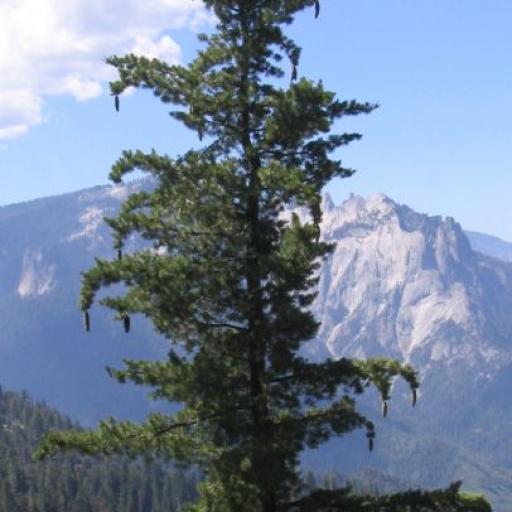
Often referred to as the "King of the Conifers," the Sugar Pine (Pinus lambertiana) is the tallest and largest pine species in the world. Its common name comes from the sweet, sugary resin that seeps from its heartwood, which was historically prized by Native Americans as a natural candy and medicinal treat. Finding one of these giants in the wild is a breath-taking experience, as they tower over the landscape with an air of ancient majesty.
🔍 How to Identify
- 🌲 Massive Cones: This tree produces the longest cones of any conifer, sometimes reaching over 20 inches (50 cm) in length. They hang like heavy wooden pendulums from the ends of the branches.
- 🪡 Needle Bundles: The needles are a beautiful blue-green color and grow in clusters (fascicles) of five. They are relatively short and stiff compared to the tree's overall massive scale.
- 🪵 Distinctive Bark: On mature trees, the bark is thick and deeply furrowed into long, irregular plates that range in color from cinnamon-brown to a rich gray.
🏡 In Your Garden
- 🏔️ Space Requirements: Unless you have a vast estate or a mountain-side property, the Sugar Pine is rarely a "garden" plant. It requires immense vertical space and deep, well-draining soil to accommodate its massive root system.
- 💧 Slow Beginnings: While they eventually become giants, Sugar Pines are notoriously slow growers in their first few years. They are also highly susceptible to White Pine Blister Rust, so they require a location with good air circulation to stay healthy.
⚠️ Safety & Toxicity
- ✅ Safe Status: The Sugar Pine is non-toxic to humans, dogs, and cats. In fact, many parts of the tree are historically edible, including the seeds (pine nuts).
- 🩹 Physical Hazards: The primary safety concern is physical. The massive cones are very heavy and can cause injury if they fall from a height. Additionally, the resin is incredibly sticky and can be difficult to remove from skin or clothing.
✨ Fun Fact
The legendary naturalist John Muir once described the Sugar Pine as "the noblest pine yet discovered." He famously claimed that the sugary resin, when scorched by fire, tasted better than any maple sugar!

Detailed Care Instructions
Growing Pinus lambertiana, also known as sugar pine, requires specific conditions and care. Here are some steps to follow:
- Climate: Sugar pine trees thrive in regions with cool, moist summers and mild, wet winters. They are typically found in zones 6 to 9 in North America.
- Location: Select a sunny or partially shaded area with well-draining soil. The soil should be slightly acidic to neutral, with a pH of around 5.5 to 7.0.
- Planting method: Plant sugar pine seeds in containers or trays during the winter months. Fill the containers with a mix of sandy loam soil, peat moss, and compost.
- Seed preparation: To increase success rates, soak the seeds in water for 24 hours or stratify them in moist sand or peat moss in the refrigerator for 3 to 4 weeks before planting.
- Seed planting: Place the seeds 1 inch deep in the soil mixture. Water lightly to maintain moist conditions without oversaturating the soil.
- Nursery care: Keep the containers indoors or in a greenhouse until the spring season. Maintain a temperature of around 68°F (20°C) until seedlings emerge.
- Transplanting: After the risk of frost has passed, transplant the seedlings outdoors. Choose a site with enough space for the sugar pine's ultimate height, as they can reach up to 200 feet (60 meters).
- Watering: Provide regular and consistent watering for the first few years until the trees establish deep root systems. Avoid overwatering, as sugar pines are susceptible to root rot.
- Fertilization: Apply a balanced slow-release fertilizer in early spring or late fall to promote healthy growth. Follow the manufacturer's instructions for dosage and application.
- Mulching: Use organic mulch around the base of the tree to retain moisture, regulate soil temperature, and suppress weed growth. Leave space around the trunk to prevent rot.
- Pruning: Minimal pruning is required for sugar pines. Remove any dead, damaged, or diseased branches. Shape the tree lightly, if desired, around late winter or early spring.
- Protection: Watch out for pests like aphids, pine beetles, or pine needle scale. Treat infestations promptly using appropriate organic or chemical methods.
Remember, growing sugar pine trees from seeds can take several years before they reach maturity and start producing cones. It's a long-term commitment, but it can be rewarding to watch these majestic trees grow.

Place in a bright room that is sun drenched almost all day. Or directly in a south-facing window.

To water this type of plant, one should first check the soil moisture level by inserting a finger into the soil or using a moisture meter. If the soil is dry to the touch, it should be watered thoroughly, making sure to saturate the root zone. However, care should be taken not to overwater the plant, as this can lead to root rot. It is best to water deeply and infrequently, allowing the soil to dry out partially before watering again. Additionally, watering should be adjusted according to weather conditions and the plant's growth stage, such as decreasing watering during winter or increasing it during hot summers.
To fertilize this plant, apply a slow-release fertilizer that is specifically formulated for evergreen trees. Follow the instructions on the fertilizer package for application rates and timing. Additionally, be sure to water the plant thoroughly before and after fertilization to ensure the nutrients are absorbed properly. Avoid fertilizing during periods of drought or extreme heat to avoid damaging the plant's root system.
The Pinus Lambertiana plant prefers acidic and well-draining soil that is rich in organic matter. It should not be planted in soil that is too alkaline or heavy in clay. A suitable soil mixture can be created using a combination of peat moss, sand, and pine bark, with a pH ranging from 5.5 to 6.5. It is important to maintain consistent moisture levels in the soil without overwatering. Adding a layer of mulch around the plant can help retain moisture and regulate soil temperature. The plant also benefits from occasional fertilization with a slow-release, high nitrogen fertilizer, applied in early spring.
To propagate this plant, collect mature seeds from cones that have opened naturally, or use a hand-held pruner or scissors to cut cones from the tree. Remove the scales carefully to reveal the seeds and place them in a container filled with water. Discard any floating seeds as they are unlikely to germinate. Soak the remaining seeds in water for 24 hours before planting.
To prepare the planting area, clear away any debris and rocks. Loosen the soil to a depth of 6 inches and mix in compost or other organic matter for better drainage. Plant the seeds in rows, spacing them 2-3 inches apart and covering them with soil to a depth of 1-2 times their diameter. Water gently and keep the soil moist but not water-logged.
The seeds will germinate in 2-3 weeks if kept at a consistent temperature of around 70°F. Once the seedlings develop a second set of true leaves, carefully transplant them to their final location. Make sure the soil is well-draining and the area receives plenty of sunlight.
Young seedlings should be watered regularly and kept free from weeds. The plant may take up to 10 years to reach maturity, at which point it may produce cones that can be harvested for seeds to continue the propagation process.
Common pests of the sugar pine include Scale insect, spider mites, aphids. Make a habit of checking your sugar pine frequently for pests so that any infestations can be caught and managed early.








