Plant Overview
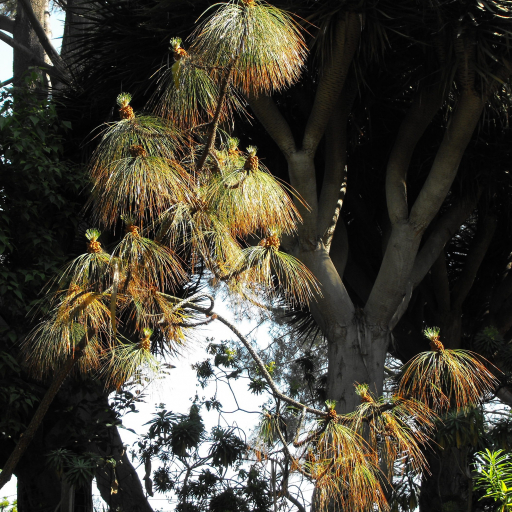
Named after the legendary Aztec emperor Moctezuma II, the Montezuma Pine is a dramatic masterpiece of the Mexican highlands. Often called "Ocote macho," this tree was historically prized for its resin-rich wood, which served as the primary fuel for ancient torches. Its long, drooping needles give it a distinctively "shaggy" or fountain-like appearance, making it one of the most elegant conifers in the world.
🔍 How to Identify
- 🌲 The Needles: Unusually long (up to 12 inches), these needles grow in bundles of five and hang gracefully downward, creating a soft, weeping silhouette.
- 🪵 The Bark: As the tree matures, the bark transforms from smooth and gray into a thick, dark reddish-brown armor with deep, rugged fissures.
- 🍍 The Cones: Large, woody, and slightly curved, these reddish-brown cones often grow in pairs and can stay on the tree for several years before falling.
🏡 In Your Garden
- ⛰️ Mountain Roots: Naturally adapted to high altitudes, this pine thrives in cool, well-drained environments. It develops a deep taproot early on, which means it hates being moved once planted—choose its "forever home" carefully!
- ☀️ Space and Light: This is a giant in the making. It requires full sun and plenty of horizontal space to accommodate its wide, rounded crown, which can eventually spread up to 30 feet across.
⚠️ Safety & Toxicity
- ✅ General Safety: The Montezuma Pine is considered non-toxic to humans, dogs, and cats. It is a safe, majestic addition to large landscapes.
- 💧 Resin Warning: Like many pines, it produces a very sticky, aromatic resin. While not poisonous, it can be difficult to remove from skin or clothing and may cause mild irritation to those with sensitive skin.
- 🧤 Pruning Care: Wear thick gloves when handling branches; the long needles and rough bark can cause minor scratches if handled roughly.
✨ Fun Fact
The wood of the Montezuma Pine is so saturated with natural resins that it is almost waterproof. Because of this durability, it was used to create the structural foundations for many of the historic buildings in Mexico City!

Detailed Care Instructions
To grow Pinus Montezumae, also known as Montezuma pine, you will need to follow these steps:
- Obtaining seeds or young plants: You can purchase seeds or young Montezuma pine plants from reputable online nurseries, local garden centers, or specialized plant catalogs. Alternatively, you can also try to collect seeds from mature Montezuma pine cones in their natural habitat, ensuring that you have the necessary permissions if collecting from the wild.
- Choosing the right location: Montezuma pine thrives in full sun to partial shade. It prefers well-draining soil and can tolerate a range of soil types, including loam, sandy, or rocky soils.
- Preparing the planting area: Prepare the soil by removing any weeds, rocks, or debris. If needed, amend the soil with organic matter, such as compost, to improve drainage and fertility. Montezuma pine is native to higher elevations, so it may benefit from sloping or raised beds to ensure proper drainage.
- Planting the seeds or young plants: If you have seeds, sow them in the prepared soil according to the instructions provided with the seeds, usually in early spring. If you have young plants, dig a hole that is slightly larger than the root ball and gently place the plant in it. Backfill the hole with soil, ensuring that the plant is planted at the same depth it was in its original container.
- Watering: Water the newly planted seeds or young plants generously to settle the soil around the roots. Afterward, water deeply but infrequently, allowing the soil to partially dry out between waterings. Montezuma pine is moderately drought-tolerant once established.
- Mulching and weed control: Apply a layer of organic mulch, such as wood chips or bark, around the base of the Montezuma pine to help retain soil moisture and suppress weed growth. Take care to keep the mulch several inches away from the trunk to prevent rot.
- Pruning and maintenance: Montezuma pine generally maintains an attractive shape on its own, but you can prune any broken, damaged, or diseased branches as necessary. Avoid excessive pruning, as it can disturb the natural form of the tree.
- Protection from pests and diseases: Monitor the plant regularly for any signs of pests, such as aphids or scale insects. Treat infestations promptly and accordingly. Montezuma pine is generally resistant to most diseases but keeping the tree healthy through proper watering and maintenance practices can help prevent issues.
Remember that growing a Montezuma pine may require some patience, as it can take several years for the tree to reach maturity and achieve its full height.

Place in a bright room that is sun drenched almost all day. Or directly in a south-facing window.

The best way to water this plant is to thoroughly saturate the soil surrounding its roots, making sure not to water the foliage or needles. It is important not to over-water the plant, as this can cause root rot and other problems. It is also important to allow the soil to dry out slightly before watering again. Additionally, providing the plant with good drainage and avoiding standing water around its roots is important for its health and growth.
- Choose a high-quality, balanced fertilizer that is specifically formulated for conifers.
- Apply the fertilizer evenly around the base of the plant, taking care to avoid getting it on the foliage or bark.
- Use a spreader or hand applicator to ensure even distribution of the fertilizer.
- Water the plant thoroughly after applying the fertilizer to help it absorb the nutrients.
- Repeat the fertilization process once or twice a year, depending on the specific needs of your plant and the type of fertilizer used.
- Monitor the health and growth of your Pinus Montezumae plant and adjust the fertilization schedule as needed. Too much fertilization can be harmful to the plant, so it's important to follow recommended guidelines and use caution.
The ideal soil for this plant should be well-draining and slightly acidic, with a pH range of 4.5-6.5. It should also be rich in organic matter and nutrients, without being too compact or prone to waterlogging. A mix of peat moss, perlite, and pine bark is a good option, and adding a slow-release fertilizer can also promote healthy growth. It's important to avoid using soil that is too heavy or clay-like, as this can lead to root rot and other issues.
- Select a mature healthy plant: The first step to propagate this type of plant is to find a mature and healthy plant that is producing cones. Look for a plant that has a sturdy stem and healthy foliage.
- Collect cones: Wait until the cones are mature and have turned brown. Collect the cones and bring them inside to dry out (this might take a few weeks). Once they are dry, use a pair of sharp scissors or shears to cut them off the plant.
- Extract seeds: Once the cones are fully dry, extract the seeds. Be careful not to damage them as this can affect their ability to germinate. Use a pair of tweezers or your fingers to gently pry the seeds out of the cones.
- Cold stratification: Pinus Montezumae plants require cold stratification to germinate. This mimics the natural conditions in the wild, where seeds fall to the ground and go through a winter before germinating in the spring. Place the seeds in a plastic bag with a small amount of damp peat or vermiculite. Seal the bag and store it in the refrigerator for 90-120 days.
- Plant the seeds: After cold stratification, remove the seeds from the bag and plant them in a pot filled with well-draining soil. Plant them about 1-2 inches deep and water well.
- Provide proper care: Keep the soil moist but not waterlogged. Place the pot in a location that receives partial shade. The seeds will germinate in 2-3 weeks.
- Transplant: After a few months, when the seedlings have developed a few sets of leaves, they can be transplanted into larger pots or directly into the ground in a well-draining, sunny location.
- Monitor growth: Monitor the growth of the plant and ensure it receives adequate water and nutrient supply. Pinus Montezumae plants can take several years to reach maturity, so patience is key.








