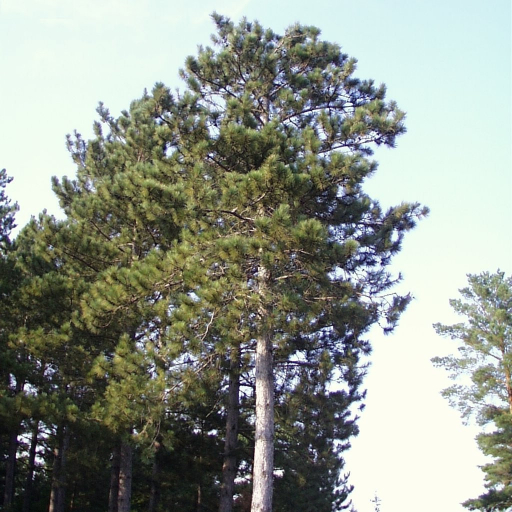
Plant Overview
Known as the "Norway Pine" in the Northwoods, the Red Pine (Pinus resinosa) is a stoic giant of the Great Lakes and Northeast. Despite its confusing nickname—attributed to early settlers in Norway, Maine—it is a purely North American native. Its tall, straight trunks were once the preferred material for ship masts and telephone poles due to their incredible strength and uniform shape.
🔍 How to Identify
- 🌲 Plated Bark: Mature trees feature thick, flaky plates that reveal a distinct reddish-pink or cinnamon hue beneath.
- 📍 The "Snap" Test: The long, dark-green needles grow in bundles of two. If you bend a needle, it will snap cleanly in half; this "brittle" quality is the easiest way to tell it apart from the flexible needles of the Austrian Pine.
- 🥚 Smooth Cones: The egg-shaped cones are roughly two inches long and remarkably smooth, lacking the sharp prickles found on many other pine species.
🏡 In Your Garden
- ☀️ Sun Seeker: This tree is strictly "shade intolerant." If it is planted in the shadow of a building or a larger canopy, it will quickly drop its lower branches and thin out.
- 🏜️ Sandy Specialist: It thrives in well-drained, acidic, and even nutrient-poor sandy soils. It is a perfect choice for "rugged" landscapes or coastal areas where other trees might struggle with dry conditions.
- ⚓ Deep Anchorage: Because it develops a strong, deep taproot, the Red Pine is incredibly wind-resistant during storms. However, this also means it hates being transplanted; once it's in the ground, it's there for life.
⚠️ Safety & Toxicity
- 🐾 Pet Friendly: Red Pine is generally considered non-toxic to dogs, cats, and horses. However, the needles are sharp and indigestible, so keep an eye on curious chewers to avoid mouth irritation or minor stomach upset.
- 🍯 Sticky Resin: The name resinosa refers to the tree’s high resin content. While not toxic, the sap is incredibly sticky and can cause mild skin irritation for some people. It is also highly flammable, so avoid planting it too close to fire pits or outdoor grills.
✨ Fun Fact
🔥 Fire Survivor: The Red Pine has evolved specifically to survive forest fires. Its thick, plate-like bark acts as a natural heat shield, protecting the living tissue inside from the flames of the forest floor, allowing it to stand tall while smaller competitors perish.

Detailed Care Instructions
To grow Pinus Resinosa, commonly known as the red pine, you can follow these steps:
- Choose a suitable location: Red pines prefer full sun but can tolerate some shade. Ensure that the location has well-draining soil.
- Prepare the soil: Red pines prefer acidic soil with a pH between 4.5 and 6.5. If your soil is alkaline, you may need to amend it with sulfur or other acidifying agents. Till the soil to loosen it and remove any weeds or rocks.
- Obtain seeds or seedlings: You can purchase red pine seeds or seedlings from a reputable nursery or collect seeds from mature red pine cones. If using seeds, stratify them in a refrigerator for one to three months to break seed dormancy.
- Plant the seeds or seedlings: If using seeds, sow them directly in the ground in early spring, covering them with a thin layer of soil. If using seedlings, dig a hole slightly larger than the root ball and gently place the seedling in it, covering the roots with soil.
- Water regularly: Red pines require regular watering, especially during the first growing season. Ensure the soil remains consistently moist but not waterlogged. Use a soaker hose or drip irrigation system to provide deep, slow watering.
- Mulch the area: Apply a layer of organic mulch, such as wood chips or pine straw, around the base of the red pine. This helps retain soil moisture, suppresses weeds, and regulates temperature.
- Prune as necessary: Once established, red pines rarely require pruning. However, if you notice any dead or damaged branches, you can prune them in late winter or early spring.
- Protect from pests and diseases: Red pines are generally resistant to pests and diseases. However, you should regularly inspect the tree for pine bark beetles, needlecast diseases, and other common issues. Treat any problems promptly to prevent further damage.
- Provide adequate space: Red pines can grow up to 80 feet tall with a spread of 20 to 40 feet. Ensure you have enough space in your planting area to accommodate the mature size of the tree.
- Be patient: Red pines are slow-growing trees, and it may take several years for them to reach their full potential. Be patient and provide the tree with the necessary care and maintenance for optimal growth.
Remember to check with local authorities regarding any regulations or permits required for planting trees in your area.

Place in a bright room that is sun drenched almost all day. Or directly in a south-facing window.

Pinus Resinosa is a species of evergreen tree that requires proper watering to thrive. Here are some tips on how to water this plant:
1. Location: First, ensure that the Pinus Resinosa plant is planted in a suitable location. It should be planted in well-drained soil that is moist but not waterlogged.
2. Water quantity: The amount of water required by the plant depends on its age and size. A newly planted seedling may require watering every day or every other day, whereas an established tree may require watering once a week.
3. Watering schedule: It is best to water the plant in the morning or evening when the temperature is cooler. Avoid watering during the hottest part of the day.
4. Irrigation method: The most effective method of watering Pinus Resinosa is through drip irrigation or soaker hoses that provide slow, deep watering to the roots. This method ensures that water reaches the roots of the plant without washing away the soil.
5. Mulching: Adding a layer of mulch around the base of the plant can help retain moisture in the soil and reduce the need for frequent watering.
6. Watch for signs of overwatering: Be careful not to overwater the plant as this can lead to root rot and other diseases. Signs of overwatering include yellowing leaves, a weak or stunted appearance, and leaf drop.
7. Monitor the weather: Lastly, be sure to adjust your watering schedule based on the weather conditions. During the hot summer months, the plant may require more frequent watering, whereas in cooler weather, less watering may be required.
To provide adequate nutrients for the Pinus Resinosa plant, use a slow-release fertilizer with a 10-10-10 NPK ratio. Apply the fertilizer in early spring before new growth appears and again in early fall. Apply the fertilizer evenly around the base of the plant, following package instructions for the correct amount. Be sure to water the plant thoroughly after fertilizing to help the nutrients move into the soil. Avoid fertilizing during periods of drought or extreme heat to prevent fertilizer burn.
The ideal soil for the plant should be well-draining, acidic and rich in organic matter. It should be moist but not waterlogged. A soil mixture that contains sphagnum peat moss, perlite and vermiculite is recommended. The pH of the soil should be between 4.5 and 6.5. Adding pine needles or pine bark to the soil can provide some additional acidity. The plant also requires a lot of sunlight, so it should be placed in a location that receives at least six hours of direct sunlight each day.
The process of propagating this plant involves collecting seeds from mature cones in the fall or early winter. The cones should be left to dry in a cool, dry place for several weeks until they begin to open naturally. Once the cones have opened, the seeds can be removed and stored in a cool, dry place until spring.
In the early spring, the seeds should be planted in moist, fertile soil in a location that receives plenty of sunlight. They should be planted about half an inch deep and one inch apart, and the soil should be kept moist but not waterlogged.
As the seedlings grow, they should be thinned out to allow for adequate space between plants. They can be transplanted to their final location once they are sturdy enough to survive outside.
Propagation can also be done using cuttings from mature trees, which should be taken in the late fall or early winter when the plant is dormant. The cuttings should be about 6-8 inches long and should be taken from the tips of branches. They should be planted in potting soil and kept moist until they begin to root, at which point they can be transplanted to their final location.
Common pests of the red pine include Scale insect, spider mites, aphids. Make a habit of checking your red pine frequently for pests so that any infestations can be caught and managed early.








