Plant Overview
Often called the "King of the Siberian Taiga," Pinus sibirica is a majestic evergreen that brings a sense of ancient wisdom to any large landscape. Despite being widely known as the "Siberian Cedar," it is actually a true pine. In its homeland, it is a symbol of strength and longevity, often surviving for hundreds of years in some of the harshest climates on Earth.
🔍 How to Identify
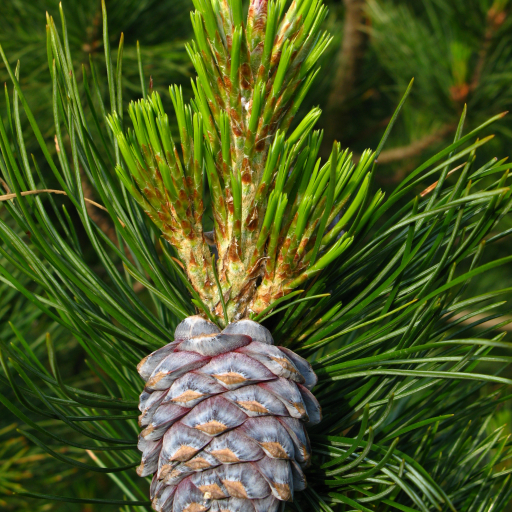
- 🌲 Needle Structure: Look for soft, flexible needles that grow in bundles of five. They have a bluish-green tint and give the branches a lush, tufted appearance.
- 🥚 The Cones: It produces large, egg-shaped cones that grow upright on the branches. They transition from a dusty purple-brown to a deep chocolate brown as they mature.
- 🏢 Statuesque Form: Young trees maintain a neat, narrow pyramid shape, while ancient specimens develop a massive, broad crown that can dominate the horizon.
🏡 In Your Garden
- 🧊 Climate Warrior: This tree is built for the cold. It thrives in regions where other plants would freeze solid, but it significantly struggles in hot, humid tropical or subtropical climates.
- 🏔️ Root Stability: It develops a powerful taproot early in life. This makes it incredibly wind-resistant once established, but it also means the tree hates being moved. Choose its "forever home" carefully!
- 💧 Soil Preference: While it loves moisture and high humidity, it cannot stand "wet feet." It requires well-drained soil to prevent root rot, especially in its early years of growth.
⚠️ Safety & Toxicity
- ✅ Non-Toxic: The Siberian Pine is generally considered safe and non-toxic to humans, dogs, and cats.
- 🍯 Sticky Resin: The tree produces a thick, fragrant sap (resin). While not poisonous, it is incredibly sticky and can be difficult to remove from pet fur or children's clothing, and may cause mild skin irritation in very sensitive individuals.
✨ Fun Fact
- 🐿️ The Nutcracker's Partner: This tree relies on a bird called the Spotted Nutcracker to survive. The bird harvests the "pine nuts" and hides them in the ground for winter; the seeds the bird forgets eventually sprout into the next generation of the Siberian forest!

Detailed Care Instructions
To grow Pinus sibirica, also known as Siberian pine, you can follow these steps:
- Selection of planting site: Siberian pine prefers full sun to partial shade and well-drained soil. Choose a location that receives at least six hours of sunlight per day and has good drainage.
- Soil preparation: Prepare the soil by loosening it and removing any weeds or grass. Mix in organic matter such as compost or well-rotted manure to improve soil fertility and drainage.
- Planting: Dig a hole that is slightly larger than the root ball of the Pinus sibirica sapling. Place the sapling in the hole, ensuring that the top of the root ball is slightly above the soil surface. Backfill the hole with soil, gently firming it around the roots.
- Watering: After planting, water the sapling thoroughly and keep the soil consistently moist but not waterlogged. Ensure that the plant receives a deep watering once or twice a week, especially during the first growing season.
- Mulching: Apply a layer of organic mulch around the base of the plant to help retain moisture, suppress weeds, and regulate soil temperature. Avoid placing mulch directly against the trunk to prevent trunk rot.
- Pruning: Pinus sibirica typically does not require extensive pruning. However, you can remove any dead, damaged, or crowded branches as needed. Pruning should be done during the dormant season.
- Fertilization: Siberian pine generally does not require regular fertilization. However, you can apply a slow-release balanced fertilizer in early spring or early fall if the tree is not showing healthy growth or appears nutrient deficient.
- Pests and diseases: Monitor the tree for common pests like bark beetles or needle-feeding insects. If detected, using appropriate insecticides or seeking professional advice may be necessary. Siberian pine is generally resistant to most diseases.
- Winter protection: In colder climates, young Pinus sibirica trees may benefit from winter protection, such as wrapping the trunk with burlap or applying a layer of mulch around the base to insulate against freezing temperatures.
- Monitoring and maintenance: Regularly monitor the plant's growth, water requirements, and overall health. Occasionally remove any fallen needles or debris from around the tree to prevent fungal growth or infestations.
By following these guidelines, you can successfully grow Pinus sibirica and enjoy the beauty and benefits of this resilient tree species.

Place in a bright room that is sun drenched almost all day. Or directly in a south-facing window.

To water this particular plant, it is important to first check the soil moisture level before proceeding with watering. This can be done by inserting a finger into the soil up to the first knuckle and checking if the soil feels dry. Once it is determined that watering is necessary, it is recommended to water deeply and thoroughly, ensuring that the water reaches the roots of the plant. It is important to avoid overwatering as this can lead to root rot and damage to the plant. It is also important to note that this plant prefers well-draining soil, so it is recommended to plant it in a soil mixture that allows for proper drainage. Finally, it is important to monitor the plant for signs of wilting or other stress, as this may indicate a need for additional watering.
To fertilize the Pinus Sibirica plant, follow these instructions:
- Choose a balanced, slow-release fertilizer specifically formulated for coniferous trees.
- Read the package instructions carefully to determine the appropriate amount of fertilizer for the size and age of your Pinus Sibirica plant.
- Apply the fertilizer in early spring or late fall when the plant is dormant, as this is the most optimal time for absorption.
- Spread the fertilizer evenly around the base of the plant, avoiding direct contact with the trunk.
- Gently work the fertilizer into the top layer of soil using a hand rake or garden fork, ensuring it is well-mixed.
- Water the area thoroughly after fertilizing to facilitate nutrient absorption into the root system.
- Repeat the fertilization process once every 1-3 years, depending on the soil conditions and the plant's growth rate.
- Monitor the plant's response to the fertilizer and adjust the frequency or amount as needed to maintain healthy growth.
It's important to note that if you have a specific variety or cultivar of Pinus Sibirica, the fertilization instructions may slightly vary.
When planting the Pinus Sibirica plant, it is important to choose the appropriate type of soil to promote healthy growth. The ideal soil for this plant should be well-draining and nutrient-rich, with a pH level ranging between slightly acidic to neutral. A mixture of sandy soil and loam is recommended, as it allows for adequate drainage while also retaining moisture and nutrients.
It is important to note that excessive moisture can lead to root rot, so the soil should not be overly wet or waterlogged. Additionally, the soil should be deeply tilled to promote good root development and to allow for proper drainage.
When fertilizing the soil, it is recommended to use a slow-release, balanced fertilizer that contains high levels of nitrogen, phosphorus, and potassium. Additionally, regular mulching can help to retain moisture and keep the soil cool during hot summer months.
Overall, the soil used for planting the Pinus Sibirica plant should be well-draining, nutrient-rich, and not overly moist, with a pH level ranging from slightly acidic to neutral.
To propagate this plant, one can collect ripe cones in late summer or early fall, and extract the seeds by rubbing them against a screen to remove the winged portion. The seeds are then soaked in water for at least 24 hours to soften the hard seed coat.
Next, fill a seed tray or pots with a well-draining soil mix and sow the seeds about 1/4 inch deep. The tray or pots can then be covered with plastic or placed in a plastic bag to create a mini greenhouse effect.
The seeds should be kept moist but not wet, and placed in a cool location (around 40-45°F) for stratification, which is the process of exposing the seeds to a period of cold to mimic winter conditions. They should be monitored and watered as needed until spring arrives.
Once the weather warms up, the seedlings can be gradually exposed to more sunlight and eventually moved outside to their permanent location. They should be watered regularly and protected from extreme temperatures and strong winds.
Common pests of the siberian pine include Scale insect, spider mites, aphids. Make a habit of checking your siberian pine frequently for pests so that any infestations can be caught and managed early.








