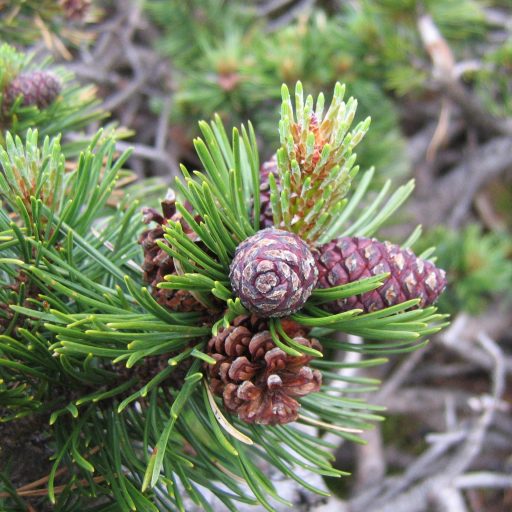
Plant Overview
Commonly known as the Mountain Pine or Hooked Pine, this rugged conifer is the ultimate survivor of the high-altitude European slopes. Often found clinging to rocky crags where other trees surrender, it earns its name from the distinctive "hooked" shape of its cone scales (uncinata means "hooked" in Latin). In mountain folklore, these twisted, windswept trees are often seen as symbols of resilience, standing watch over the Pyrenees for centuries.
🔍 How to Identify
- 🍂 Needle Clusters: The needles are a deep, forest green, appearing in stiff, slightly twisted pairs that stay on the tree for up to 10 years, giving the branches a dense, "bottle-brush" appearance.
- 🪵 Bark Texture: As the tree matures, its bark breaks into dark, grey-black plates or scales, providing a dramatic, rugged contrast against the snowy landscapes it often inhabits.
- 🌲 The Hooked Cone: Look for small, asymmetrical egg-shaped cones; each scale features a prominent, pyramid-shaped "hook" that points downward toward the base of the cone.
🏡 In Your Garden
- ⛰️ Alpine Adaptability: This pine is a perfect choice for rock gardens or exposed, windy landscapes. It naturally thrives in poor, rocky soils and is genetically built to withstand heavy snow loads without breaking.
- ⏳ Slow and Steady: Because it is a slow-growing species with a deep, sensitive taproot, it hates being transplanted. Once you find a sunny spot with well-draining, slightly acidic soil, it is best to leave it there for life.
⚠️ Safety & Toxicity
- 🟢 Status: Generally non-toxic and safe for residential environments.
- 🧤 Physical Hazards: While not poisonous to pets or children, the needles are quite stiff and the "hooks" on the cones can be sharp. Additionally, the tree produces a very sticky resin (pitch) that can cause mild skin irritation for some or simply be difficult to scrub off your hands.
✨ Fun Fact
🏔️ Pinus uncinata is a true "treeline" specialist; it can survive temperatures as low as -40°C and is one of the longest-living trees in the mountains, with some specimens in the Spanish Pyrenees confirmed to be over 600 years old!

Detailed Care Instructions
To grow a Pinus uncinata plant, also known as the mountain pine or the Swiss mountain pine, you can follow these steps:
- Climate: Pinus uncinata thrives in cold regions with a continental climate and high altitude. It is accustomed to harsh winters and prefers cool summers. Ensure the climate conditions in your area are suitable for this plant.
- Soil: The mountain pine prefers well-draining soil with good water retention capabilities. It grows best in acidic to neutral soils. If your soil is more alkaline, consider amending it to lower the pH level.
- Location: Choose a location with full sun exposure for your mountain pine, as it requires at least six to eight hours of direct sunlight each day.
- Planting: Planting can be done by either sowing seeds or transplanting seedlings. If you have seeds, sow them in containers or directly in the soil during late winter or early spring. For seedlings, transplant them during the same time frame, ensuring proper spacing between each plant.
- Watering: Initially, after planting, provide water regularly to ensure the soil remains moist but not waterlogged. Once established, the mountain pine is quite tolerant of drought conditions.
- Mulching: Apply a layer of organic mulch around the base of the plant to help conserve moisture, suppress weed growth, and regulate soil temperature.
- Pruning: Minimal pruning is required for Pinus uncinata. You can remove any dead, damaged, or diseased branches as necessary. It is recommended to prune during late winter or early spring before new growth begins.
- Fertilizing: The mountain pine is adapted to nutrient-poor soils and typically does not require much fertilization. However, if your soil lacks essential nutrients, you can apply a slow-release, balanced fertilizer in early spring.
- Pest and disease control: Monitor your Pinus uncinata for any signs of pests or diseases such as pine needle scale, bark beetles, or rust. If detected, apply appropriate treatments or consult a professional for assistance.
- Maintenance: Regularly monitor the health of your plant, removing any fallen needles or debris. Be cautious with weed control, as the shallow root system of Pinus uncinata can be damaged easily.
Remember that growing a Pinus uncinata plant requires patience, as it is a slow-growing species. It may take several years to see significant growth.

Place in a bright room that is sun drenched almost all day. Or directly in a south-facing window.

To properly water the Pinus uncinata plant, it is crucial to understand its specific watering needs. Here are some details on how to water this plant effectively:
1. Watering frequency: Ensure that the Pinus uncinata plant receives adequate water at the right intervals. A good general guideline is to water the plant deeply once every 7-10 days during the growing season. However, adjust the frequency according to weather conditions, as extremely hot and dry periods may necessitate more frequent watering.
2. Water quantity: When watering, aim to thoroughly moisten the soil to a depth of at least 6-8 inches. This helps ensure that water reaches the plant's root system. Avoid shallow watering, as it can encourage shallow root growth, making the plant more vulnerable to drought stress.
3. Irrigation method: While there are various irrigation methods available, the most efficient approach for watering Pinus uncinata is to use a soaker hose or drip irrigation system. These methods provide a slow, steady supply of water directly to the plant's root zone, reducing water loss due to evaporation.
4. Time of day: Watering this plant in the early morning or late afternoon is preferable. This allows the plant to absorb moisture before the heat of the day, reducing the risk of evaporation. Avoid watering during the hottest part of the day to minimize water loss through evaporation.
5. Monitor soil moisture: Regularly check the moisture level of the soil around the Pinus uncinata. Insert your finger or a moisture meter into the soil to a depth of a few inches. Water only when the soil feels slightly dry. Be cautious not to overwater, as excessive moisture can lead to root rot or other fungal diseases.
6. Mulching: Apply a layer of organic mulch around the base of the plant, within a few inches of the trunk, but not touching it. Mulching helps retain soil moisture, prevents weed growth, and regulates soil temperature. It also reduces water evaporation from the soil surface.
7. Container-grown plants: If you have a Pinus uncinata in a container, ensure the pot has sufficient drainage holes to prevent waterlogging. Water the plant until the excess water flows out of the drainage holes. Empty the saucer beneath the pot to prevent water from standing, which can cause root rot.
Remember, these guidelines provide a general overview for watering Pinus uncinata plants. Always consider the specific conditions of your plant, such as its age, size, environment, and the soil type, as these factors might require slight adjustments to the watering routine.
To fertilize Pinus Uncinata, follow these instructions:
- Choose a balanced, slow-release fertilizer specifically formulated for coniferous trees. Look for a fertilizer with an N-P-K ratio of around 10-10-10 or similar.
- Apply the fertilizer in early spring before new growth begins. This will provide the tree with essential nutrients for the upcoming growing season.
- Measure the recommended amount of fertilizer according to the package instructions. The dosage will depend on the size and age of the tree.
- Spread the fertilizer evenly around the drip line of the tree, which is the outer edge of the foliage.
- Incorporate the fertilizer into the top layer of soil using a rake or garden fork. Be gentle not to damage the tree's roots.
- Water the tree thoroughly after fertilizing to help the nutrients penetrate deeper into the soil.
- Avoid over-fertilizing, as it can lead to excessive growth and weak branches. Follow the recommended dosage and do not exceed the recommended frequency of fertilization.
- Monitor the tree's growth and appearance throughout the growing season. If you notice any signs of nutrient deficiency (such as yellowing needles or stunted growth), consider providing additional fertilizer or consulting with a garden expert.
Remember, it's essential to understand the specific nutrient requirements of your Pinus Uncinata and adjust the fertilization regimen accordingly.
Pinus uncinata, commonly known as mountain pine or Swiss stone pine, is a tree species that belongs to the family Pinaceae. When choosing soil for Pinus uncinata, it is important to consider its natural habitat and growth requirements.
Pinus uncinata is native to mountainous regions of Europe, including the Alps and Pyrenees. It is adapted to harsh environmental conditions and thrives in well-draining, slightly acidic soils. Here are some details about the ideal soil characteristics for this plant:
- Soil Type: Pinus uncinata prefers a well-draining soil mixture that allows excess water to flow away easily. It is best to use a sandy or loamy soil that is not excessively heavy or compacted. This type of soil allows the roots to spread freely and facilitates proper gas exchange.
- pH Level: The pH level of the soil for Pinus uncinata should be slightly acidic to neutral, ranging from 5.5 to 7.0. This range provides the optimum conditions for nutrient uptake.
- Organic Matter: Incorporating organic matter into the soil is beneficial for Pinus uncinata. It improves the soil structure, enhances water retention capacity, and provides a slow release of essential nutrients. Adding compost, well-rotted manure, or leaf mold to the soil mix will help create a favorable environment for root development.
- Drainage: Good drainage is crucial for Pinus uncinata as excessive moisture around the roots can cause root rot and other fungal diseases. Raised beds or planting on slopes can help ensure proper drainage. Additionally, adding perlite or coarse sand to the soil mixture can further improve drainage.
- Moisture Levels: Although Pinus uncinata is tolerant of drought conditions, it still requires regular watering during its establishment phase. The soil should be moist, but not waterlogged. Once the tree is established, it can withstand periods of drought but may benefit from occasional watering during prolonged dry spells.
It is important to note that these recommendations are general guidelines, and the specific soil requirements of Pinus uncinata may vary slightly depending on environmental conditions and individual plant preferences. Monitoring the growth and health of the tree and adjusting soil moisture and nutrient levels accordingly is always a good practice.
Pinus uncinata is a coniferous plant species that belongs to the Pinaceae family. Propagation of Pinus uncinata can be accomplished through various methods such as seed collection, stratification, and softwood cuttings. Here is a detailed guide on how to propagate Pinus uncinata:
- Seed Collection: Pinus uncinata produces cones that contain seeds. Collect the cones when they turn brown or gray, indicating maturity. Avoid cones that are still green or have not fully opened.
- Cone Preparation: Place the collected cones in a warm, well-ventilated area until they open naturally. Once open, remove the seeds from the cones.
- Seed Cleaning: To remove any remaining debris or pieces of cones, gently rub the seeds between your hands or use a sieve to separate them. This process helps enhance the seed's germination potential.
- Stratification: Pinus uncinata seeds require a period of cold stratification to break their dormancy. Mix the cleaned seeds with slightly moist sphagnum moss or vermiculite in a plastic bag or container. Seal the bag/container and place it in a refrigerator at a temperature of around 35-40°F (2-4°C) for 30-60 days.
- Soil Preparation: While the seeds are stratifying, prepare a well-draining seed-starting mix. Use a combination of peat moss, perlite, and coarse sand to create a suitable medium for the seeds.
- Potting: After the stratification period, remove the seeds from the refrigerator and sow them in small pots or seed trays. Place a few seeds in each pot, pressing them gently into the soil. Cover them with a thin layer of the seed-starting mix.
- Germination: Keep the pots or trays in a warm location with indirect sunlight. Maintain a consistent moisture level in the soil, avoiding overwatering. Germination usually occurs within a few weeks to a few months, depending on the specific conditions and seed viability.
- Transplanting: Once the seedlings have developed sturdy roots and are a few inches tall, they can be transplanted into larger pots or containers. Ensure the new containers have adequate drainage holes and provide well-draining soil.
- Growing Conditions: Pinus uncinata prefers full sun and well-drained soil. Make sure to provide sufficient watering during the growing season but avoid excessive moisture, as waterlogged soil may lead to root rot.
- Hardening Off: Before planting the young plants outdoors, gradually expose them to outdoor conditions by placing them in a sheltered area for a few hours each day. Gradually increase the exposure time over a period of 7-10 days to acclimate the seedlings to the outdoor environment.
By following these steps, you can successfully propagate Pinus uncinata and enjoy the growth of this coniferous plant species.








