Plant Overview
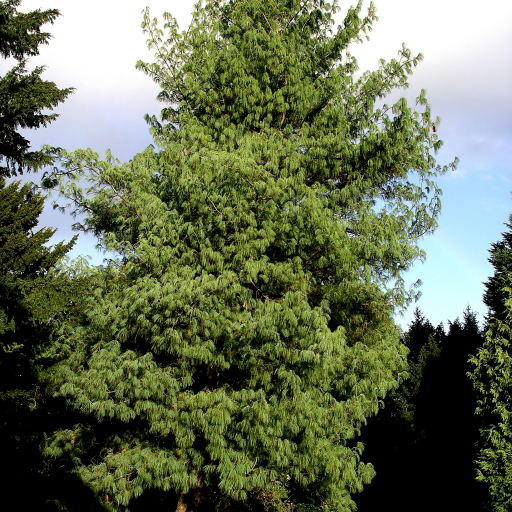
Often called the "Bhutan Pine" or "Himalayan White Pine," this high-altitude royalty is famous for its graceful, weeping silhouette. Native to the mountain ranges of the Himalayas, it has long been prized by landscapers for its shimmering, blue-tinted foliage that looks like soft rain frozen in time. In its native lands, it is a symbol of endurance and is frequently found surrounding ancient monasteries.
🔍 How to Identify
- 🌲 The Needles: Unlike the stiff needles of many pines, these are remarkably long (up to 8 inches), soft, and always grow in bundles of five. They droop downward, giving the tree a "weeping" appearance.
- 🎨 Color Palette: The foliage has a distinct glaucous (waxy) blue-green tint, which creates a silvery-white shimmer when the wind catches the branches.
- 🍌 The Cones: It produces slender, cylindrical cones that are quite long and often curved. When young, they are covered in a sticky, fragrant white resin.
🏡 In Your Garden
- 🌬️ Space to Breathe: This is not a tree for a cramped corner. It grows quite large and wide; it needs plenty of air circulation to prevent needle cast diseases, which can happen if the foliage stays damp for too long.
- 💧 Drainage is Vital: While it loves the cool, moist air of the mountains, it cannot tolerate "wet feet." If planted in heavy clay soil that holds water, the roots will quickly rot. It thrives best in well-drained, slightly acidic soil.
- ❄️ Cold Over Heat: It is exceptionally cold-hardy, but it struggles in tropical or sweltering urban heat. It prefers areas with distinct seasons and cool summer nights.
⚠️ Safety & Toxicity
- ✅ Generally Safe: Pinus wallichiana is considered non-toxic to humans and common household pets like dogs and cats.
- 🌲 Resin Irritation: The tree produces a high volume of sticky resin (sap). While not poisonous, this resin can cause mild skin irritation for sensitive individuals and is notoriously difficult to wash out of clothing or pet fur.
✨ Fun Fact
The resin of the Himalayan White Pine is exceptionally high in turpentine. Historically, it was a primary source for high-quality oleoresins used in traditional medicines and for waterproofing wooden Himalayan bridges!

Detailed Care Instructions
To grow Pinus wallichiana (also known as the Himalayan pine), you can follow these steps:
- Choose a suitable location: Pinus wallichiana prefers a sunny location with well-drained soil. It can tolerate various soil types but prefers alkaline to slightly acidic soil.
- Prepare the soil: Loosen the soil in the planting area by removing any weeds, rocks, or debris. Add organic matter or compost to improve soil fertility and drainage.
- Planting: Dig a hole that is slightly larger and deeper than the root ball of the plant. Place the tree in the hole and backfill with soil, gently firming it around the roots. Ensure that the soil level is even with the top of the root ball.
- Watering: Water the tree thoroughly after planting and continue to provide regular deep watering during the first year to establish a strong root system. After that, watering can be reduced, as Pinus wallichiana is relatively drought-tolerant.
- Mulching: Apply a layer of mulch around the base of the tree to conserve moisture, suppress weed growth, and regulate soil temperature. Use organic mulch such as wood chips or pine needles.
- Pruning: Pinus wallichiana generally requires minimal pruning. Remove any dead, damaged, or diseased branches as needed. Prune for shaping or size control during the dormant season.
- Fertilizing: Apply a slow-release fertilizer specifically formulated for evergreens in spring. Follow the package instructions for application rates.
- Protecting from pests and diseases: Monitor the tree for pests like aphids, sawflies, or bark beetles and take appropriate control measures if necessary. Regular inspections for diseases such as pine needle blight or rust can also help catch and treat any issues early.
- Winter care: Pinus wallichiana is hardy in cold climates, but young trees might require protection from frost or extreme temperature fluctuations during their first few winters. Consider using burlap or other protective materials to shield them.
Remember to consult local gardening resources or professionals for specific advice based on your region's climate and growing conditions.

Place in a bright room that is sun drenched almost all day. Or directly in a south-facing window.

When caring for this species of plant, it is essential to ensure that it receives adequate water throughout the year. During the growing season, water the plant deeply once a week, providing enough moisture to saturate the root system. It is important to water slowly and deeply, allowing the water to penetrate the soil and reach the entire root system.
During times of drought or dry weather, increase watering frequency to twice per week. When watering, avoid getting water on the foliage or needles, as this can lead to fungal diseases. Instead, focus the water on the soil around the base of the plant.
It is critical to ensure that the soil is well-draining. If the soil retains too much moisture, the plant's roots can become waterlogged and prone to rot. Therefore, it is crucial to plant this species of pine in well-draining soil or to add sand or gravel to improve drainage.
During the winter months, reduce watering frequency as the plant enters its dormant period. Only water if the soil becomes dry to the touch. Overwatering during this time can lead to root rot and other issues.
In summary, water this species of plant deeply once a week during the growing season, avoid getting water on the foliage, ensure the soil is well-draining, and reduce watering frequency in winter.
To fertilize this plant, apply a slow-release, balanced fertilizer in early spring when the soil has thawed and the plant is beginning its growth period. Use a fertilizer with a lower ratio of nitrogen to phosphorus and potassium to encourage strong root growth and overall plant health. Apply the fertilizer evenly around the base of the plant, being careful not to apply too much in one spot. Water the plant thoroughly after fertilizing to help the nutrients move into the soil and to prevent fertilizer burn. Repeat this process annually or as needed based on the plant's growth and health.
Pinus Wallichiana requires well-draining soil with a pH level that ranges from slightly acidic to neutral. The plant requires soil that is rich in organic matter and has good water retention capacity, while also allowing excess water to drain away. The ideal soil for Pinus Wallichiana should be sandy loam or loamy sand with a moderate level of fertility. It is important to avoid using heavy or clay soils as they tend to hold water for long periods, leading to root rot and other diseases. It is also recommended to mix in some compost or other organic matter to help improve soil structure and nutrient levels. Additionally, it is important to ensure that the soil is well-aerated to allow for proper root development and growth.
- Obtain mature cones from a healthy Pinus Wallichiana plant. Make sure the cones are fully developed and dry.
- Place the cones in a warm, dry location for a few days to allow them to fully open and release the seeds.
- Collect the seeds from the cones and remove any debris or damaged seeds.
- Soak the seeds in water for 24 hours to soften the outer coating.
- Fill a seed tray with a mixture of sand and peat moss. The mixture should be moist but not soaking wet.
- Spread the seeds evenly in the seed tray and cover lightly with the sand and peat moss mixture.
- Cover the tray with a plastic lid or wrap to create a humid environment.
- Place the tray in a warm location with indirect light. The temperature should be between 60 and 70 degrees Fahrenheit.
- Maintain a moist environment by misting the seeds regularly with water.
- After 2-3 weeks, the seedlings should start to emerge. Once they have developed a few true leaves, they can be transplanted into individual pots with a well-draining soil mixture.
- Water the seedlings regularly and provide them with a balance of light and shade as they grow.
- After 1-2 years, the seedlings should be large enough to transplant into their permanent location.








