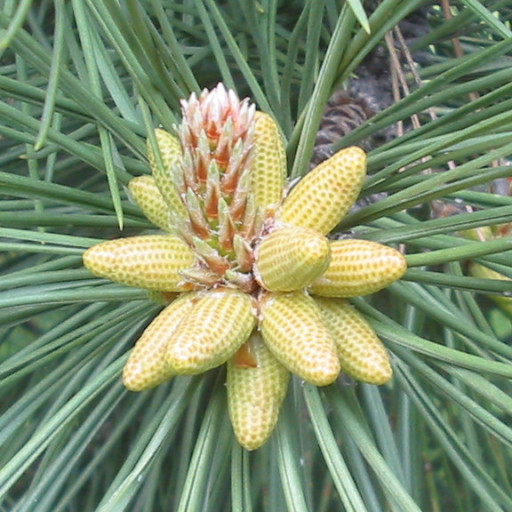
Plant Overview
The mighty Pine (Pinus) is the ancient architect of the northern forests, standing tall as a universal symbol of longevity and resilience. Known colloquially as "The Forever Green," these resinous giants belong to one of the oldest plant lineages on Earth, dating back over 150 million years. Whether they are providing the refreshing scent of a winter forest or offering shelter to woodland creatures, pines are the backbone of many diverse ecosystems.
🔍 How to Identify
- 🌲 The Needles: Unlike other conifers, pine needles are always bundled together in small sheaths called "fascicles." Depending on the species, you will typically find them in clusters of two, three, or five.
- 📦 The Cones: Pines produce woody, scaled seed cones. These are distinct from the soft, berry-like cones of Junipers or the papery cones of Spruces; pine cones are rigid and take one to three years to fully mature.
- 🪵 The Bark: As the tree matures, the bark becomes thick, craggy, and deeply furrowed. In many species, it looks like rectangular "armored" plates that help the tree survive heat and forest fires.
🏡 In Your Garden
- ☀️ Sun Seekers: Pines are "pioneer species," meaning they are designed to grow in wide-open, sunny spaces. They demand full sunlight and will often drop their lower branches if they become too shaded.
- ⛰️ The Taproot Factor: Most pines develop a deep, sturdy taproot very early in life. This makes them incredibly wind-resistant once established, but it also means they hate being transplanted. It is best to choose their "forever home" carefully from the start.
- 🍂 Natural Mulching: Don't be alarmed when your pine drops its oldest needles in the autumn. This "pine straw" creates a natural, acidic mulch that suppresses weeds and helps the tree retain moisture during dry winters.
⚠️ Safety & Toxicity
- ✅ Generally Safe: Most true members of the Pinus genus are considered non-toxic to humans and common household pets.
- 🐾 Sticky Situations: The primary concern is the resin (sap), which is incredibly sticky and can cause mild skin irritation or be a mess to remove from pet fur. If a pet eats a large amount of needles, the sharp points may cause minor mechanical irritation to the stomach.
- ⚠️ Important Note: Never confuse a Pine with a Yew (Taxus). While Yews look similar to the untrained eye, they are highly toxic to both humans and animals.
✨ Fun Fact
✨ Ancient Elders: The Great Basin Bristlecone Pine (Pinus longaeva) is one of the oldest living organisms on Earth. Some individual trees in the mountains of California have been verified to be over 4,800 years old—meaning they were already ancient when the Great Pyramids were being built!

Detailed Care Instructions
| Humidity | Normal |
| Lighting | Part Sun |
| Difficulty | Easy |
| Temperature | 20°C - 30°C |
| Hardiness Zones | 2 - 9 |
To grow a Pinus plant, also known as a pine tree, you can follow these steps:
- Choose the right location: Pinus plants thrive in full sun and well-drained soil. Make sure you have enough space for the tree to grow to its full height, as some species can reach 100 feet or more.
- Prepare the soil: Before planting, loosen the soil and remove any weeds or grass. You can also add organic matter like compost to improve soil fertility and drainage.
- Select a healthy seedling or sapling: You can purchase Pinus seedlings or saplings from a reputable nursery or online supplier. Look for healthy green needles, a strong and straight trunk, and a well-developed root system.
- Plant the seedling: Dig a hole slightly larger than the root ball of the seedling. Place the seedling in the hole, making sure the root system is fully covered by soil. Gently firm the soil around the base of the tree.
- Water regularly: Pinus plants need consistent watering, especially during the first year. Water deeply but infrequently to encourage deep root growth. The frequency will depend on the weather and soil conditions. Check the soil moisture regularly and adjust watering accordingly.
- Mulch: Apply a layer of organic mulch around the base of the tree to help conserve moisture, reduce weed competition, and regulate soil temperature.
- Prune as needed: Pinus trees generally don't require heavy pruning. However, you may need to remove any dead or diseased branches and thin out overcrowded growth to maintain the tree's health and appearance.
- Protect from pests and diseases: Keep an eye out for common pine pests like pine beetles or pine weevils. Act promptly if you notice any signs of infestation, such as wilting branches or holes in the bark. Consult with a local arborist or extension office for specific pest and disease management recommendations in your area.
- Be patient: Growing a Pinus plant from a young sapling to a full-grown tree can take several years or even decades, depending on the species. Be patient and enjoy watching your tree grow and provide beauty to your landscape.
Remember to research the specific Pinus species you are planting, as different types may have slightly different care requirements.

Place in a bright room that is sun drenched almost all day. Or directly in a south-facing window.

When watering Pinus plant, it is important to keep in mind its natural habitat and watering needs. These plants typically prefer well-draining soil that is not overly wet or dry, as they can be susceptible to root rot.
To water Pinus plant, first, check the soil's moisture level by sticking your finger about one inch into the soil. If it feels dry at this depth, it is time to water. If the soil still feels moist, wait a day or two before checking again.
When watering, use a gentle, slow stream of water that allows the soil to absorb the moisture without washing it away. Water the plant deeply, allowing the water to soak into the root zone. Be sure to avoid getting water on the foliage or needles, as this can lead to fungal problems.
It is important to note that Pinus plants may require less water during the dormant season or during periods of drought. So, it is necessary to adjust watering frequency accordingly. Additionally, be careful not to overwater the plant, which can lead to root rot.
To fertilize this plant, apply a slow-release, balanced fertilizer in the spring before new growth begins. Use a granular product designed for acid-loving plants, applying at a rate of 1-2 pounds per 100 square feet. Water thoroughly after application to ensure nutrients penetrate the soil. Do not fertilize in the fall, as it may encourage late-season growth that can be damaged by cold temperatures.
When planting Pinus, it is important to use well-draining soil with a pH level that is slightly acidic. The ideal pH range for Pinus is between 5.5 and 6.5. The soil should be rich in organic matter and capable of holding moisture without becoming waterlogged. A soil mixture with a combination of compost, sand, and loam is recommended for growing Pinus plants. It is important to ensure that the soil is free of any pests or diseases that could harm the plants. Regular fertilization with a balanced fertilizer is also essential to ensure healthy growth and development of the plants. Overall, the soil should be nutrient-rich, well-draining, and slightly acidic for optimal growth and health of Pinus plants.
To propagate this plant, you will need to collect seeds from mature cones. The seeds should be placed in a plastic bag with moist peat moss or sand to allow for stratification, which is the process of exposing the seeds to cold temperatures to stimulate germination. After a few weeks, the seeds can be sown in a well-draining potting mix and covered with a thin layer of soil. Keep the soil moist and place the container in a sunny location. Once the seedlings are a few inches tall, they can be transplanted into individual pots or into the ground. It is important to note that this plant can take several years to reach maturity. Alternatively, cuttings can be taken from softwood growth in early to mid-summer. Dip the cuttings in rooting hormone and place them in a rooting medium. Keep the medium moist and place a plastic bag or cover over the cuttings to maintain high humidity. Once rooted, the cuttings can be transplanted into individual pots or into the ground.







