Plant Overview
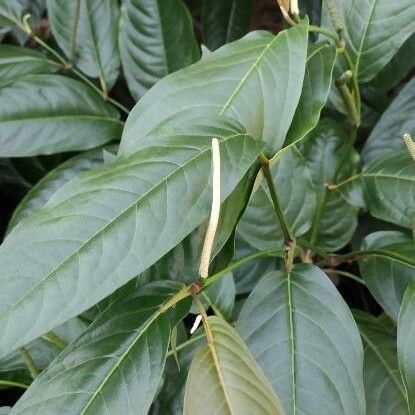
Often called the Candle Pepper or False Kava, Piper arboreum is a striking woody shrub that looks like it stepped straight out of a Mesoamerican rainforest. While it is a close cousin to the black pepper used in your kitchen, this plant is prized by collectors for its architectural beauty and its curious, upright flower spikes that glow like tiny white candles against deep green foliage.
🔍 How to Identify
- 🕯️ Candle Spikes: Its most iconic feature is the inflorescence—slender, cream-colored spikes that stand perfectly upright at the ends of branches, resembling flickers of candlelight.
- 🍃 Quilted Foliage: The leaves are large, lance-shaped, and possess a distinct "quilted" or rugose texture with prominent veins that give the plant a lush, prehistoric look.
- 🦴 Knobby Stems: Look for the characteristic "jointed" stems. Like most members of the Pepper family, the branches have swollen nodes that look almost like knees or bamboo joints.
🏡 In Your Garden
- ☁️ Humidity is Key: As a native of the tropical understory, this plant craves moisture. If you notice the leaf edges becoming crisp or brown, it is likely a sign that the air is too dry; a pebble tray or frequent misting will keep it happy.
- 🌦️ The Dappled Life: It is a specialist in low-light environments. It thrives in "filtered" sun, mimicking the shadows of taller forest giants. Avoid direct afternoon sun, which can easily scorch its delicate, textured leaves.
- 🌱 Root Stability: It prefers to stay put once established. Because it forms a relatively dense root system to support its woody height, frequent repotting can stress the plant and cause leaf drop.
⚠️ Safety & Toxicity
- 👅 Mild Irritant: While Piper arboreum is not considered a deadly plant, it contains essential oils and compounds that can cause a numbing sensation or mild tingling if chewed.
- 🐾 Pet Caution: It is best kept out of reach of curious cats and dogs. Ingestion can lead to drooling or stomach upset due to the peppery compounds found within the foliage and fruit.
✨ Fun Fact
In many South American traditional cultures, this plant is known as a "Toothache Shrub." The leaves contain natural anesthetic properties; when chewed, they create a numbing effect on the gums, acting as a prehistoric version of Orajel!

Detailed Care Instructions
To grow Piper arboreum, also known as tree pepper, follow these steps:
- Choose the right location: Select an area with partial shade or filtered sunlight. Avoid direct sunlight, as it can scorch the leaves. The plant prefers a warm and humid environment.
- Soil preparation: Prepare well-draining soil rich in organic matter. Amend the soil with compost or well-rotted manure to improve fertility and drainage.
- Planting: Plant Piper arboreum in early spring or summer when the soil temperature is consistently above 60°F (15°C). Dig a hole twice the size of the root ball and place the plant in the hole. Backfill with soil, firm it gently, and water thoroughly.
- Watering: Keep the soil evenly moist but not waterlogged. Provide regular watering during dry spells, especially when the plant is establishing its roots. Mulching around the plant helps retain moisture.
- Fertilization: Feed the Piper arboreum plant with a balanced, slow-release fertilizer in early spring. Follow the manufacturer's instructions for dosage and frequency.
- Pruning: Prune the plant in late winter or early spring to maintain its shape and remove any dead or diseased branches. This will also encourage bushier growth.
- Pests and diseases: Monitor the plant for pests like aphids, spider mites, or mealybugs. Treat any infestations promptly using organic insecticidal soaps or neem oil. Ensure good air circulation to prevent fungal diseases.
- Staking: Young Piper arboreum plants may require staking to support their upright growth until they become established.
- Propagation: The plant can be propagated through seeds or stem cuttings. Collect seeds from ripe fruit and sow them in a well-draining potting mix. For stem cuttings, take 4- to 6-inch (10-15 cm) cuttings from a healthy plant, dip them in rooting hormone, and plant them in a moist potting mix.
- Overwintering: In regions with cold winters, protect the plant from frost by bringing it indoors or covering it with a frost blanket. Maintain a slightly lower watering schedule during winter.
With proper care and suitable conditions, your Piper arboreum plant should thrive and grow well.
To properly water this plant, it is important to ensure that the soil has dried out slightly between waterings. Use a watering can or hose to slowly and evenly water the soil around the base of the plant until the water starts to seep out the bottom. Avoid getting water on the leaves, as this can lead to disease. In addition, make sure the plant is placed in a location with good drainage to prevent water from accumulating around the roots.
To fertilize this plant, use a balanced fertilizer with equal parts nitrogen, phosphorus, and potassium. Apply the fertilizer during the growing season, every four to six weeks. Make sure to dilute the fertilizer according to the instructions and only apply to moist soil to avoid burning the roots. Avoid fertilizing during the dormant season.
When selecting soil for the plant known as Piper Arboreum, it is important to consider its natural habitat. This plant is typically found in humid environments with rich, well-draining soil. Therefore, it is recommended to use a soil mix that is high in organic matter and holds moisture well, but also provides good drainage. A mix of peat moss, perlite, and vermiculite may be suitable, or a potting mix designed specifically for tropical plants. It is important to ensure that the soil pH is within the plant's optimal range, which is typically between 5.5 and 7.5. Regular fertilization can also benefit this plant, with a balanced fertilizer that provides essential micronutrients.
To propagate this plant, take a cutting from a healthy mature stem that has several leaves. Use sharp, clean shears to cut the stem at a 45-degree angle just below a node where a leaf and branch meets. Remove the leaves from the bottom two-thirds of the stem and dip the cut end in rooting hormone powder. Place the cutting in a pot filled with a moist, well-draining soil mixture and cover with a plastic bag to create a mini greenhouse. Keep the soil moist and the cutting in indirect sunlight until roots form in about four to six weeks. Gradually expose the new plant to more sunlight and remove the plastic bag. Transplant the new plant into a larger pot with fresh potting soil and continue to care for it until it reaches maturity.








