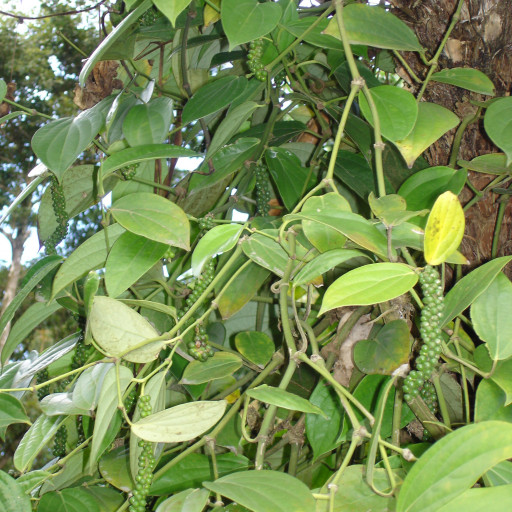
Plant Overview
Known as the "King of Spices," Piper nigrum is the lush, tropical climber responsible for the black gold found in pepper shakers worldwide. Native to the humid monsoon forests of Kerala, India, this woody vine once fueled global trade routes and sparked the Age of Discovery. Today, it is a prized ornamental for indoor gardeners who enjoy its glossy, heart-shaped foliage and the thrill of growing their own pantry staples.
🔍 How to Identify
- 🍃 Heart-Shaped Leaves: The foliage is dark green, leathery, and alternate, often looking similar to certain Philodendrons but with a distinct, slightly quilted texture.
- 🧶 Pendulous Spikes: It produces tiny, inconspicuous white flowers on hanging spikes called "catkins" that can reach up to 6 inches in length.
- 🍒 The Berries (Drupes): Small round fruits grow in dense clusters along the spikes, transitioning from bright green to vibrant red as they ripen.
🏡 In Your Garden
- 🧗 The Need for Support: As a true climbing vine, Piper nigrum requires a sturdy trellis or a moss pole. In the wild, it uses adventitious roots to scale tall trees; in your home, providing vertical support is the only way to encourage it to produce fruit.
- 💧 Tropical Humidity: This plant is a "humidity hog." It thrives in moist, well-draining soil and air that mimics a rainforest. If your home is dry, frequent misting or a pebble tray is necessary to prevent the leaf edges from crisping.
- ☀️ Dappled Light: Think of the jungle canopy—it prefers bright, indirect light. Direct afternoon sun can scorch the glossy leaves, while too much shade will result in a leggy plant that refuses to flower.
⚠️ Safety & Toxicity
- 🌿 Safe Status: Piper nigrum is generally considered non-toxic to humans and is not listed as a majorly poisonous plant for cats or dogs by the ASPCA.
- 🌶️ Mild Irritant: While not toxic, the berries contain piperine, which can cause sneezing or mild digestive upset if a pet decides to munch on a large quantity. The sap may also cause minor skin irritation for individuals with high sensitivity.
✨ Fun Fact
One plant provides four different spices! Black, white, green, and even rare red peppercorns all come from Piper nigrum. The difference lies entirely in when the berries are harvested and how they are processed (dried, fermented, or peeled).

Detailed Care Instructions
| Color | White |
| Soil Ph | Slightly Acidic 6.0 To 7.0 |
| Humidity | Normal |
| Lighting | Full Sun |
| Soil Type | Rich And Loamy |
| Bloom Time | Summer |
| Difficulty | Easy |
| Plant Type | Tropical Perennial Vine |
| Mature Size | 10 To 30 Feet |
| Native Area | India, Sri Lanka |
| Temperature | Min 18°C |
| Sun Exposure | Full Sun |
| Hardiness Zones | 12 |
To grow Piper Nigrum (black pepper) plant, follow these steps:
- Purchase high-quality seeds or cuttings from a reputable source. It is recommended to choose a variety suited for your climate.
- Prepare the planting medium by combining equal parts of well-draining soil and organic matter like compost. Black pepper plants prefer slightly acidic soil with a pH between 5.5 to 7.0.
- Fill small pots with the prepared planting medium and water thoroughly. Allow excess water to drain away before moving to the next step.
- Plant the black pepper seeds about half an inch deep in each pot. If using cuttings, dip the cut end into a rooting hormone to encourage faster and more successful rooting.
- Place the pots in a warm and humid location, such as a greenhouse or near a sunny window. Maintain a temperature between 75-85°F (24-29°C) to aid germination or rooting. Ensure the plant receives indirect sunlight as too much direct sunlight can scorch the young plants.
- Keep the soil consistently moist, but not waterlogged, until the seeds germinate or cuttings root. Mist the leaves regularly to provide additional humidity.
- Once the seedlings or cuttings have established a strong root system and are about 6-8 inches tall, transplant them into larger pots or directly into the ground. Choose a well-draining location with partial shade to protect the plants from intense sunlight.
- Monitor the moisture levels of the soil and water the plants regularly to keep the soil evenly moist. Avoid overwatering as it can lead to root rot.
- Fertilize the plants every 6-8 weeks with a balanced, water-soluble fertilizer to provide essential nutrients. Follow the instructions on the fertilizer package carefully, as over-fertilization can harm the plants.
- Provide support for the growing vines by using stakes or trellises. The black pepper plant grows as a climbing vine and needs support for optimal growth.
- Prune the plants regularly to maintain their shape and encourage bushier growth. Remove any dead or damaged foliage to keep the plants healthy.
- Harvest the black peppercorns when they turn from green to red. This usually happens 6-8 months after planting. Pick the berries when they are fully ripe for the best flavor.
By following these steps, you can successfully grow and cultivate your own Piper Nigrum plant.

Place in a dark room with little light, like a dark bedroom or a spot far away from a window or directly in a north-facing window.

The best way to water this plant is to avoid over-watering it. You should ensure the soil is moist but not waterlogged. You can do this by watering the plant deeply once a week and ensuring the water is absorbed by the soil before watering again. It is important to note that the plant prefers well-draining soil and not to let the soil completely dry out. Additionally, you can mist the leaves with water to increase humidity around the plant which can be beneficial.
To fertilize the plant, use a balanced fertilizer with equal amounts of nitrogen, phosphorus, and potassium. Apply the fertilizer every three months during the growing season and adjust the amount according to the plant's size. It is important to water the plant before and after fertilizing to prevent root burn. Avoid over-fertilizing as it can lead to excessive growth and reduce the quality of the plant's produce.
Piper nigrum plant requires a rich and well-draining soil with a pH range between 5.5 and 7.5. The soil should be loamy, sandy, or clayey, with good organic matter and nutrients. It should be slightly moist but not waterlogged. The plant prefers soil that is slightly acidic to neutral and should not be planted in soil that is highly alkaline. Adding compost or other organic matter to the soil before planting can help improve the soil structure and fertility. The soil should also have good drainage to prevent waterlogging and root rot.
To propagate this particular plant, take a cutting from a mature plant that has a few leaves and a section of stem that is at least 2 inches long. Dip the cut end in rooting hormone and plant it in a pot with well-draining soil. Keep the soil moist, but not soggy, and place the pot in a warm and brightly lit area. The cutting should start to develop roots within a few weeks. Once the plant has established roots, it can be transplanted into a larger pot or into the ground in a well-drained and sunny location.
Common pests of the pepper include Mealybugs, spider mites, thrips. Make a habit of checking your pepper frequently for pests so that any infestations can be caught and managed early.








