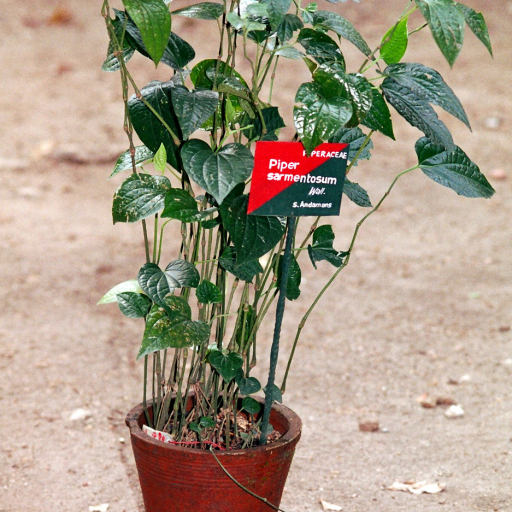
Plant Overview
Often called the Wild Betel or Lolot pepper, this lush tropical creeper is a staple in Southeast Asian kitchens and shaded gardens. While it is frequently mistaken for its famous cousin, the true Betel leaf, Piper sarmentosum is softer, shinier, and creates a dense, emerald-green carpet across the forest floor. It is most famous for its culinary role, where its peppery, earthy leaves are used to wrap savory snacks.
🔍 How to Identify
- 🍃 Heart-Shaped Foliage: The leaves are thin, glossy, and perfectly heart-shaped (cordate), featuring deep, prominent veins that radiate beautifully from the base.
- 📉 Creeping Habit: Instead of climbing high like other peppers, this plant stays low to the ground, spreading horizontally via runners to form a thick mat.
- 🕯️ White Spikes: It produces tiny, erect white flower spikes that look like miniature candles standing upright among the green leaves.
🏡 In Your Garden
- ☁️ The Shade Specialist: This plant is the perfect solution for those "difficult" damp, shady corners where grass refuses to grow. It thrives in dappled light and will scorch if left in the midday sun.
- 🌊 Moisture Lover: It hates "dry feet." Because the leaves are quite thin, they will wilt dramatically if the soil dries out, though they are resilient enough to perk back up quickly after a deep drink.
- 🏃 Space Management: Be aware that it is a vigorous spreader. In warm, humid climates, it can become invasive in a garden bed; growing it in a wide, shallow pot is a great way to enjoy the foliage without it taking over.
⚠️ Safety & Toxicity
- 🥗 Safe for Humans: This plant is non-toxic to humans and is a widely consumed vegetable and medicinal herb throughout Asia.
- 🐾 Pet Sensitivity: While not considered "poisonous" in the traditional sense, the essential oils and oxalates common in the Piper family can cause mild mouth irritation or tummy upset in curious cats and dogs if chewed in large amounts.
✨ Fun Fact
In Thailand, the leaves are the essential "wrapper" for a famous snack called Miang Kham. The name translates to "one bite wrap," and the leaf is specifically chosen because its complex, peppery flavor perfectly balances the sweet, sour, and spicy fillings inside!

Detailed Care Instructions
To grow Piper sarmentosum plants, also known as wild betel leaf or betel pepper, follow these steps:
- Choose a suitable planting location: Piper sarmentosum plants prefer partial shade and well-draining soil. They can be grown indoors or in a garden bed.
- Obtain plant material: You can purchase Piper sarmentosum plants or obtain cuttings from established plants. If using cuttings, select healthy stems that are around 4-6 inches in length.
- Prepare the soil or container: If planting in a garden bed, ensure the soil is loose, fertile, and free from weeds. If growing in a container, use a well-draining potting mix.
- Plant the Piper sarmentosum: Dig a hole or create a shallow furrow in the soil. Space the plants around 8-12 inches apart. Place the cuttings into the hole or furrow and gently pack the soil around them.
- Water the plants: Keep the soil consistently moist, as Piper sarmentosum plants prefer slightly damp conditions. Watering once or twice a week should be sufficient, but adjust based on the weather and soil moisture levels.
- Provide partial shade: These plants thrive in areas with partial shade. If growing indoors, place them near a window with filtered light.
- Fertilize appropriately: Apply a balanced, slow-release fertilizer or organic compost once every few months to provide essential nutrients for growth.
- Prune regularly: Piper sarmentosum plants benefit from regular pruning to control their size and promote bushier growth. You can trim the stems back to encourage branching and yield more leaves.
- Harvest the leaves: You can start harvesting leaves when the plant is around 4-6 months old. Harvest only a few leaves at a time and avoid overharvesting from a single plant.
- Maintain plant health: Watch out for pests like aphids or caterpillars, and take appropriate measures to control them. Regularly inspect the plant for signs of diseases or nutrient deficiencies and address them promptly.
By following these steps and providing proper care, you can successfully grow Piper sarmentosum plants and enjoy their flavorful leaves.

Place in a window with dappled sun or a spot in the middle of a room. Or directly in a window facing west or east.

To water this specific plant, one should check the soil moisture level before watering. If the soil is dry to touch, the plant needs watering. One should pour enough water so that the excess water drains out from the bottom of the pot. Overwatering should be avoided as it can cause root rot. This plant prefers to be kept in moist soil, but not waterlogged. It is recommended to water this plant once a week or when the soil feels dry.
To fertilize this plant, use a balanced, slow-release fertilizer once a month during the growing season (spring and summer). Apply the fertilizer around the base of the plant, taking care not to get any on the leaves. Water the plant well after fertilizing to help the nutrients soak into the soil. Avoid fertilizing during the dormant season (fall and winter) when the plant is not actively growing.
Piper Sarmentosum is a tropical plant that prefers well-drained soil that is rich in organic matter. The soil should have a slightly acidic to neutral pH, ranging from 5.5 to 7.0. It is important to choose a soil that is not too heavy and compacted, as this can lead to poor drainage and root rot. A suitable soil for Piper Sarmentosum can be a mix of organic potting soil, perlite, and coco coir, which allows for good drainage and aeration while retaining moisture. It is important to keep the soil moist but not waterlogged, and to avoid over-fertilizing, as this can lead to excessive growth and poor flavor. A light application of a balanced fertilizer every two to three months can help support healthy growth and enhance the taste of the leaves.
Propagation of this plant can be done through stem cuttings. Take a healthy stem cutting with at least two leaves and a node. Remove the lower leaves and plant the cutting in moist soil or a rooting hormone solution. Keep the cutting in a warm, well-lit area and mist regularly. After a few weeks, the cutting should develop roots and can be transplanted to a larger container or the ground. Propagation can also be done through division of the plant or collecting and planting the seeds.
Common pests of the pointed pepper include Mealybugs, spider mites, thrips. Make a habit of checking your pointed pepper frequently for pests so that any infestations can be caught and managed early.








