Plant Overview
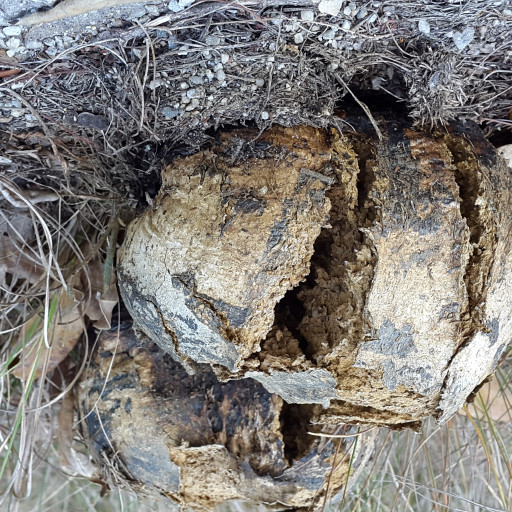
Known by the unflattering but descriptive nicknames "Dead Man’s Foot" or the "Dog Turd Fungus," Pisolithus arhizus is a master of disguise in the fungal world. While it may look like a lump of charred wood or animal waste at first glance, it is one of the most beneficial soil-building organisms on the planet. This strange-looking puffball relative is a silent hero that thrives where other life fails, turning desolate ground into a nursery for trees.
🔍 How to Identify
- 🟤 The Body: It typically appears as a club-shaped or lumpy, stalked mass that can grow up to 10 inches tall. The exterior is a dull, mottled brown that looks remarkably like a piece of burnt wood or dried dung.
- 🎨 The "Peas": If you slice a young specimen open, the interior is filled with tiny, distinct chambers called peridioles that look like small, yellowish-brown grains or "peas" set in a black gel.
- 🌫️ The Spore Cloud: As it matures, the top disintegrates into a dry, cinnamon-colored powdery mass. Even a light tap can send a massive cloud of spores into the air to be carried by the wind.
🌲 Habitat & Ecology
- 🤝 The Ultimate Partner: This fungus is ectomycorrhizal, meaning it forms a symbiotic "handshake" with the roots of trees like Pines, Oaks, and Eucalyptus. It provides the tree with water and minerals while taking a bit of sugar in return.
- 🏜️ Lover of Poor Soil: You won’t usually find this in lush, wet forests. Instead, look for it in dry, sandy, or rocky areas, along roadsides, or even in urban areas with heavily compacted soil where most other mushrooms cannot survive.
⚠️ Safety & Toxicity
- 🚫 Status: Non-edible. While not known to be aggressively poisonous, it is considered inedible due to its woody, cork-like texture and bitter taste.
- 💨 Inhalation Warning: The mature fungus produces a staggering amount of powdery spores. While not toxic, breathing in a large "puff" of these spores can cause respiratory irritation for humans and curious pets.
- 🧤 Staining Potential: The dark pigments in the fungus are very strong. If you handle a fresh specimen, it will leave deep brown stains on your skin and clothing that are difficult to wash off.
✨ Fun Fact
The Pisolithus arhizus is often called the "Dyeball" because it has been used for centuries as a powerful natural dye. It produces a rich, permanent bronze or deep chocolate-brown color that is highly prized by traditional wool and silk crafters!

Detailed Care Instructions

Place in a bright room that is sun drenched almost all day. Or directly in a south-facing window.
To water this plant, it is important to ensure that the soil remains moist but not waterlogged. One way to achieve this is by watering deeply and infrequently, allowing the water to penetrate the soil and reach the roots. It is also important to water the plant at the base, rather than over the leaves, to avoid creating conditions that could promote fungal growth. In addition, it is a good idea to use a well-draining soil mix and to avoid letting the plant sit in standing water. Regularly checking the soil moisture level by sticking a finger into the soil can help ensure that the plant is getting the appropriate amount of water.
The ideal soil for the plant that goes by the scientific name of Pisolithus Arhizus is a well-draining, sandy soil that is high in organic matter. The soil should have a pH level between 6 and 7.5, which is slightly acidic to neutral. The plant requires a soil that is rich in nutrients, so it is recommended to add a slow-release fertilizer to the soil when planting. It is important to avoid planting the Pisolithus Arhizus in heavy clay or compacted soils as this could lead to root rot and poor growth. Additionally, the plant requires regular watering to keep the soil moist but not waterlogged.







