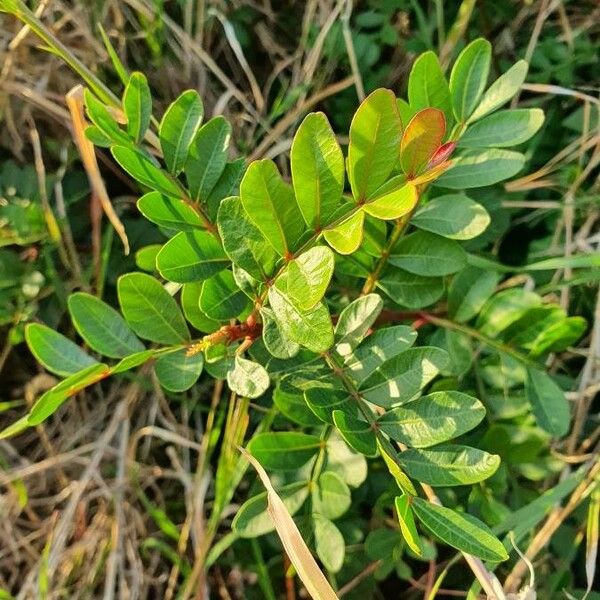
Plant Overview
Hailing from the rugged highlands and rocky outcrops of East Africa, Pistacia aethiopica, commonly known as the African Pistachio, is a resilient evergreen that bridges the gap between wild survival and traditional utility. While it is a close relative of the tree that gives us the green nuts we love to snack on, this species is prized more for its aromatic resin and its ability to thrive where other plants surrender to the heat.
🔍 How to Identify
- 🍃 The Foliage: Look for leathery, glossy green leaves arranged in pairs along a central stem (pinnate). The leaves often have a distinct citrus-like or resinous scent when crushed.
- 🍒 The Berries: In late summer, female trees produce dense clusters of tiny, round fruits. These start off a vibrant, fleshy red and eventually ripen into a deep, purplish-black.
- 🌳 Growth Habit: It typically grows as a large shrub or a small, gnarled tree. The bark is greyish-brown and develops deep cracks and character as the tree ages.
🏡 In Your Garden
- 🌱 A Tough Customer: This plant is an "extremophile" of the garden world. It prefers well-draining, even rocky soil, and is exceptionally drought-tolerant once its root system is established. It’s a perfect choice for xeriscaping or Mediterranean-style gardens.
- ⏳ Patience is Key: The African Pistachio is a slow grower. Because it invests so much energy into producing dense wood and protective resins, don't expect it to provide a massive canopy overnight. It is a long-term investment in your landscape's structure.
⚠️ Safety & Toxicity
- 🟢 General Safety: Pistacia aethiopica is considered non-toxic to humans and is often used in traditional medicine. However, the berries are not the "pistachios" we eat and are generally not palatable for human consumption.
- 🐕 Pet Caution: While not listed as a major toxin, the high resin and essential oil content in the leaves can cause mild stomach upset in curious dogs or cats if ingested in large quantities.
- Sticky Situation:** The tree produces a sticky sap (resin) that can be difficult to wash off skin or clothing and may cause mild irritation to those with very sensitive skin.
✨ Fun Fact
The resin of the African Pistachio has been used for centuries as a natural chewing gum and incense. In various East African cultures, the wood is so dense and aromatic that it is a preferred material for crafting high-quality walking sticks and traditional carvings.

Detailed Care Instructions
Here are some steps to help you successfully grow a Pistacia Aethiopica plant:
- Choose a suitable location: Pistacia Aethiopica plants prefer full sun and well-draining soil. Choose a location in your garden that receives at least 6-8 hours of sunlight per day.
- Prepare the soil: Pistacia Aethiopica plants thrive in well-draining, slightly acidic soil. Amend the soil with organic matter such as compost or aged manure to improve drainage and fertility.
- Plant the seedling: Plant the Pistacia Aethiopica seedling in the prepared soil, making sure to dig a hole that is slightly larger than the root ball. Gently place the seedling in the hole and backfill with soil, making sure to water thoroughly after planting.
- Water regularly: Pistacia Aethiopica plants require regular watering to establish a strong root system. Water deeply once or twice a week, depending on the weather and soil conditions.
- Fertilize: Feed your Pistacia Aethiopica plant with a balanced fertilizer in the spring and summer months to encourage healthy growth and flowering.
- Prune as needed: Prune your Pistacia Aethiopica plant to remove dead or damaged branches, and to shape the plant as desired. Pruning can also help improve airflow and reduce the risk of disease.
- Protect from pests and diseases: Keep an eye out for common pests such as aphids and scale insects, and treat any infestations promptly. Additionally, provide good air circulation around the plant to prevent disease.
By following these steps, you can successfully grow a healthy and thriving Pistacia Aethiopica plant in your garden.
To properly water a Pistacia Aethiopica plant, it is important to consider its specific needs. This plant prefers a consistent watering schedule, allowing the soil to dry out slightly between waterings to prevent root rot.
When watering, aim to thoroughly saturate the soil around the plant, making sure the water reaches the roots effectively. It is best to water at the base of the plant, avoiding getting the foliage wet which can lead to fungal diseases.
During the growing season, typically spring and summer, the Pistacia Aethiopica plant may require more frequent watering as it actively grows. In contrast, during the winter months, it is important to reduce the frequency of watering to mimic its natural dormancy period.
To determine when to water, it is helpful to check the moisture level of the soil by sticking your finger into the top few inches. If the soil feels dry to the touch, it is time to water. Additionally, using a moisture meter can provide a more accurate reading of the soil's moisture level.
Overall, providing the Pistacia Aethiopica plant with proper watering care will help support its growth and overall health.
To properly fertilize the Pistacia Aethiopica plant, begin by selecting a balanced fertilizer with a nitrate-phosphate-potassium ratio of 10-10-10 or similar. Apply the fertilizer to the soil around the base of the plant, ensuring it is evenly distributed. Water the plant after fertilizing to help the nutrients penetrate the soil and reach the roots. Repeat this process every 4-6 weeks during the growing season, typically from spring to early fall. Avoid over-fertilizing as this can lead to nutrient imbalances and harm the plant. Additionally, monitor the plant for any signs of nutrient deficiencies and adjust the fertilizer application accordingly.
Pistacia Aethiopica thrives in well-draining soil with a slightly acidic to neutral pH level. It prefers a soil that is rich in organic matter and nutrients. A sandy loam soil with good aeration is ideal for this plant, as it allows for proper root development and drainage. It is important to avoid waterlogged or compacted soil, as this can lead to root rot and other issues. Adding compost or organic fertilizer to the soil can help provide the necessary nutrients for healthy growth. Overall, a well-balanced and fertile soil mix will promote optimal growth and health for Pistacia Aethiopica.
To propagate the Pistacia Aethiopica plant, one can use both seeds and cuttings. Here is how to propagate it using each method:
- Propagation from seeds:
- Collect fresh seeds from ripe fruits of the Pistacia Aethiopica plant.
- Prepare a well-draining potting mix and sow the seeds about 1/2 inch deep in the soil.
- Water the soil thoroughly and keep it consistently moist but not waterlogged.
- Place the pot in a warm and bright location, but out of direct sunlight.
- Seeds should germinate within a few weeks to a few months.
- Once the seedlings have developed a few sets of true leaves, they can be transplanted into individual pots.
- Propagation from cuttings:
- Take cuttings from mature, healthy branches of the Pistacia Aethiopica plant during the growing season.
- Cut 4-6 inch long sections of the stem with a sharp, clean knife.
- Remove the lower leaves from the cutting, leaving only a few at the top.
- Dip the cut end into a rooting hormone to encourage root development.
- Plant the cutting in a well-draining potting mix and lightly water.
- Place the pot in a warm and bright location, but out of direct sunlight.
- Roots should develop within a few weeks to a few months.
- Once roots have established, the cutting can be transplanted into a larger pot or into the garden.
By following these steps, one can successfully propagate the Pistacia Aethiopica plant without the need for its common names.








