Plant Overview
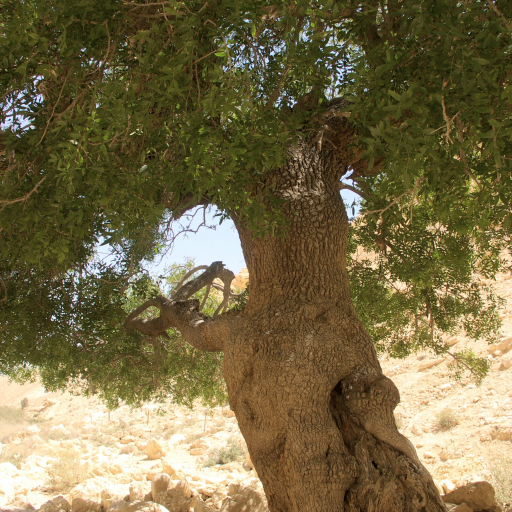
Known as the "Eternal Tree" of the high plateaus, Pistacia atlantica is a symbol of incredible resilience. Often called the Mt. Atlas Mastic Tree, it can live for over a thousand years, thriving in harsh, rocky landscapes where most other greenery withers. In its native range across North Africa and the Middle East, it has served as a vital source of shade, resin, and medicine since ancient times.
🔍 How to Identify
- 🌿 The Foliage: It features dark green, leathery leaves that are "odd-pinnate," meaning they grow in leaflets of 7 to 11 with a single leaf standing alone at the very tip.
- 🌳 Structure: A deciduous tree that develops a thick, gnarled trunk and a massive, umbrella-like crown. As it ages, the bark becomes deeply fissured and textured.
- 🍒 The Fruit: It produces small, pea-sized berries in clusters. These drupes undergo a beautiful color transformation, shifting from a bright, fleshy red to a waxy, metallic blue or black when fully ripe.
🏡 In Your Garden
- 🌍 Drought Champion: This tree is a master of water conservation. It uses a deep taproot to find moisture far underground, which makes it nearly impossible to move once it has settled—choose its "forever home" in your garden with care!
- 🛡️ Natural Protector: Because it is so hardy, it is frequently used as a rootstock for commercial pistachio trees. It provides a "shield" for weaker species, protecting them against soil-borne diseases and extreme temperature fluctuations.
⚠️ Safety & Toxicity
- ✅ Generally Safe: This plant is considered non-toxic to humans, cats, and dogs. It is a very safe choice for large landscapes or public spaces.
- 💧 Sticky Resin: The tree naturally produces a fragrant, turpentine-like resin. While not poisonous, the sap is extremely sticky and can cause mild skin irritation for people with very sensitive skin or those with specific sap allergies.
✨ Fun Fact
The resin from Pistacia atlantica was one of the world’s first forms of "chewing gum." Ancient Mediterranean cultures would collect the hardened sap tears to freshen their breath and use the antimicrobial properties to help soothe toothaches!

Detailed Care Instructions
To grow a Pistacia Atlantica plant, also known as the Atlantic pistachio, you can follow these steps:
- Climate and Location: Pistacia Atlantica plants thrive in areas with a Mediterranean climate, characterized by mild, wet winters and hot, dry summers. Ensure that the plant receives full sunlight and is protected from strong winds.
- Soil: The plant prefers well-draining soil with a pH level ranging from slightly acidic to neutral (pH 6.0-7.5). Amend the soil with organic matter such as compost to improve its fertility and drainage.
- Watering: Young Pistacia Atlantica plants require regular watering to establish their roots. Once they are established, they become relatively drought-tolerant but still benefit from occasional deep waterings during prolonged dry spells.
- Planting: Select a healthy Pistacia Atlantica sapling or start the plant from seeds. If starting from seeds, scarify them (scratch the seed coat) and soak them in warm water for 24 hours before sowing. Plant the seeds or saplings at a depth of about 1 inch in well-prepared soil and space them 5-10 feet apart.
- Pruning: Prune the plant during its dormant season (late winter or early spring). This helps maintain its shape and encourages new growth. Remove any dead, damaged, or crossing branches. Pruning can also control the overall size of the plant.
- Fertilizing: Fertilize the plant with a balanced, slow-release fertilizer suitable for woody plants during the growing season, typically in early spring and late summer. Follow the manufacturer's instructions for application rates.
- Mulching: Apply a layer of organic mulch around the base of the plant to help retain moisture and suppress weed growth. Leave a gap between the mulch and the trunk to prevent potential rotting issues.
- Pest and Disease Control: Pistacia Atlantica plants are generally resistant to pests and diseases. However, keep an eye out for common issues such as aphids or leaf spot diseases. Regularly inspect the plant and take appropriate measures if any problems arise.
- Patience: Pistacia Atlantica plants can take several years to reach maturity and start producing fruit. Be patient and provide proper care and maintenance throughout its growth.
Remember to consult local gardening resources or specialists for specific care instructions based on your location and climate.

Place in a bright room that is sun drenched almost all day. Or directly in a south-facing window.

1. Determine the moisture level of the soil: Before watering the plant, it is important to check the soil moisture level. Insert a finger into the soil up to the second knuckle. If the soil feels dry, it is time to water the plant.
2. Water deeply: Pistacia Atlantica plants prefer deep watering rather than frequent shallow watering. Water the plant slowly and deeply to ensure that the water penetrates the soil and reaches the roots.
3. Use room temperature water: Use water at room temperature, rather than cold water from the tap. Cold water can shock the plant's roots and affect its growth.
4. Water at the right time: The best time to water Pistacia Atlantica plants is early morning or late afternoon. Avoid watering during the hottest part of the day as the water will evaporate quickly and the plant may not be able to absorb it.
5. Use appropriate drainage: It is important to ensure that the soil has good drainage to prevent overwatering and root rot. If the plant is in a container, ensure that it has drainage holes to allow excess water to drain out.
6. Monitor and adjust watering frequency: The frequency of watering will depend on factors such as the temperature, humidity and the type of soil. Monitor the soil moisture level regularly and adjust the watering frequency accordingly.
7. Consider using mulch: Mulch can help to retain moisture in the soil and prevent evaporation. Apply a layer of mulch around the plant, leaving a gap around the stem to prevent moisture buildup and potential rotting.
To fertilize this plant, use a balanced fertilizer with equal proportions of nitrogen, phosphorus, and potassium. Apply the fertilizer in early spring and late summer, and water thoroughly after each application. Avoid using too much fertilizer, as it can lead to excessive growth and damage the plant. Additionally, consider using organic fertilizers, such as compost or manure, to provide nutrients in a natural way. Finally, monitor the plant for signs of nutrient deficiencies, such as leaf yellowing or stunted growth, and adjust your fertilization regimen accordingly.
The ideal soil for a Pistacia Atlantica plant is a well-draining, slightly acidic soil that is rich in organic matter. It should also be able to retain moisture without becoming waterlogged, and should be free from heavy clay or sand.
The pH of the soil should be between 6.0 and 7.5, and it should be enriched with organic matter such as compost, leaf mold, or well-rotted manure.
A loamy soil with good drainage is best, as Pistacia Atlantica plants do not tolerate standing water. However, they also require sufficient moisture to thrive, so the soil should be able to hold enough water to keep the roots moist.
It is important to avoid using soil that is too alkaline or too compacted, as this can lead to poor growth and development. Instead, choose a soil that is well-balanced and easy to work with, and amend it with plenty of organic matter to provide the nutrients and moisture that your Pistacia Atlantica plant needs to thrive.
To propagate this plant, begin by taking semi-hardwood cuttings in late spring or early summer. Cuttings should be approximately 6 inches (15 cm) long and taken from healthy, disease-free plant material.
Prepare a rooting hormone solution by dissolving a powdered rooting hormone in water according to the manufacturer's instructions. Dip each cutting into the solution and plant it in a pot filled with a well-draining potting mix.
Ensure the soil is kept moist, but not overly wet, and place the pot in a warm, bright location out of direct sunlight. It may take several weeks for the cuttings to root, so be patient and continue to monitor the soil moisture.
Once the cuttings have rooted, transplant them into larger pots or into the ground in a well-draining area with full to partial sun exposure. Ensure the plant is watered regularly and fertilized occasionally to encourage healthy growth.








